

May 26, 2026, 1:56 pm | Read time: 3 minutes
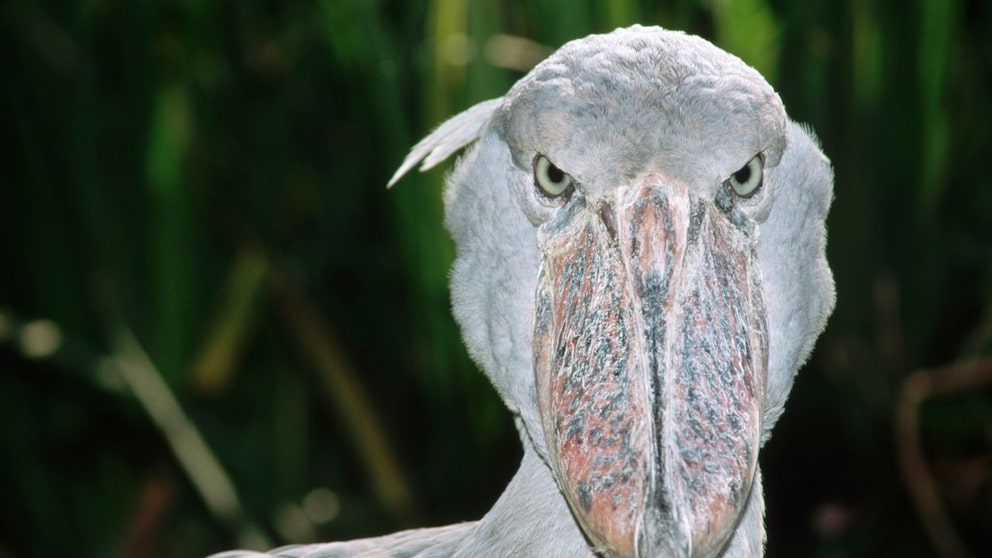
The shoebill is a rare bird from East Africa with a distinctive, shoe-shaped bill. This bill can grow up to 24.5 centimeters long, giving the bird its name. Although the shoebill itself is only about 1.2 meters tall, it uses its powerful bill effectively for hunting, even catching small crocodiles. In Sudan, it is called “Abu Markub,” meaning “father of the shoe.” This makes the shoebill one of Africa’s most extraordinary bird species. PETBOOK introduces the remarkable shoebill, which can even catch crocodiles with its large bill.
The Shoebill in Action
In the bird world, a bill like that of the shoebill is unique. The upper part of the bill is shaped similarly to a pelican’s and features a hook at the tip. This allows the swamp dweller to better hold onto prey after capturing it and then consume it. The lower part of the bill is relatively unremarkable in comparison, but still contributes to the bill’s depth of about twelve centimeters. Overall, the bill is greenish to brownish. The sounds the large bird makes with its bill resemble the bursts of a machine gun.

The shoebill lives in swampy and tropical regions of Africa, primarily in Sudan. However, these striking birds can also be found in Tanzania, Uganda, and Zambia. The papyrus swamps along the White Nile are particularly favored by the shoebill. Here, they usually stand alone or in pairs in shallow water—sometimes for hours, completely motionless. They wait in this way until prey swims by.
Their preferred prey includes lungfish, but amphibians and even small crocodiles are also on the shoebill’s menu. The bird’s enormous bill then darts into the water with lightning speed. With the hook at the tip of the bill, the shoebill can securely hold even defensive animals. These are then dismembered with the sharp-edged bill before the bird skillfully tosses them with a wide-open bill directly toward its stomach.1
Shoebill’s Way of Life
The shoebill can fly, and quite well at that. It can soar up to 500 meters high. However, its flying skills are rarely used. Most of the day, it sits seemingly motionless on the shore. However, it is not inactive here. It closely observes its surroundings and especially the water to not miss any potential prey. Otherwise, its movements are more deliberate than frantic.
It slowly strides through reeds and papyrus. Adult crocodiles and hippos can pose a threat to the bird, and its barely perceptible movements attract less attention. Humans also pose a threat to the shoebill, primarily through the destruction of the sensitive ecosystem the bird needs to survive.2
The 13 Deadliest Animals in the World–Why Sharks Rank Last
Why the Tiny Black-footed Cat Is the World’s Deadliest Feline Predator
Shoebill’s Mating Season and Reproduction
Amid the shoreline vegetation, the shoebill builds its nests. The bird also constructs clutches on islands in rivers or ponds, usually incubating two to three bluish eggs. The area around these nests is typically densely vegetated, making them difficult for predators to spot. It takes 14 weeks for the hatched shoebill chicks to stand, and by four months, they are independent and hunt on their own. Until then, the parent birds take turns caring for the chicks.3
Threat to the Abu Markub
The shoebill population is estimated at about 6,500 individuals, with numbers continuing to decline. The primary reason is the destruction of its habitat. Areas near water in the shoebill’s range are particularly popular with farmers for agriculture. This often leads to the destruction of protective shoreline vegetation, depriving the bird of nesting opportunities.