

May 27, 2026, 9:08 am | Read time: 6 minutes
New footage from China currently shows what is likely the only wild albino giant panda in the world. With its white fur and reddish eyes, the rare animal is fascinating–yet in nature, albinism often brings significant disadvantages. PETBOOK explains why this is the case and which animals exhibit this genetic peculiarity.
Overview
World’s Only Known Wild Albino Panda Filmed in China
New footage of an extremely rare albino giant panda from China is currently attracting attention. The videos come from the Giant Panda National Park in Sichuan Province and show the animal among snowy forest areas and bamboo groves. The white panda was first discovered in 2019 by a camera trap in the Wolong Nature Reserve. Researchers believe it is the only known wild albino giant panda in the world. Since then, the animal has been scientifically observed and so far shows no major health problems.1
The panda is thus one of the most well-known examples of albinism in the animal kingdom. Although the genetic peculiarity is rare, it affects animals worldwide–from mammals to birds, reptiles, and fish. For the affected animals, the striking appearance often brings significant disadvantages in the wild.
How Does Albinism Occur?
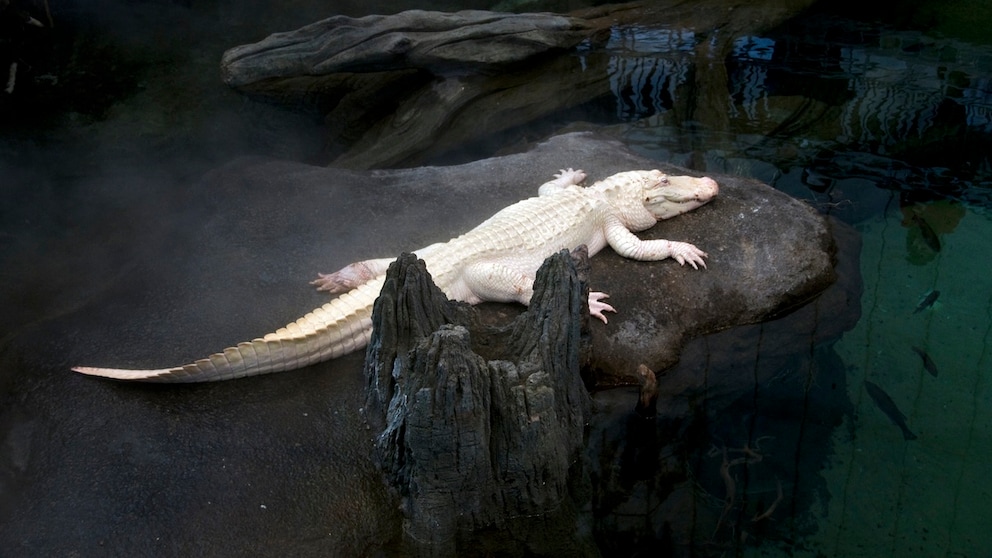
What is considered special naturally receives our undivided attention. This is also true for particularly rare animals, such as albinos. Albino animals differ from their peers due to a very prominent feature–they are white and have red eyes. In some regions of the world, these animals receive special treatment. White elephants, for example, are considered lucky in Thailand, and white cows are revered as deities in India. The fascination we humans have for these animals is not shared by nature–albinos have a harder time compared to their peers.2
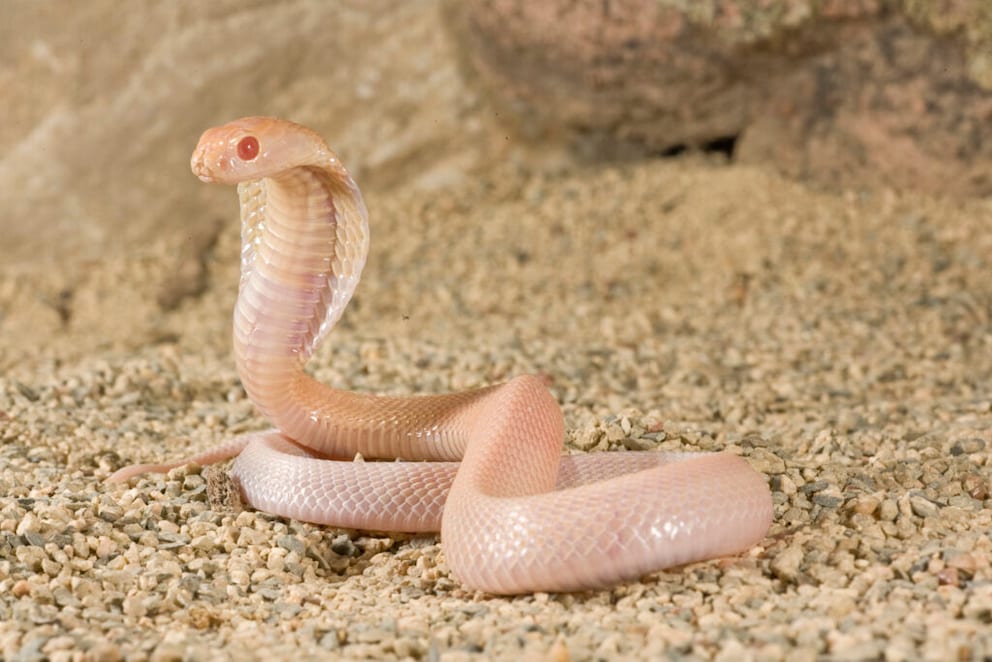
Albinism occurs in both animals and humans due to a genetic defect. This defect prevents the cells responsible from producing color pigments in the skin and hair or feathers–hence they are light or white. Albinos also lack color pigments in their eyes, which is why they are often red. This is because the iris of the eye is transparent, allowing the small red veins to show through the tissue. However, there are also albino animals with blue eyes. In this case, the albinism is less pronounced, and very few color pigments, known as melanin, are still produced.3
The genetic changes of albinism are passed on to offspring and do not occur randomly. However, the inheritance is recessive, meaning both parents must lack the gene responsible for pigment production. Due to these conditions, albinism is a rare phenomenon.
Also interesting: These Wild Animals Are Particularly Rare in Germany
Why Albino Animals Struggle in the Wild
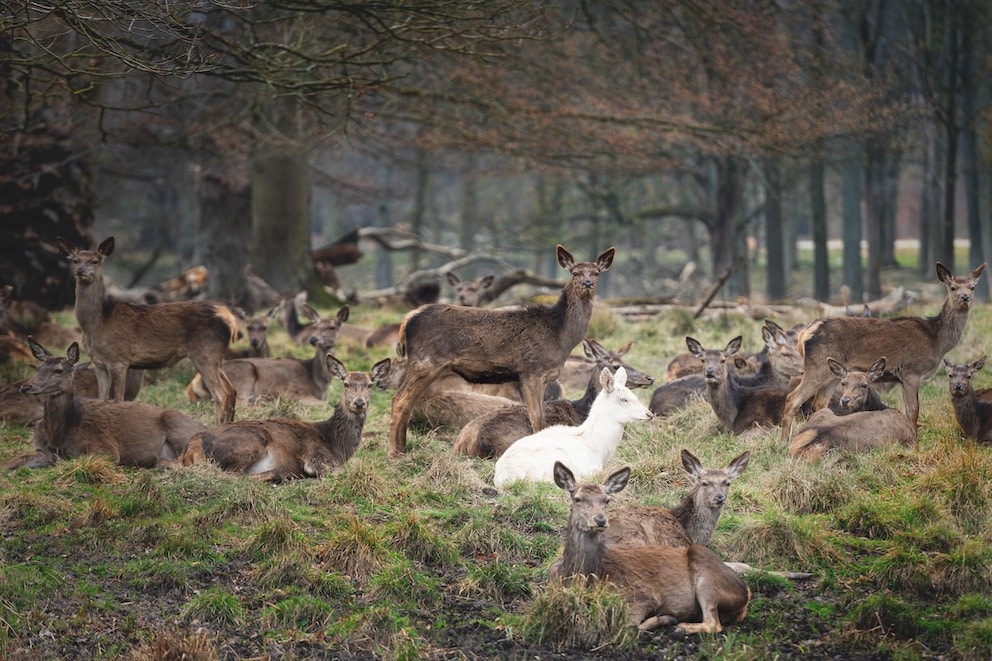
Albino animals have a hard time in nature. This is partly because their light skin and white fur, feathers, or scales make them stand out immediately among their peers. They lack camouflage, are not visually adapted to their environment, and are often defenseless against predators.
Additionally, albinos are ostracized and sometimes even attacked by their peers. This means they lose another protective mechanism if they are herd animals. In terms of reproduction, the outlook is also poor for these uniquely appearing animals: They are often avoided.4
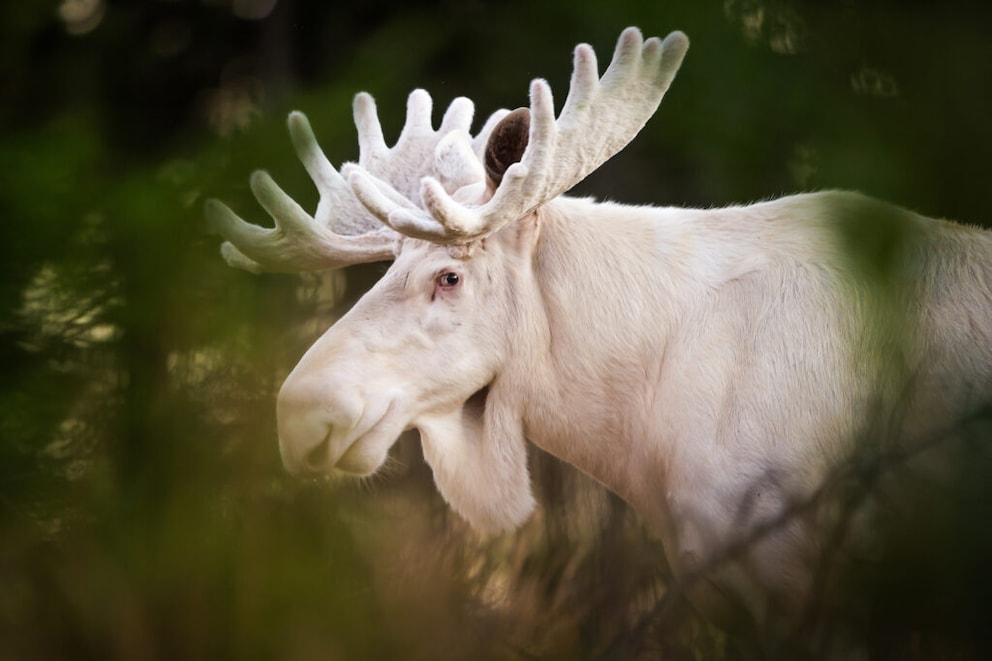
In addition to these social factors that make life difficult for albino animals, there are physical limitations and risk factors. Due to the lack of color pigments in their eyes, they exhibit increased sensitivity to light and have impaired vision, especially in terms of spatial perception. This negatively affects the animals’ fitness and makes them easier prey.5
Moreover, their skin, without the protective color pigments, is defenseless against the sun’s UV rays. Their sensitive skin burns quickly, and skin cancer is not uncommon in albino animals. Therefore, animals that many people find particularly “beautiful” often have a significantly reduced life expectancy in nature.
However, the light fur of albino animals does have a small advantage. Due to their light fur or skin, the animals are less bitten by horseflies in the wild. This is because horseflies are attracted to polarized light (light that oscillates in a specific direction), which dark fur emits. Therefore, albinos not only suffer from fewer itchy bites, but their risk of contracting infectious diseases or bacteria is also reduced.

Rare Discovery in Bavaria: The Story Behind the Snow-White Fox

Do you know all the different colors and patterns of cats?
Which Animals Exhibit Albinism?
Although albinos are relatively rare, they occur in all vertebrates. They can be found in water, on land, and in the air. About one in 10,000 animals is an albino. The likelihood of the genetic defect is particularly high in some species, such as wild boars and rodents. Here, one in 500 individuals has the gene mutation. In other species, the absence of color pigments is much rarer, such as in penguins. Among birds, the likelihood of albinism is one in 1,000,000 animals.
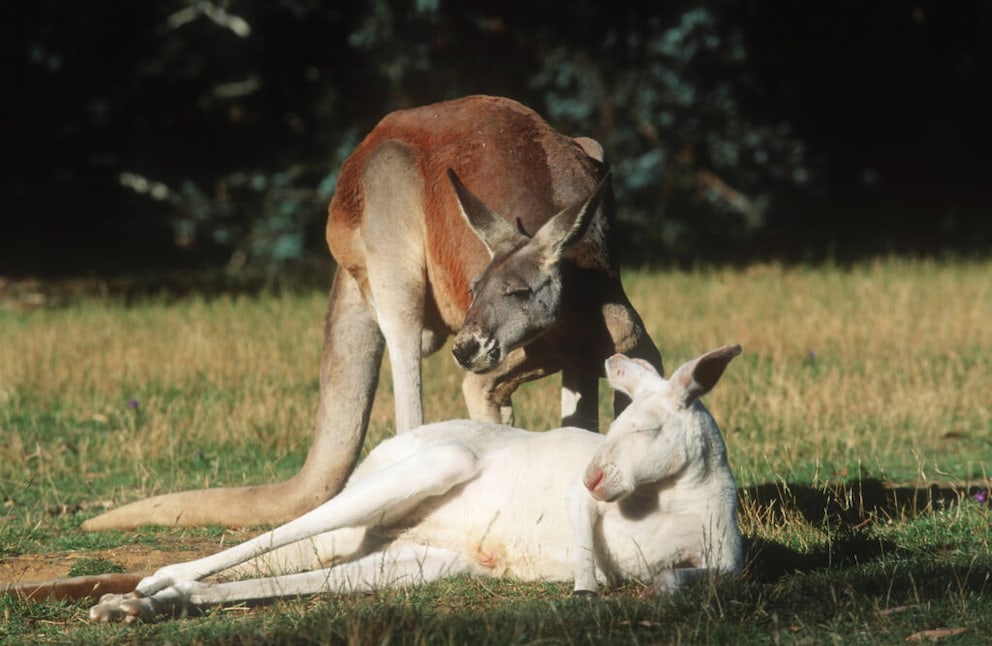
Do All White Animals Have Albinism?
Not all white animals are automatically albinos. Polar bears, arctic foxes, or snow hares are optimally adapted and camouflaged with their light fur in their habitat. However, there are also albino animals among polar bears: They can be recognized by their white nose and red eyes.
Albinos are difficult to distinguish from leucistic animals. Leucism, the so-called lack of color, also arises from a genetic defect. This leads to the absence of pigment-producing cells, resulting in white fur or hair and pink skin. In contrast to albino animals, leucistic animals may have pigment cells in their eyes or extremities. Depending on the number of pigment cells, these white animals have light brown, dark blue, or orange eyes.
Among birds, this mutation is particularly common in blackbirds. Blackbirds with leucism are often white-spotted, have a white head, or completely white plumage. Their eyes and beak are normally colored. Therefore, it is worth taking a closer look at white animals to truly identify an albino.6