

August 3, 2026, 3:04 pm | Read time: 4 minutes
Mice are curious, social, and surprisingly active animals. To feel comfortable, they need more than just a cage and some food. PETBOOK explains what future owners need to consider when keeping mice.
What Owners Should Know Before Mice Move in
Mice are often considered uncomplicated starter pets. However, the small rodents have some needs that future owners should be aware of. For instance, mice should never be kept alone. The German Animal Welfare Federation recommends groups of two to four animals. To avoid offspring, either only females or a neutered male with several females should live together.
Additionally, mice do not fit into every household. Many species are primarily active at dusk and night. That’s when they eat, dig, climb, and scurry around the enclosure. This can be quite audible. Ideally, the enclosure should be in a quiet room where neither the mice nor their owners are disturbed during sleep.1
Important to know: Mice are observation animals, not cuddly pets. Most do not like to be picked up or cuddled. However, those who enjoy observing their social behavior and activities will find a lot of joy in these lively rodents.
What Should the Cage Be Like?
The enclosure should provide enough space for movement, activities, and retreat options. The German Animal Welfare Federation recommends a base area of at least 100 x 50 centimeters for two mice. For each additional animal, the area should be increased by about 20 percent. Additionally, space for a 20 to 30 centimeter high layer of bedding and additional levels is important.
Many commercially available mouse cages are too small. According to the German Animal Welfare Federation, well-secured bird aviaries or rat enclosures can also be suitable. The bars should be stable and no more than five millimeters apart.
Some owners also opt for a large aquarium as an enclosure. The advantage: The high layer of bedding stays in place, and the animals are better protected from drafts. At the same time, owners must ensure adequate ventilation to prevent the buildup of moist, stale air in the enclosure.
What Should Not Be Missing in Any Mouse Enclosure
Mice are curious and active animals. To prevent boredom, their enclosure should be varied. According to the recommendations of the German Animal Welfare Federation, this includes:
- At least 20 centimeters of bedding so the animals can dig tunnels
- Hay, straw, leaves, and paper shreds as additional nesting and building materials
- Several sleeping houses and caves as retreats
- Tunnels and cork tubes that provide hiding places and activities
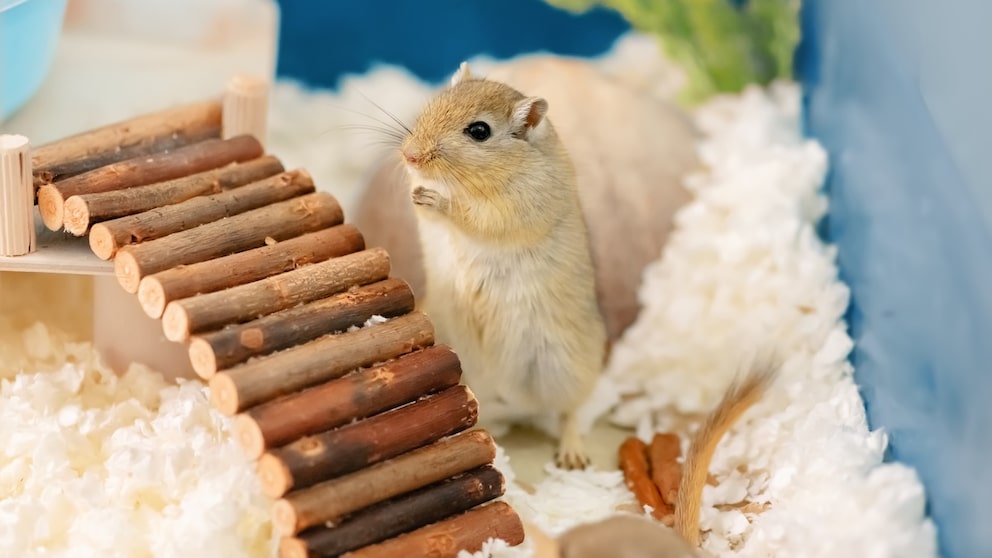
- Climbing opportunities like branches, bridges, or ropes
- Multiple levels to better utilize the available space
- A suitable exercise wheel with a closed running surface and a diameter of at least 25 to 30 centimeters
It is also important that all furnishings are made of safe, non-toxic materials and are securely fastened. Natural materials like wood, cork, or clay are considered particularly suitable.2

How Rabbits and Guinea Pigs Stay Healthy in Outdoor Enclosures During Cold Weather

Proper Care and Maintenance of the Alexandrine Parakeet
What Do Mice Eat?
Mice are omnivores. Their diet is primarily based on seeds, grains, and other seeds. In nature, they also eat insects, nuts, herbs, and other plant parts.
For pets, a high-quality grain feed that is regularly supplemented with fresh food is suitable. Small amounts of animal protein, such as mealworms or quark, can also be beneficial.
By the way: Contrary to a widespread cliché, cheese is not among mice’s favorite foods. It is not necessary for a species-appropriate diet and is often rejected by many animals if more attractive food is available. Owners should avoid sugary snacks like yogurt drops as much as possible.
Fresh drinking water must be available to mice at all times and should be changed daily. Whether the water is offered in a drinking bottle or a shallow, stable dish is generally a matter of preference. The most important thing is that the animals can drink easily at any time and that the water remains clean.
Mice Are Not “Side” Pets
Even though mice are small, they require just as much responsibility as other larger pets. The animals usually live two to three years and are entirely dependent on their owners during this time. This includes not only daily care and cleaning of the enclosure but also regular health checks and vet visits.