

March 11, 2026, 4:43 am | Read time: 3 minutes
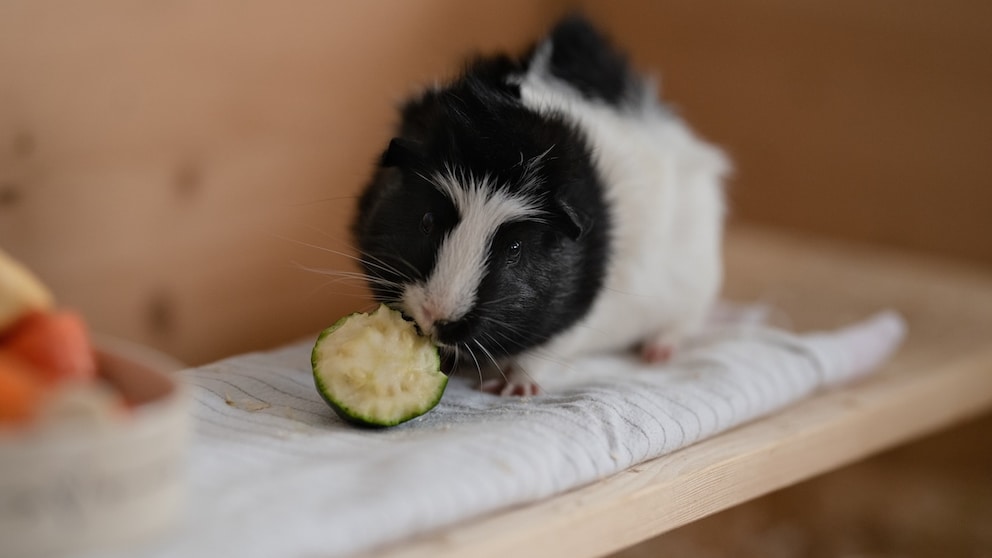
Zucchini is considered a light, healthy vegetable—but is it suitable for guinea pigs? Many owners are unsure about which fresh foods are truly safe for their pets’ diet. Alongside classics such as cucumber or fennel, the question often arises: Is zucchini a good choice for these small rodents? PETBOOK explains what to consider when feeding them.
Guinea pigs are among the most popular pets. However, many myths still circulate about their care, from proper nutrition to appropriate housing. It’s encouraging that more and more information is becoming available about the needs of these small rodents.
A central question is: What can guinea pigs actually eat? PETBOOK regularly examines individual foods and explains what can safely be included in their diet—and what should be avoided. This time in focus: zucchini.
Can Guinea Pigs Eat Zucchini?
Guinea pig owners know how complex their pets’ diet can be. In addition to hay and grass, various vegetables are part of the weekly menu. Alongside cucumber, tomato, and fennel, guinea pigs can indeed enjoy zucchini. This squash is particularly popular due to its high water content, which provides an additional source of hydration. It is also easily digestible and contains important nutrients.
Along with other vegetables and a sufficient amount of hay, zucchini can be fed daily.

Which Fruits and Vegetables Guinea Pigs Can Eat

The 7 Most Common Diseases in Guinea Pigs
What Is Zucchini Made Of?
Zucchini belongs to the squash family. In addition to the classic green color, it also comes in yellow and white. Depending on the variety, it can even be rounder or more elongated. Moreover, zucchini is composed of up to 95 percent water.
Zucchini provides potassium, calcium, and vitamin C, while having a very low energy content.
Nutritional Content per 100 Grams of Zucchini:
- Sodium: 3 mg
- Potassium: 152 mg
- Calcium: 30 mg
- Magnesium: 22 mg
- Phosphorus: 23 mg
- Iron: 1.5 mg
- Vitamin A: 37 µg
- Vitamin B1: 211 µg
- Vitamin B2: 79 µg
- Vitamin C: 17 µg
- Vitamin E: 430 µg
- Niacin: 400 µg
It’s important for owners to know that the high water content can lead to softer stools.
What to Consider When Feeding
Even though zucchini is full of nutrients, owners need to be mindful when feeding it. The advantage of zucchini is that it is not too hard for the animals’ teeth. However, the stem has a firmer consistency and should be removed before giving it to the guinea pig.
Zucchini are easily available in supermarkets. In the summer, many people also harvest this vegetable from their own gardens. In general, it’s always good to know the source of the vegetables you plan to feed your pet. However, zucchini can also be toxic. It can produce the toxin cucurbitacin, especially under high temperatures or when grown near ornamental gourds. Toxic zucchini can be identified by the bitter smell caused by cucurbitacin.