


May 21, 2026, 12:04 pm | Read time: 6 minutes
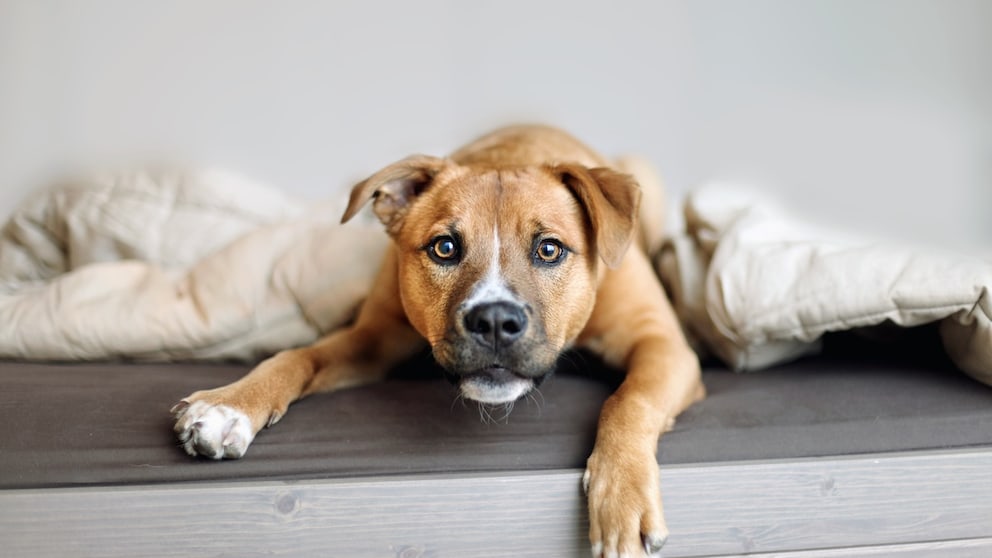
Many dog owners are familiar with this look: The dog sits in front of them and stares at them for minutes. Sometimes it seems loving, sometimes demanding, and sometimes even uncomfortably intense. But what’s really behind it? Is it about affection, attention, or a warning? Dog trainer Katharina Marioth explains in an interview with PETBOOK why dogs stare at people, when owners should take a closer look, and why the gaze alone often doesn’t tell the whole story.
Staring Is Primarily Communication
When dogs intensely look at their humans, many owners wonder: What’s behind it? Is it about love, attention, or perhaps even a warning? Dog trainer Katharina Marioth explains why dogs stare and why it’s not just the gaze itself that’s important, but always the entire body.
Staring is primarily communication, Marioth explains. Dogs look at their humans because they want something or want to communicate something. It can be quite simple: If you’re holding a sandwich and your dog is fixated on you, it’s likely just begging behavior. But often it’s about other needs. The dog might want to go out, get on the couch, play, or get attention.
Context Is Key
Therefore, the overall impression of the dog is always crucial. Many owners are familiar with this typical “puppy look” with big, round eyes, Marioth says. The dog appears overall soft and friendly–often a sign that it’s politely asking for something. It’s quite different if a dog becomes stiff and fixates on someone. Then the message might be more like: “Please don’t come closer.”
For Marioth, it’s clear: Staring is almost always communication–positive or negative. However, she sees an exception with older dogs. If dogs suddenly stare into space or at the wall and seem to “look through people,” it could also indicate dementia. This should be checked by a veterinarian.
Should You Stare Back?
Many dog owners then wonder how they should respond to the staring. However, Marioth doesn’t think staring back is a good idea. That comes from old dominance theories and doesn’t help in practice. If a dog, for example, is guarding its toy and fixates on its human, you don’t solve the problem by staring back at the dog. Instead, you should seek professional support and work on the root cause.
It’s different with friendly requests. Especially with puppies or young dogs, it’s important to respond to certain signals. If a dog seeks eye contact because it urgently needs to go out, that’s exactly the communication you want in everyday life. It becomes more challenging with requests like “Play with me” or “Let me on the sofa.” Here, you have to weigh your options. If you always respond immediately, you could quickly end up with a dog that constantly demands attention and hardly ever calms down.
Also interesting: Why do cats stare at the wall?
Be Cautious When Dogs Fixate on Visitors
Therefore, Marioth recommends closely observing your own dog. Her own dog, for example, looks very different when it urgently needs to go out. Then there’s much more body tension, sometimes accompanied by a little tiptoeing or a glance toward the apartment door. If the dog just seems bored and maybe even brings a toy, she tends to ignore it. Especially in the office or home office, it’s important for dogs to learn to tolerate calm.
Owners should be particularly attentive when dogs intensely fixate on visitors. Marioth recalls a Bullmastiff that kept a constant eye on visitors. The dog seemed calm in its basket but watched every movement. This may seem harmless at first but can quickly escalate. If dogs start to control or guard visitors, it must be taken seriously. The dog should learn that it’s not its job to monitor guests.
Staring Pays Off for Some Dogs
If it’s just begging at the coffee table, visitors should not reinforce the behavior, the trainer emphasizes. If the dog keeps getting something slipped to it, it quickly learns that persistent staring pays off. A good mat training and a fixed resting place can be helpful.
If the staring seems threatening, Marioth especially recommends good management. In such cases, she likes to work with a house line so the dog can be secured without people having to physically reach for it. Additionally, it can help to give the dog a protected area–such as behind a baby gate. There, it can still observe everything but remains at a distance.
Why Does My Dog Stare at Me While Pooping?

Why Many Overlook These Signals in Dogs and What They Mean
Dog Staring? Here’s How to React Properly
It’s also important to better structure visitor situations. It often happens that the door is opened and the dog immediately rushes forward to position itself between the visitor and the owner. That’s exactly where you need to intervene early and calmly show the dog that it should go to its place.
Depending on the dog, it can also be useful to associate visitors with something positive. According to Marioth, some dogs benefit from guests announcing something particularly pleasant–such as a special chew bone or a special reward at the resting place. Nervous dogs, on the other hand, often need to learn that visitors are part of everyday life and not a threat.
Staring or “Loving Looks”?
And then there are, of course, the moments that many dog owners would describe as “loving looks.” When a dog snuggles close to its human and looks up relaxed, it’s indeed an expression of bonding, says Marioth. Not only does the gaze appear soft, but the entire facial expression of the dog is relaxed.
Similar to humans, intense eye contact can also strengthen bonding in dogs. In fact, oxytocin is released–the hormone that promotes social closeness and connection. Owners should therefore calmly reciprocate and enjoy such moments.
You can watch the full interview with Katharina Marioth in the video.

About the Expert
Katharina Marioth is the founder of the Stadthundetraining brand and the KEML principle. She is an IHK- and government-certified dog trainer and behavioral assessor for dangerous dogs in the state of Berlin. In her daily business, she works closely with veterinarians, scientists, and other specialists on dog-related topics. With her knowledge and skills, she secured the title of Dog Trainer of the Year 2023 in the Sat.1 show “The Dog Trainer Champion.”