

November 13, 2026, 5:06 am | Read time: 4 minutes
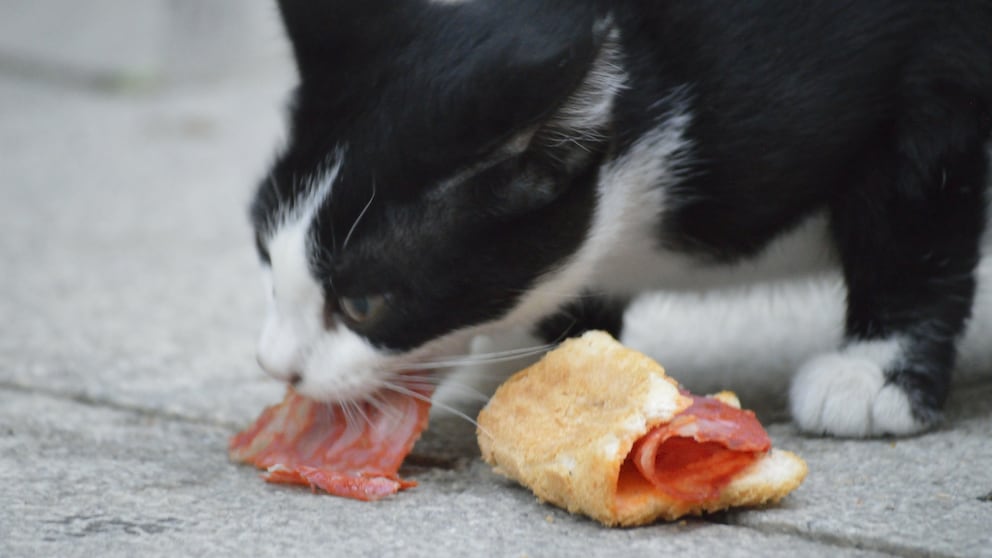
Cats are carnivores and interested in anything with a strong smell. The scent of sausage, salami, or ham is particularly enticing to them. That’s why every cat owner likely knows the situation where begging is common, especially at the breakfast table. Giving a piece of sausage or ham—there’s nothing wrong with that, right? Or could it even be dangerous for my cat? This question is answered by our PETBOOK author and health consultant for dogs and cats, Philine Ebert.
Sausage, Salami, and Ham–a Tasty Snack or Unhealthy?
One might think a piece of sausage couldn’t be harmful to a pure carnivore like a cat, but as with many things, the dose makes the poison! And unfortunately, the high dose is often reached faster than expected!
The unhealthy and sometimes toxic part of sausages is not the meat itself, but how and with what additives they are processed. Most types are heavily salted, seasoned, and contain a lot of fat. Salami (raw sausage) or ham is often smoked and cured. All of this is harmful to a healthy cat’s body and can be toxic even in small amounts. Therefore, meat products like sausage, salami, and ham are entirely unsuitable as food or snacks for cats.
Also interesting: Can cats eat cheese? A veterinarian explains
What Are the Consequences of Eating Sausages for a Cat’s Body?
The greatest danger is poisoning from consuming too much salt or other toxic substances:
Salt Poisoning:
Just 0.5 to 1 gram of salt per kilogram of a cat’s body weight can be toxic and thus life-threatening (e.g., salami often has a salt content of three to six percent).
The specific curing salt hidden in many sausages is even more critical. It contains a lot of sodium, which heavily burdens the kidneys and can lead from dehydration to salt poisoning. Long-term effects can also include heart and kidney damage.
Toxic Additives:
If the sausage contains onions, garlic, or spicy seasonings, these additives are highly toxic to cats even in small amounts. The sulfur compounds in garlic and onions damage and destroy red blood cells.
Artificial Additives:
Preservatives, flavor enhancers, antioxidants, aromas, colorings, sugar, or other artificial substances can heavily burden and damage the body.
High Fat Content:
A high fat content is difficult for a cat’s body to digest, burdens the cardiovascular system and kidneys. Possible consequences include vomiting, diarrhea, or even a life-threatening pancreatitis. Fat provides more than twice the energy of protein or carbohydrates, so weight gain and obesity are inevitable in the long run.
Aujeszky’s Virus:
Raw pork (e.g., minced meat) can transmit the deadly Aujeszky’s virus to cats. Raw sausages made from pork that have not been fully cooked are also affected. There is a lower risk with industrially heated salami, but even this is not suitable for cats due to its high salt and fat content.
Pathogens:
Raw, cold-smoked products (e.g., raw ham) can transmit parasites, germs, salmonella, and listeria, as they have not been heated.
Also interesting: How healthy is raw meat for cats
Symptoms and First Aid
If a cat has eaten too much sausage, salami, or ham, it manifests through corresponding symptoms of salt poisoning:
- Strong and extreme thirst, excessive urination, kidney problems
- Increased salivation, gagging
- Vomiting or diarrhea
- Neurological failures, coordination disorders, consciousness disorders, apathy, restlessness, or weakness
- Muscle tremors, cramps
- Shortness of breath
Signs of poisoning in cats usually appear within minutes but can also occur hours later. Such poisoning is an acute emergency and must be immediately clarified and treated by a veterinarian. Until treated by a vet, the animal should drink as much as possible, ideally always having a bowl of fresh water nearby.
Also interesting: How to recognize a good veterinarian?

What Happens When Cats Eat Too Much Salt

Is asparagus safe to eat for dogs? A vet gives an answer
What Could I Offer My Cat Instead of Sausage?
- Lean beef, turkey, or chicken, unseasoned, only cooked or steamed
- Dried offal (particularly interesting due to the intense smell)
- Sausage specifically made for feeding cats, such as BARF sausage, cat liver sausage, sausage roll/cat sausage, training sausage, etc.
- Meat snacks like BARF snacks, single protein snacks, cat treats
Conclusion
Not sharing your own sausage sandwich is certainly difficult for many owners. However, for the sake of your cat’s health, it’s better to refrain. Even cooked ham or lean poultry sausage usually contains too much salt and fat and heavily burdens the cat.

My Tip as a Health Consultant for Cats
Just trick your cat a little. While you have breakfast or a snack as usual, have an extra bowl ready just for your cat. It contains no regular sausage, ham, or salami, but instead, for example, small pieces of cooked chicken breast or fragrant, dried offal. Your cat will happily eat this suitable and healthy snack and won’t notice the difference.