

July 22, 2026, 2:22 pm | Read time: 5 minutes
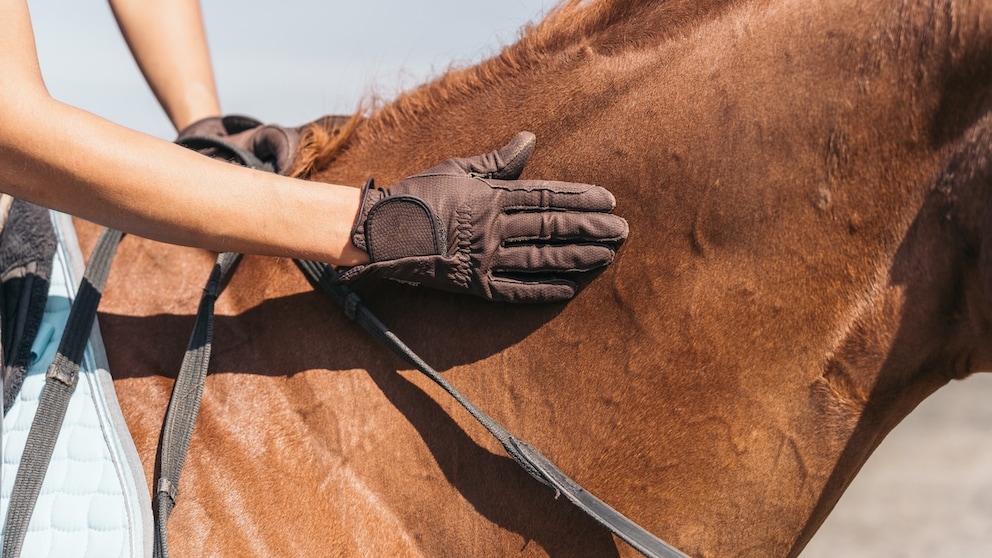
A pat on the neck is often considered a natural way to praise a horse. But does this gesture actually resonate with the animal as we believe? Dr. Vivian Gabor, a Ph.D. in equine science and founder of the Institute for Behavior and Communication, explains which forms of reward horses truly understand—and why the classic shoulder pat is often not the best choice.
Do Horses Even Understand Patting as Praise?
Many horse owners praise their animals with a pat on the neck. But does this gesture actually register as a reward with the horse? Dr. Vivian Gabor, founder of the Institute for Behavior and Communication and a Ph.D. in equine science, is skeptical: “In my view, neck patting is primarily a human habit.”
A horse only understands this touch as praise if it has been clearly associated with a positive experience beforehand. “Many horses find a strong pat more unpleasant or at least not particularly soothing,” the expert explains. A more horse-friendly approach is often a gentle scratch, such as in the withers area.
How Can You Praise a Horse?
When it comes to rewards, every horse person has their own praise words or knows the animal’s favorite treats. But how do horses perceive different forms of reward? Do they distinguish between voice, petting, food, or breaks? Dr. Vivian Gabor explains: “Food is a very direct positive reinforcer for many horses, while the voice must first be learned.” A praise word acts as a secondary reinforcer and gains its meaning through association with something pleasant.
The expert also explains what owners need to pay special attention to: “Breaks, relaxation, and the release of pressure are also very important forms of praise for horses.” Additionally, petting or scratching can be rewarding if done in a place and with an intensity that the individual horse truly finds pleasant.
The Most Common Mistakes in Praising
Praising your horse correctly is often easier said than done. From her daily work, Dr. Vivian Gabor knows typical mistakes that many owners make unconsciously.
“A common mistake is that the praise comes too late, and the horse no longer knows which behavior was meant,” explains the equine scientist. Food is also often used at the wrong moment—for example, when the horse is already rummaging in the pocket or pestering the person. “Then exactly this behavior is rewarded,” warns Dr. Vivian Gabor.
Moreover, the impact of a break or the release of pressure is often underestimated. “Many people also forget that a real break, a release of their own body tension, or a moment of relaxation is often more valuable to the horse than an automatic pat on the neck,” the expert further explains.

Is There Bullying Among Horses? Here’s What the Expert Says

Are Mares in Heat Really More “Moody”?
Why the Right Timing Is Crucial
But what does good praise actually look like in practice? Suppose a horse stands calmly at the hitching post for the first time or successfully masters a new lesson—how should the person react at that moment?
For Dr. Vivian Gabor, good praise begins with the right timing. “I would first calmly confirm the right moment with a known praise word and then immediately give the horse a break,” says the equine scientist. Depending on the horse’s character, a scratch at the withers or a small food reward might also be appropriate, as long as the animal remains calm and respectful. The key is that the horse stores the situation positively: “This behavior is worthwhile and leads to a pleasant state.”
“Good Praise Is Not as Loud and Exuberant as Possible”
The expert summarizes what makes good praise: “Good praise is not as loud or exuberant as possible, but above all clear, appropriate, and timely. We should always ask from the horse’s perspective: What does this individual horse truly find pleasant at this moment?” explains Dr. Vivian Gabor.
For her, good praise does not end with a praise word or a reward. Rather, the horse’s sense of security also plays a crucial role. “For the prey and flight animal horse, security is a central factor: Through trust, clarity, and reliable communication, it can feel safe with the person,” the expert notes.
This can even include giving the horse some space. “This also includes space—sometimes it is rewarding and calming for a horse when the person physically takes a step back, allowing the horse to experience more overview, distance, and thus more security,” says Dr. Vivian Gabor.
In the end, praise is far more than just a nice gesture in her view. “Then praise becomes not only a reward but also an important building block for trust, motivation, and joy in learning,” the equine scientist concludes.