

March 30, 2026, 12:25 pm | Read time: 6 minutes
Horse-drawn carriages symbolize relaxation, romance, and a piece of the past. But is this image misleading? Behind the seemingly idyllic offering lies a debate that has intensified over the years–raising uncomfortable questions. PETBOOK author Emily Reimann has long made up her mind: Horse-drawn carriage? Never again!
What Carriage Rides Are Really About
“I will never get into a horse-drawn carriage again in this life.” I swore this to myself–and in doing so, I waded into a thicket of controversy. Opinions on horse-drawn carriages vary widely. The discussion is often framed as a choice between “animal cruelty and tradition.” The debate is particularly heated around so-called Fiaker–traditional, two-horse carriages that are iconic and tourist attractions in Vienna–or whenever accidents or fatalities involving carriages occur.
Recently, two horses were euthanized following an accident in Potsdam, according to a police report from the Brandenburg police, and the carriage driver was hospitalized with injuries. Shortly thereafter, the animal rights organization PETA issued a press release calling for a carriage ban from District Administrator Marko Köhler. But what exactly is the problem with carriage rides?
Between Nostalgia and Doubt
As a child, I often rode in horse-drawn carriages–at summer camps or on school trips. When I think back on it today, it’s mostly nostalgia: children’s laughter, singing together, carefree travel. Yet even then, I paid attention to which horse was pulling the carriage. Usually, draft horses calmly led us through the woods at a walk.
As I grew older and took small city trips with my parents, my perspective began to change. City carriage horses often appeared different to me: some barely muscled, almost delicate compared to the carriage, some very old or very young. Sometimes I also felt they weren’t adequately fed–I never saw hay at the stands, at least.
Debate Over Carriage Horses Has Grown Louder
At the same time, there were other horses: alert, strong, well-groomed. This contrast became increasingly noticeable to me over time–and raised questions. During this period, I had a horse of my own and began to delve deeper into understanding how to tell if an animal is well and what it needs to stay healthy long-term. Perhaps this is the turning point. The more I learned, the less I could ignore what I saw in some carriage horses.
When I think about why I would no longer ride in a carriage today, it has everything to do with this. Over the past decade, the debate over carriage horses–especially in city centers–has become significantly louder. Critical voices are increasing, as are demands: stricter regulations, bans on rides during heat, and sometimes even a complete ban.
The Real Problem Behind Carriage Rides
Why is there this seemingly endless debate about carriage horses–especially in big cities where they wait for tourists? Critics see it as more than just a nostalgic offering. They point to heat without adequate shade, long working hours, irregular water supply, and above all, a fundamental contradiction: Horses are flight animals.1
This is one of the biggest problems–not just for the animals, but also for people. Horses are constantly aware of their surroundings and react sensitively to sounds, movements, and the unexpected. A honking car, a suddenly braking bicycle, a crowd of people–any of these can be enough to startle a horse. Unlike in a calm, controlled environment, there are few retreat options in city traffic. If a horse panics, it is not only at risk itself but also pulls the carriage, putting people in a potentially dangerous situation.
These risks are not just theoretical, as shown by the handling of particularly sensitive areas. It is no coincidence that horse-drawn carriages are prohibited from entering Pariser Platz in Berlin. This has been the case since December 13, 2017, and was justified by pedestrian safety and orderly traffic. Additionally, a press release from the Mitte district office on January 29, 2018, states: “Pariser Platz is also unsuitable for horses because there are no opportunities for the animals to drink and rest, nor are there any shade areas important for animal welfare.”
Why Horse-Drawn Carriages Still Exist
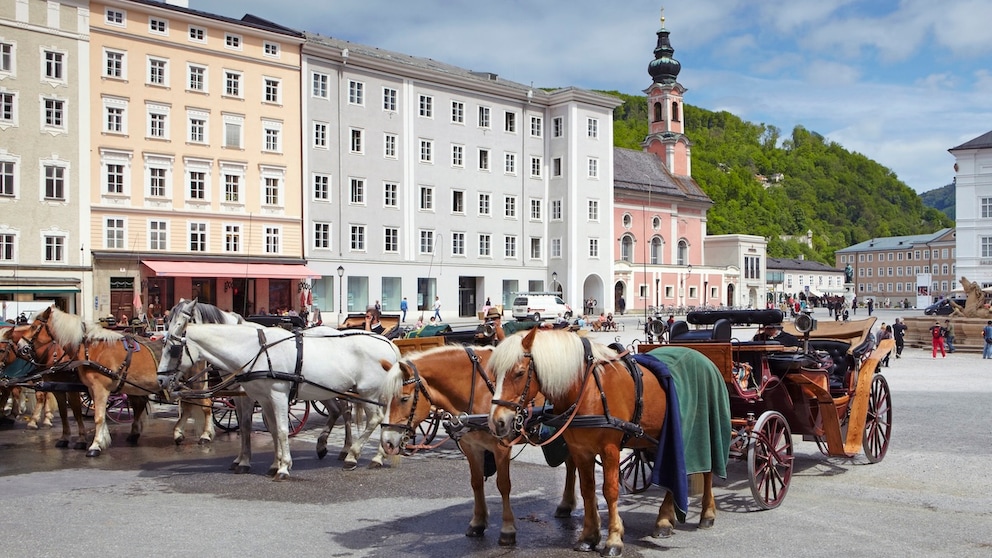
When I think of Vienna, I immediately picture the historic center. The Hofburg and St. Stephen’s Cathedral–that’s typical Vienna. The architecture itself invites one to wonder what it must feel like to ride through the streets in a carriage. Vienna is known not only for Sisi, Sachertorte, and the charm of old buildings but also for Fiaker. Originally, they were a kind of early taxi system: As early as the 17th century, carriages were officially licensed and offered at fixed stands. Over time, the business evolved from an everyday means of transport to a popular way for tourists to explore the city.2
This development is still the basis of the argument for many Fiaker businesses today. They point to studies showing that healthy horses can perform light work–such as carriage rides at a walk–even in higher temperatures. Yet the criticism remains, as the conditions in city traffic go beyond mere physical strain.
Today, carriage rides are meant to convey nostalgia and relaxation. But many, including myself, view this critically: While Fiaker are cultural assets to some, others have been calling for stricter rules or bans for years. The focus is on long working and waiting times, monotonous routines, stress from traffic, and potential accident risks. Thus, the debate is less about a clear yes or no and more about the conditions under which the use of horses in modern city life is even justifiable.3

Expert Explains Why Protection Dog Sports Have Such a Bad Reputation

Did You Know? These Animals Were Sisi’s Greatest Passion
Why I Would No Longer Ride in a Carriage
I will never ride in a carriage again–especially not a tourist one. My perspective on horses has changed too much. From personal experience, I know what it takes for a horse to be physically and mentally balanced: sufficient water, continuous access to roughage, rest periods, and above all, a living environment that allows the animal to fulfill its natural needs. Horses are social flight animals; they need appropriate movement, retreat options, and reliable structures.
All of this stands in stark contrast to what I’ve observed with many carriage horses in cities: long waiting times on hard surfaces, little variety, dense traffic, noise, and heat. Even if individual businesses strive to create good conditions, the fundamental question remains for me whether an animal naturally designed for space, movement, and herd life fits into this environment at all. That’s why my decision is clear: I no longer want to be part of this system.
Between Responsibility and Uncomfortable Questions
I am aware that not all carriage businesses operate the same way and that many people genuinely care about the welfare of their animals. There are businesses that try to create good conditions and take responsibility. Yet the question remains for me whether these efforts are sufficient when the fundamental environment–dense city traffic, noise, heat, and limited retreat options–is hardly changeable.
Perhaps in the end, it’s less about condemning individual actors and more about honestly questioning what role animals should still play in our urban lives today–and where we are willing to explore new paths.