

December 23, 2025, 12:16 pm | Read time: 5 minutes
The image of Empress Elisabeth is still shaped by film romance and courtly splendor. Yet, far from the Vienna Hofburg, the monarch sought a place beyond duty and protocol. A special role was played by something that was far more to her than a courtly pastime—and promised her a rare moment of freedom.
Between Crown and Longing: Who Was Empress Elisabeth Really?
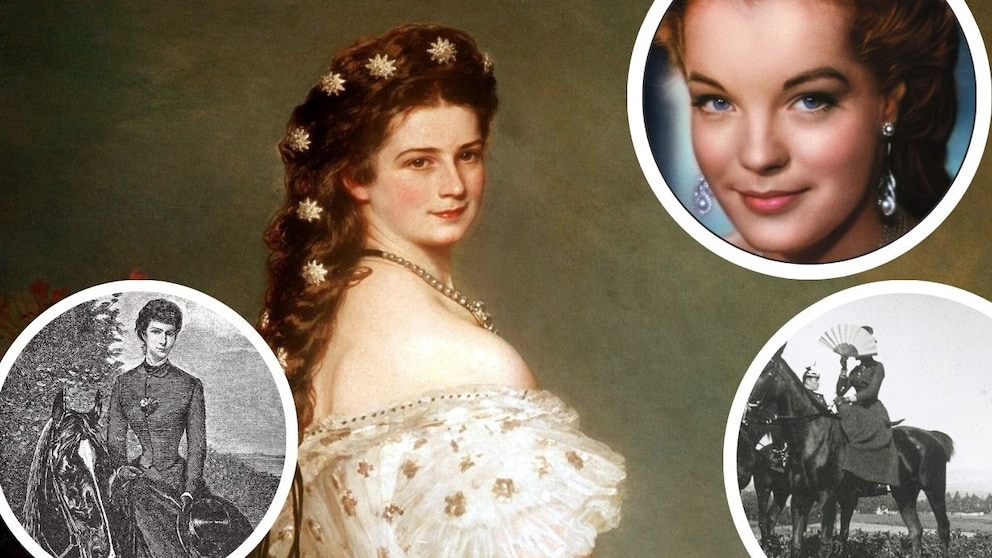
Long hair and endless beauty—these are often associated with Empress Elisabeth of Austria. On December 24, 1837, the future monarch was born in Munich as the daughter of Duke Max in Bavaria and Duchess Ludovika of Bavaria. Unlike other nobles, Duke Max led a rather unconventional life. Sisi spent her childhood in her father’s palace or during the summer months at Possenhofen Castle. At just 15 years old, she was engaged to her cousin, the heir to the throne, Franz Joseph I. At the age of 16, on April 24, 1854, the two married in a pompous and glamorous style—the festivities lasted a week.
But anyone who thinks it was a romantic wedding is mistaken. Unlike in most films, Elisabeth (nicknamed Sisi) became increasingly unhappy. She longed to escape, far from the strict court ceremonies. Away from the Vienna Hofburg, she often traveled under pseudonyms like “Countess of Hohenembs” around the world. And when she wasn’t doing that, she sought happiness on horseback. 1
Fun Fact: Sisi or Sissi? The real Sisi is spelled with one “s,” after her parents’ nickname for her. The Sissi with the double “s” is from the famous film trilogy starring Romy Schneider.
Wasp Waist, Veal on the Face, and Excessive Walks
If one had to describe Sisi, many would mention her wasp waist. There were also rather questionable wellness treatments like veal masks. The empress also placed enormous value on her extensive exercise regimen. For her workouts, she even had a room with exercise equipment at Schönbrunn Palace—perhaps one of the first home gyms.
In addition to her fitness exercises on the climbing wall, she walked briskly through the expansive paths of the park. According to some reports, she walked so fast that her ladies-in-waiting couldn’t keep up and had to be practically gathered up. However, Sisi didn’t just walk quickly, but also for long periods. She is said to have roamed the palace gardens for up to eight hours a day. 2
Captivated by Horses Since Childhood
“Sissi! Jump over the roses!” Who knows this quote? It comes from one of the most famous film adaptations of Sisi’s life. Romy Schneider in the lead role jumps a horse over a rose bed—and that in a sidesaddle. Whether the real Sisi also jumped over roses is questionable. What is certain is that Sisi was definitely an accomplished rider. Since her childhood days, she is said to have liked horses.
Her passion for the animals even made it into her private chambers. In addition to the classic furnishings, the empress had a rather unusual paperweight on her desk: a horse hoof. 3
Sideways but Uncompromising: Riding in a Sidesaddle
Even in a sidesaddle, Empress Elisabeth demonstrated exceptional skill. As was customary for women of her time, she rode sitting sideways, but that didn’t stop her from undertaking demanding rides. Already as a teenager, she was portrayed in a sidesaddle, and later she mastered fast gallops, difficult horses, and even jumps. For Elisabeth, the sidesaddle was not an obstacle but another challenge. Her secure seat, body control, and courage made her an outstanding rider even in this style. 4
Becoming an Athlete at 30
Around the age of 30, riding became more than just a pastime for Empress Elisabeth. In a phase where she felt increasingly confined by court life, she found solace and freedom in the saddle. She rode for several hours daily, trained intensively, and set high standards for herself. Difficult horses, high jumps, and fast rides were part of her daily routine. Elisabeth wanted to test her physical limits and prove her courage. It wasn’t about appearances or admiration, but about performance and self-control. Her consistent training and ambition made her an extraordinary rider, considered one of the best in Europe during her lifetime.
The 16 Most Famous Animals in World Literature
Why I Would Never Ride in a Horse-Drawn Carriage Again
Parforce Hunt, the Equestrian Sport of the Nobility
The parforce hunt, in which Empress Elisabeth occasionally participated, is considered one of the most spectacular yet controversial forms of hunting in European aristocratic history. Originally from France, it was reserved for the high nobility and followed a clear principle par force—”by force.” In this hunt, live game was chased over many miles by large packs of hounds until it collapsed from exhaustion. The enormous effort made this form of hunting a status symbol of the nobility.
Hundreds of hunting horses and sometimes up to 400 dogs were needed, which only a few courts could afford. In the 19th century, the parforce hunt increasingly came under criticism. In Germany, it has been banned since 1934. Today, this form of hunting is viewed critically, especially from an animal welfare perspective. 5
Even the Empress Fell from a Horse
Empress Elisabeth, however, showed great interest in all facets of equestrian sports: In addition to parforce hunts, she even trained in circus riding. About 30 horses were part of her personal stable, and her passion took on almost cult-like dimensions—in a specially established riding chapel, she collected portraits of her favorite horses.
Despite her exceptional skills, she was not immune to accidents: After a severe fall during a ride in Normandy, she suffered a concussion but remained unfazed, emphasizing in a letter to Emperor Franz Joseph that she had “not lost heart over such a jolt.”
By her late 30s, Sisi stopped riding. The reasons were partly health-related but also mental. Her love for the animals, however, remained until her tragic death.