

August 31, 2025, 2:58 pm | Read time: 5 minutes
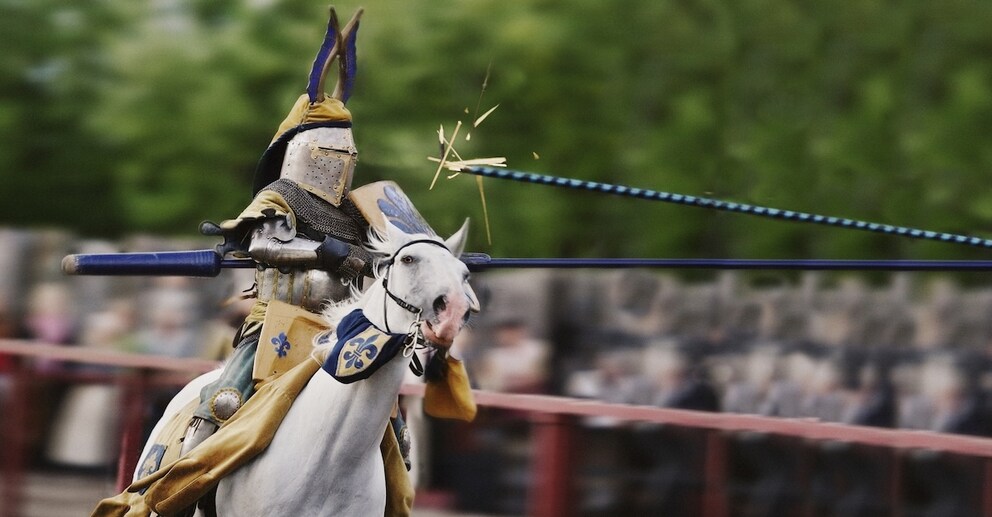
On the battlefields of the Middle Ages, they tower above, while the thunder of their hooves shakes the ground. After a victory, they stride triumphantly through the castle gates. In official jousting tournaments, daring heroes engage in epic battles on their backs. Large, magnificent, and brimming with power–that’s how we imagine horses in the Middle Ages. But a study shows that the armored horses weren’t as large as we think.
When Was the Middle Ages?
Pinpointing the exact dates is historically challenging and still debated in many lecture halls today. Various events could mark the beginning and end. Traditionally, the fall of the Western Roman Empire in 376 is considered the start, while the end of the Middle Ages is marked by the Reformation or the advent of the printing press. Different fields have varying dates, depending on the events relevant to their research. 1
What Was the Role of Horses in the Middle Ages?
Pulling loads, carrying knights, and delivering messages: Horses had many functions at the time. Their strong muscles made them useful for plowing fields on feudal estates. Horses are also known for their speed, and with proper endurance training, they could cover long distances. As a result, they were a crucial part of the communication and announcement network.
Moreover, they were indispensable as pack and carriage horses: They helped transport goods and chauffeured noble ladies and gentlemen. This was particularly important, as it was customary for kings to move from palace to palace without a fixed main residence. Horses were thus vital for maintaining a stable and consistent rule.2 3
Not least, particularly strong horses were an essential part of warfare. They had to be capable of carrying their knights along with the namesake armor.
Also interesting: How Cats Were Revered in Ancient Egypt
How Big Were Horses in the Middle Ages?
A research team led by Carly Ameen shared their findings, published in the journal “International Journal of Osteoarchaeology.” In the 2021 study, researchers analyzed 1,964 horse skeleton parts from England. The artifacts from 171 different locations date from between 300 and 1650 AD. The goal was to examine the bones for size, shape, and robustness (bone strength) and draw historical conclusions.
To obtain comparative values, the research team also measured 490 contemporary animals, including horses, ponies, donkeys, and mules. They included ten different types of bones. To find relative size differences, the team used the Log-Standard-Index (LSI) calculation. Through these calculations, they estimated the corresponding withers height. 4
Average Withers Height Was Under 1.48 Meters
The research team concluded that contrary to popular belief, the average withers height between the 5th and 12th centuries was under 1.48 meters. For comparison, according to the German Equestrian Federation (FN), the benchmark for distinguishing ponies from horses is 1.48 meters. So, by today’s standards, the horses from that period would be considered ponies. 5
It wasn’t until the 13th century that larger horses became more common. Exceptions were even proven to be as tall as 1.6 meters. From the late Middle Ages, researchers noted increasingly higher average sizes of horses, but also a broader size profile.

Shire Horse–The Largest Horse Breed in the World

Falabella–Have You Heard of the World’s Smallest Horse?
Breeding in the Middle Ages
Further interesting insights are based on the study of robustness. There were significant differences in the analysis of the fore and hind legs. During the High Middle Ages, researchers found that the hindquarters increased in robustness. This observation could indicate that animal selection through breeding was carried out during this time, aiming for particularly strong and load-bearing animals.
One of these breeds might be the so-called Destrier. Unfortunately, there is no consolidated research on this, so it can only be speculated that these horses were primarily bred as strong knight horses in the Middle Ages.
Where Does the Misconception Come From?
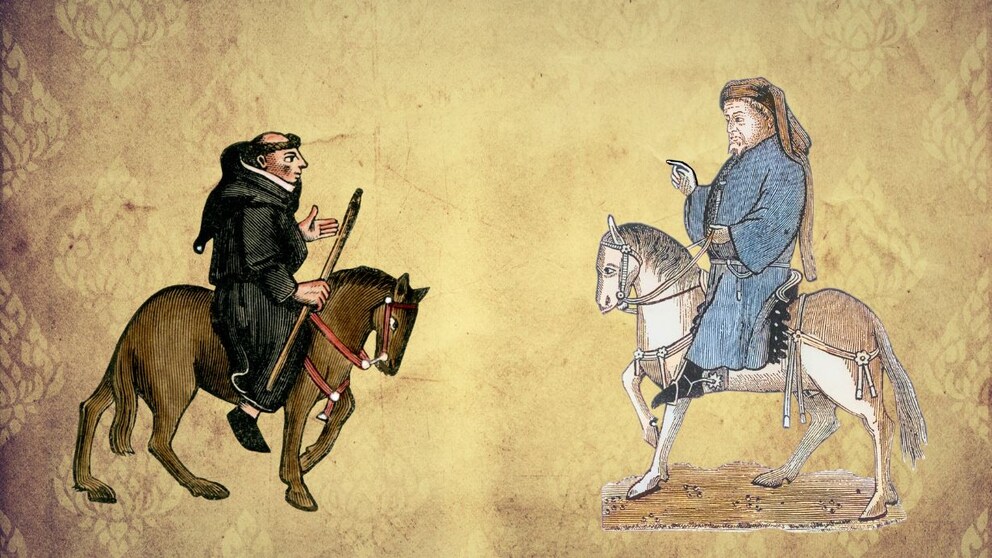
The answer to this question is not straightforward. Contemporary depictions from the Middle Ages actually show a different awareness. Often, you see large men on small horses. Thus, the Middle Ages itself provides us with a visual source. A study also found that, contrary to what might be assumed, men in the Middle Ages had an average height of about 1.73 meters. However, it was noted that this number fluctuated toward the end of the Middle Ages due to famine. 6
A cultural history article from the online journal Compendium Heroicum explained how narratives about horses have changed or been embellished. The team concluded that the perception of horses from a Western perspective is often imbued with heroic traits. Warhorses were both status symbols and companions of warrior heroes, while horses themselves emerged as independent heroes with bravery and personality. A turning point was the shift from warhorses to tournament or sport horses, leading to a more emotional portrayal of horses. 7
Additionally, depictions and reports about the Middle Ages often lead to misleading images. It is frequently perceived as the dark ages, although research has long argued against this view.