

June 5, 2026, 11:12 am | Read time: 4 minutes
Golden shimmering coat, athletic talent, and a history full of ups and downs: The Kinsky horse is now one of the rarest horse breeds in Europe. Once, these animals were coveted hunting horses of the Bohemian nobility. However, the breed was at times on the brink of disappearing forever.
Origin
The origins of the Kinsky horse lie in Bohemia, now the Czech Republic, where the Kinsky noble family had been breeding horses for centuries.
As early as the 18th century, horses were kept on the family’s estates for military and agricultural purposes. The Kinskys had a particular preference for light duns and palominos, which attracted great attention even then. However, the decisive step toward the modern breed was made by Count Oktavian Kinsky in the 19th century. He wanted to create a horse that was fast, enduring, and brave enough for the then-popular parforce hunts (mounted hunts) and steeplechases. To achieve this goal, he increasingly relied on English thoroughbreds.
According to legend, the actual breed history began with an unusually colored mare. When a palomino horse was not to be included in the thoroughbred studbook at the time, Count Kinsky decided to establish his own breeding line. This laid the foundation for the later Kinsky horses.
Over time, the animals developed into respected hunting and sport horses. They impressed with endurance, speed, and a pronounced jumping ability. After World War II, however, the breeding faced a severe crisis. Due to expropriations and the nationalization of many stud farms, the population drastically declined. At times, the breed was even on the verge of extinction.
Today, only about 1,000 Kinsky horses live worldwide, most of them still in their Czech homeland. This makes the breed one of the rarest warmbloods in Europe.
Appearance
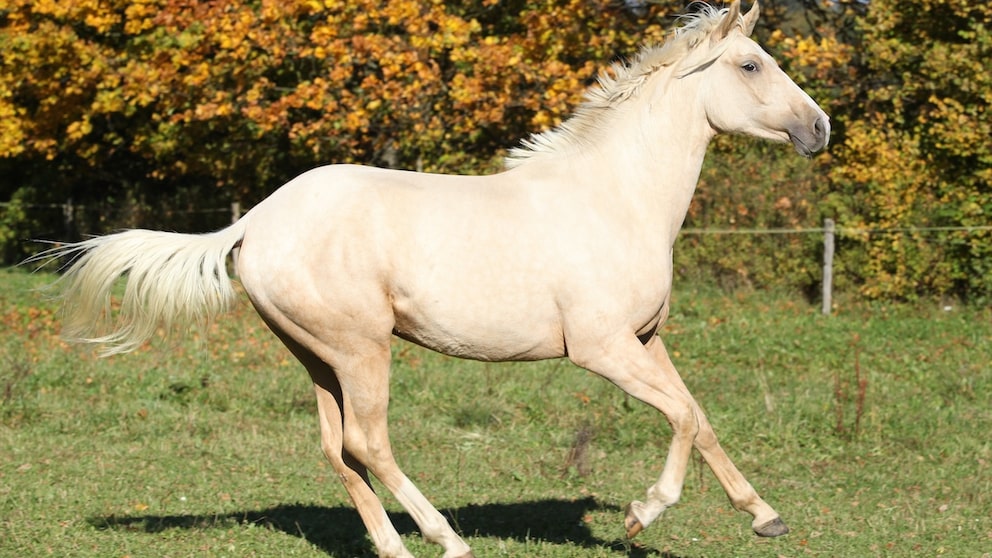
Kinsky horses are particularly noticeable for their extraordinary coat. Many animals have a golden coat color that shimmers intensely depending on the sunlight. Palominos and duns are common, but chestnuts, bays, grays, or blacks also occur.
With a height of about 160 to 170 centimeters, Kinsky horses are medium-sized warmbloods. They are characterized by a noble head with large eyes, a long neck, and a harmonious, athletic build.
Character & Temperament
Kinsky horses are considered attentive, intelligent, and willing to perform. At the same time, they are described as pleasant to handle. Due to their thoroughbred component, they bring temperament and energy, but today they are considered much more balanced than their historical ancestors.
Those who engage with these sensitive animals and build trust will gain a reliable partner for sport and leisure.
Gait & Discipline
Originally, Kinsky horses were bred for hunting. Accordingly, they possess great endurance, speed, and a pronounced jumping ability.
They are particularly successful in show jumping and eventing. Here, they benefit from their agility, courage, and willingness to perform. They can also impress in dressage. Their three basic gaits are considered balanced, rhythmical, and comfortable to ride.
In addition, Kinsky horses are often used as leisure horses. Thanks to their cooperative nature and versatility, they feel comfortable both in the riding arena and on trail rides.
Proper Care & Maintenance
Like all horses, Kinsky horses need sufficient exercise and contact with other horses. As social herd animals, they benefit from group housing with daily pasture or paddock access.
Regular exercise is particularly important, as these athletic horses need activity and variety. At the same time, sufficient rest periods should be ensured.
Daily care includes thorough grooming before training and regular checks of hooves, legs, and joints. The silky coat does not require special care but looks particularly beautiful with regular grooming.
How the Trakehner Evolved from Military Horse to Dressage Star
These are the rarest horse breeds in the world
Nutrition
The basis of their diet should be high-quality roughage such as hay or grass. Since Kinsky horses are considered relatively easy keepers, concentrate feed should only be given according to actual energy needs.
Especially horses that are heavily trained often require an adjusted diet. In case of doubt, feeding should be coordinated with a veterinarian or a feed consultant.
Susceptibility to Certain Diseases
Specific hereditary diseases that occur exclusively in Kinsky horses are not yet known. However, like other warmbloods, they can suffer from musculoskeletal disorders, metabolic problems, or colic.
Appropriate care, regular exercise, and a balanced diet significantly contribute to maintaining the horses’ health in the long term.
Kinsky Horse at a Glance
- Character: intelligent, attentive, willing to perform
- Height: 160–170 centimeters
- Coat color: often palomino or dun, also chestnut, bay, gray, or black
- Gait: rhythmical, enduring, and lively
- Discipline: jumping, eventing, dressage, leisure
- Special features: rare horse breed with a characteristic golden shimmering coat