

May 12, 2026, 3:09 pm | Read time: 7 minutes
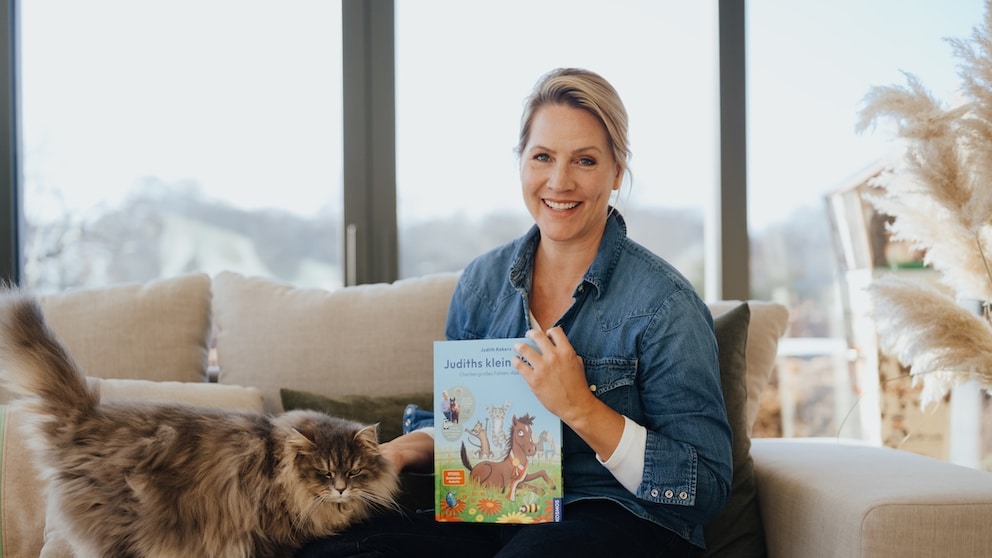
Most people know Judith Rakers from the Tagesschau as a professional news anchor. However, few are aware that she spends her time away from the studio among neighing horses, clucking chickens, and gardening. It’s a life that is intentionally slowed down and marked by a close connection to nature and her animals. In her book series “Judith’s Little Farm,” she gives children a playful insight into life with animals. In an interview with PETBOOK, the journalist shares how much we can learn from horses about trust, responsibility, and respectful interaction.
Why Horses Are Like a “Mirror” of Humans
Horses react sensitively to body language and mood. What fascinates you most about working with them?
“They are so gentle and strong at the same time. That fascinates me again and again. They can pick up an incredible pace, be so wild and powerful, yet they can feel a tiny fly landing on their coat. They might have just been fighting with their peers in the pasture and the next moment gently stroke their human’s cheek with their muzzle.
They are very empathetic creatures that always function like a mirror of their surroundings. If a person is impatient or hectic around them, that mood transfers to the horse just as calmness and serenity do. Therefore, when dealing with horses, you quickly learn to put your own moods aside. Harmonious interaction takes priority.”

“You Should Never Betray a Horse’s Trust”
What do you learn about yourself when you work regularly with horses?
“You get to know yourself very well because the horse reflects your behavior immediately, often before you even realize it. You learn that anger only causes resistance, that love comes back twofold, and how much can be achieved with kindness and reliability.
You also learn to be clear about what you want. A horse is more likely to follow a 10-year-old child than an adult bodybuilder if the child leads clearly and confidently and knows where they want to go. Working with horses has nothing to do with strength but with clarity of mind.”
What is particularly important to you in dealing with horses, especially regarding respect, trust, and responsibility?
“You should never betray a horse’s trust. If they find their human reliable, they feel safe and are happy to follow. Horses are herd animals and always look to the lead animal for guidance. Ideally, a human can also provide the security of a lead animal. Respect is important on both sides.”
Why You Can Learn a Lot About Life from Horses
What can children—and perhaps adults—learn from interacting with horses for their own lives?
“So much that can also help them in life: not taking out your moods on others, prioritizing togetherness, taking responsibility, gaining clarity of mind, and being brave. Because despite all the harmony between rider and horse, sometimes things get wild when you’re galloping across a stubble field and a deer suddenly jumps out of the woods (laughs).
When jumping, you also learn phrases like ‘Don’t look at the obstacle. Look at where you want to land.’ A phrase that, in my opinion, is so important for life. Or if you fall off, the old riding wisdom applies: ‘Get back on immediately, or you’ll develop fears.’ These guidelines from working with horses have accompanied me since I was 6 years old and they also help in life.”
“Judith’s Little Farm”–Between Neighing Horses and Clucking Chickens
What values do you want to convey to children through your story?
“In my book series ‘Judith’s Little Farm,’ I tell the stories of my cats, chickens, and horses and impart knowledge on topics like nature, gardening, vegetable cultivation, and nutrition. It’s about values like tolerance, friendship, and respect for nature.
My animals are the identification figures for the children and take them along in the garden, where they also meet moles, hedgehogs, squirrels, snails, and more. The children learn a lot about the habits and characteristics of different animals in the books. They also learn how ecological vegetable cultivation works and how to keep chickens in their own garden.
In the first volume, it was also about my horses: My foal Charlie was born in the story, while chicks hatched in the chicken coop. This allowed me to convey, in passing, which other animals in the garden also hatch from eggs and which are mammals.
In volume 3, my foal Charlie even has a leading role, as he prepares for the foal show, and the young readers learn in passing what horse care involves and how horses think. These are exciting stories that convey a lot of knowledge in a very loving way.”
“I Really Enjoy This Feedback”
Why is it important to you to bring young readers closer to knowledge about horse care and agriculture?
“If we all learn early on how magical the real world out there is, then we are also ready to protect it. I’m not against digital technology and a smartphone in the children’s room, but I believe we shouldn’t neglect experiencing the real world out there. And it’s not just about developing respect and love for nature. Children who only sit in their rooms playing computer games miss out on a lot of happiness and self-experience.
My children’s books spark interest in experiencing the real world outside the front door. They make you want to explore the garden and engage with vegetables and healthy eating.
I receive photos from 8-year-old readers in the garden, explaining to their parents how to best protect lettuce from snails because they learned it during storytime at daycare. Or drawings of Günter the mole, showing how he builds tunnels underground because the children have suddenly developed an interest in what it looks like under the garden soil. I really enjoy this feedback.”
The 16 Most Famous Animals in World Literature
Isabell Horn and her cat even share the bed.
What Is Behind the Foal Show?
Many know Charlie from your real life. How much personal experience is in this book?
“The foal show and my futile practice for it with the little rascal actually happened in reality just like that (laughs). I even documented it on Instagram at the time.
Actually, the core of the stories is always real, but I embellish reality with dialogues and imagination. Even Günter the mole really exists. It’s always a real aha moment for the children when they see the photos of the real animals on the last double page of the book and understand that this wonderful world out there really exists.”
“My Horse Is a Friend and Family Member”
Many people underestimate the effort behind proper animal care. What do you think is essential?
“It’s different for every animal. And the children learn that in my books too: Chickens should have a coop and enough space to roam. You should take protective measures against their natural predators, like hawks and foxes. Hedgehogs and robotic lawnmowers don’t get along well, and horses need a lot of care and constant feeding. I convey all this in my books.”
Equestrian sports are often criticized—regarding performance pressure and animal welfare. How do you perceive this discussion?
“In parts, it’s very justified. I believe every rider faces the decision at some point whether the horse should primarily be a friend or a sports tool that has to perform.
For me, it was always clear: My horse is a friend and family member. We experience adventures together that are fun for both of us.”
If you had one wish: What experience should everyone have with a horse at least once?
“I wish everyone could feel the strong emotional connection that can develop between a human and a horse just once. How happy it makes you when you gallop across a field hands-free and feel that the horse is having just as much fun as you are. Or how comforting it can be when the horse gently seeks closeness because it senses that you’re sad. Animals, in general, are so good for emotional balance. And they give you so much—if you allow it.”