

September 4, 2025, 11:48 am | Read time: 5 minutes
For many horse owners, the diagnosis is a nightmare: equine herpes. Sometimes an infection occurs quietly and unnoticed. However, the virus can also lead to significant neurological disorders or even death. In the event of an infection, utmost caution is required–the disease is highly contagious. PETBOOK explains the symptoms, causes, and treatment.
Equine herpes is a highly contagious viral disease. It is abbreviated as EHV, which stands for equine herpesvirus. There are five different types of viruses, each with varying symptoms and disease progression:
- EHV-1: Equine Herpes Myeloencephalopathy (EHM)
- EHV-2: Keratoconjunctivitis, Rhinitis, Pharyngitis
- EHV-3: Coital Exanthema
- EHV-4: Rhinopneumonitis
- EHV-5: Keratoconjunctivitis, Rhinitis, Pharyngitis
The EHV-1 and EHV-4 types are the most widespread globally. Horses can infect each other through droplet infection. Humans can also be silent carriers, although the virus is harmless to us.1
Signs and Symptoms of Equine Herpes
Depending on the virus type, there are various symptoms. However, there are also cases with a so-called subclinical course of the disease–in other words, “symptomless.”
Overview of Symptoms
- Fever
- Loss of appetite
- Cough
- Nasal discharge/Eye discharge
- Abortions
- Lethargy
- Nervous system damage
In cases of EHV-4 infection, respiratory issues or fever spikes are more common. In contrast, a broader range of symptoms is observed with EHV-1 infection. Damage to blood vessels can lead to circulation problems resembling a stroke. The hind limbs, bladder, and rectum can suffer significant damage, resulting in urinary and fecal issues or even gait disturbances. Respiratory symptoms, as seen in Type 1, are also possible. Additionally, abortions, or miscarriages, can occur.2, 3
Reasons for Herpes Transmission
Like many other viruses, herpesviruses are transmitted through droplet infection. About 85 to 90 percent of all horses have had contact with the virus at least once. Humans and objects can also be carriers. This is a significant challenge, especially regarding the virus’s persistence. It can survive on objects for up to 48 days under favorable conditions–even months at 4 degrees Celsius.
Important for all owners: 80 to 90 percent of all horses are latent, or silent carriers. Once a horse is infected, the virus remains in an inactive form in the animal’s immune system and can still be transmitted to other horses. Infected mares can also infect their foals in the womb, as the amniotic fluid and placenta are highly contagious.
A particular reason is that inactive EHV viruses can be reactivated by stress. A good balance of training and leisure can be more important than one might think.4
How Is Herpes Diagnosed in Horses?
Since the disease can even lead to the death of the animals, you should handle potential symptoms sensitively. It’s better to make one extra visit to the veterinarian. Especially since the indicators of the disease appear at different speeds. Normally, the incubation period for Types 1 and 4 is four to seven days. However, EHV-1 symptoms sometimes appear only after weeks or even months. Such long incubation periods are often associated with foal miscarriages.
If herpes infection is suspected, immediate action should be taken. The affected horse should be isolated to prevent infecting other horses. Additionally, the entire stable should be sealed off, with no other animals allowed in or out. A sterile environment should be maintained, including disinfecting oneself after contact, as well as equipment and clothing.
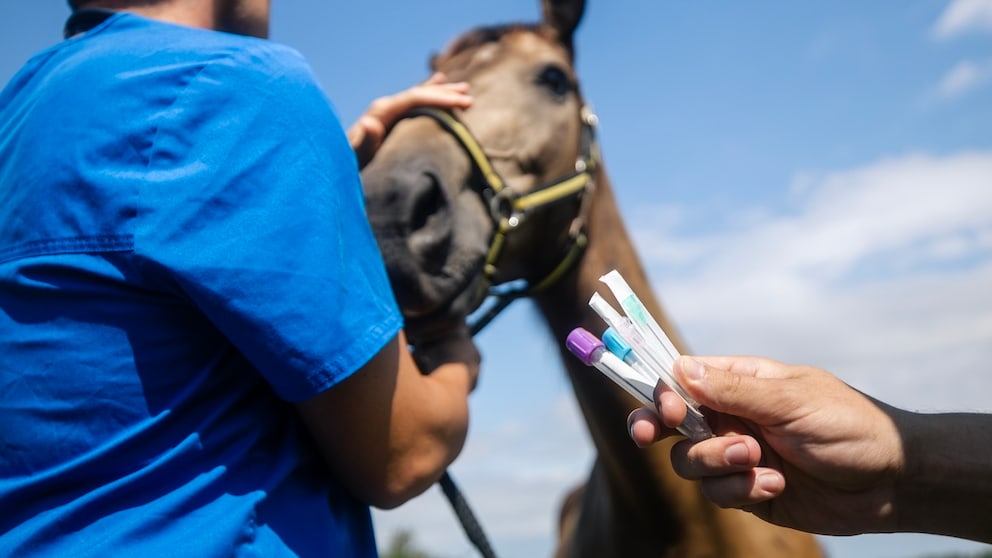
At the same time, you should promptly consult your veterinarian. They will then conduct laboratory tests by taking nasal swabs or blood samples. If the suspicion is confirmed by the lab, the veterinarian will immediately proceed with treatment. In Germany, equine herpes is not subject to mandatory reporting.
Treatment of Equine Herpes Takes Time
Unfortunately, the virus cannot be directly treated, but symptoms can be managed. Veterinarians often administer anti-inflammatory drugs, supportive medications for the immune system and cardiovascular system, vitamin B, and antibiotics in the case of an additional bacterial infection.
Affected horses are kept isolated, with a quarantine of at least 28 days recommended. During the infection, weak limbs may occur: horses may struggle to stand on their legs and are therefore supported with a harness.
For the animals themselves, a case of illness is psychologically very stressful. They are herd and flight animals: they enjoy company and actually need plenty of exercise to feel secure. In isolation, neither is available, so owners should spend a lot of time with their horses. Cuddling and grooming sessions help ease the path to recovery.

Why the Borna Virus Is So Dangerous for Horses

The 7 Most Common Cat Diseases
Prognoses Vary
For an individual prognosis, you should definitely consult with your veterinarian. Each horse reacts differently to the virus. However, the healing process can be somewhat assessed based on the EHV type.
The symptoms of rhinopneumonitis, or the EHV-4 type, can generally be well treated. However, it’s important to know that the healing process is very slow and can take a long time. Even if the animal is symptom-free, it should be gradually reintroduced to movement.
It’s a bit more complicated with EHV-1 equine herpes myeloencephalopathy. Twenty to 50 percent of affected animals show neurological symptoms, which are rather difficult to treat. Stroke-like circulation disorders can also occur, which are often not particularly treatable.
How Can Equine Herpes Be Prevented?
The Standing Committee on Vaccination in Veterinary Medicine (StiKo Vet), consisting of researchers and veterinarians, explicitly recommends vaccination against the equine virus. However, according to the German Equestrian Federation (FN), there is currently no mandatory vaccination.
A vaccination consists of three shots for basic immunization. In foals, the first vaccination should start at six months. The second follows after four to six weeks, and the third with a longer interval after four to six months. From that point, a booster shot every six months is recommended for adequate protection. Unfortunately, infection cannot be ruled out despite vaccination. However, the course of the disease can be much milder.5 6