

December 6, 2025, 2:54 pm | Read time: 4 minutes
A hiss, the smell of burnt skin—and a foal that never forgets. For some, it’s a lived tradition; for others, pure animal cruelty: branding horses. PETBOOK explains what’s behind it and why the practice is still not completely banned today.
What is a Brand?
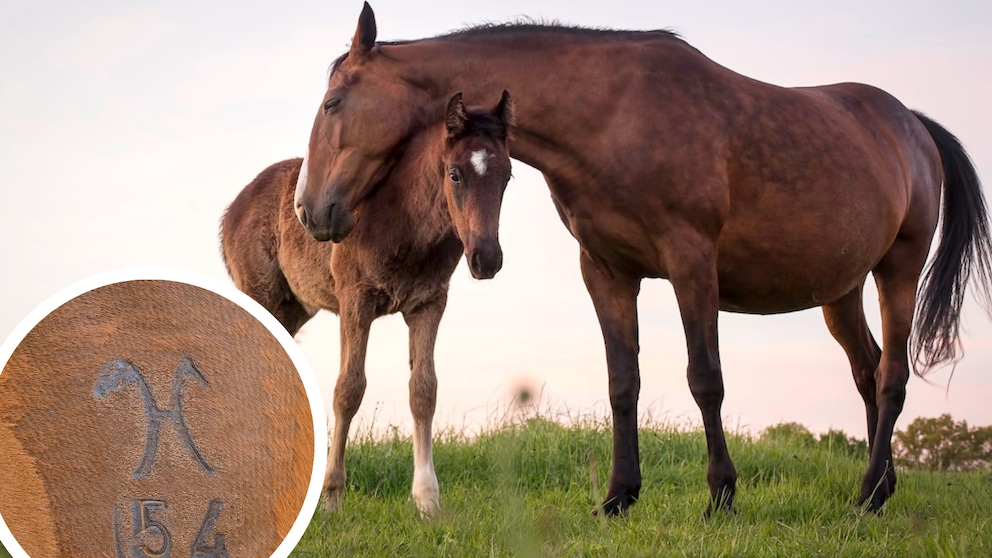
A brand is a type of marking intended to make identifying the horse easier. An iron stamp is heated to 80 degrees Celsius and pressed onto a shaved area of the foal.
Each breed has its own symbol, which is branded onto the horse’s left hindquarter. There is also a breeder’s brand symbol: This brand is applied to the horse’s right hind leg.
Under the brand on the horse, there is usually a number. This can provide information about a studbook or indicate the stud farm or owner. 1,2
Do Horses Feel Pain During Branding?
When a horse is branded, it typically happens to foals at the age of three to five months. The branding is done without local anesthesia. Do they feel pain? If you’ve ever accidentally touched a hot stove, you know the answer. If you’re lucky, you get away with painful blisters. For young foals, it’s similar—except they often suffer third-degree burns. This destroys the skin cells and nerve endings of these sensitive animals.
After branding, it only slowly gets somewhat better. Such wounds take a long time to heal and require intensive care to prevent infections. It’s especially grim for gray horses. Due to their light coat color, the brand is hard to see after healing, so the hot iron is often pressed into their skin for painfully longer. Horses show a clear defensive posture. 3
Tradition Meets Animal Welfare: The Debate Over the Hot Iron
The discussion about branding has been around for quite some time. The debate has been primarily led by two main parties. On one side, breeder associations—for them, the process of hot branding was a tradition passed down from generation to generation on stud farms. On the other side, animal rights activists and the Federal Veterinary Chamber opposed it: They believe this tradition is unnecessary and offers no benefit to the animal other than pain. In 2012, voices on both sides grew louder. Animal rights activists urged breeders to abandon branding and emphasized the urgent need for a legal adjustment for the welfare of the animals. Yet, no agreement was reached. 4
Banned, Yes or No? A Clear Maybe!
On January 1, 2019, a legal change regarding horse branding took effect. The law under the Animal Welfare Act § 6 was both progressive and confusing: Traditional branding without anesthesia was banned. With the exception that if the horse receives local anesthesia, it may still be branded.
So far, so good—but now it gets really confusing. In Germany, there is no suitable anesthetic for horse branding. This means in practice that foals and horses cannot be branded as long as there is no adequate anesthetic available.
Why the Hot Iron is Long Overdue
For some people, the “horse branding” debate was rather unnecessary. When it reignited in 2012 and then again in 2018/19, a solution had long been available: On January 1, 2009, the general chip requirement for horses was introduced. This includes the life number, also known as the identification number. It is linked to the horse passport, owner, and registration. Thus, a brand is essentially unnecessary. 5

Why I Would Never Ride in a Horse-Drawn Carriage Again

Is Horse Riding Considered Animal Cruelty? An Expert Weighs In
Why Some Owners Tattoo Their Horses’ Lips
Branding a horse’s hindquarters is quite outdated. But this doesn’t apply worldwide. Some horse racing commissions required racehorses to be marked with a code consisting of numbers and letters. Not with a chip, but with a lip tattoo. This fades after a short time—usually after three to five years. 6
Glowing Iron, Burning Conscience
Brands may once have been a symbol of origin and pride—today they symbolize an outdated practice. Modern identification methods like microchips or DNA databases make the hot iron simply unnecessary. What remains is the question of whether tradition can justify an animal’s pain. In a time when animal welfare and technology can go hand in hand, the answer should be clear: The welfare of the horse must always come first.