

July 23, 2025, 3:11 pm | Read time: 5 minutes
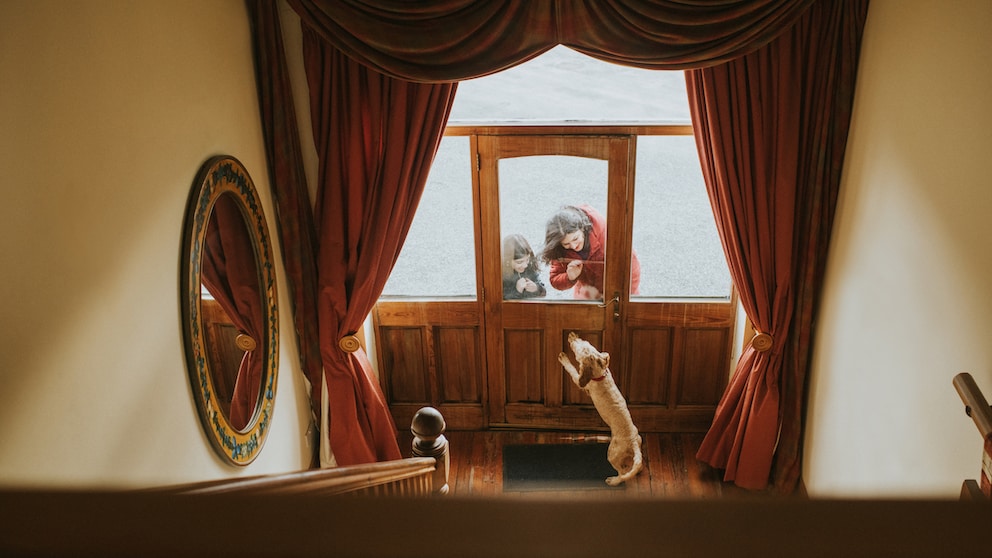
The doorbell is the epitome of excitement for many dogs: Something is happening, someone is coming, and there might be attention or even a threat. Our mistakes often start in everyday life: The dog is usually allowed to go to the door, perhaps even encouraged with “Look who’s here!” And then we suddenly expect peak performance under maximum excitement. Having visitors can quickly become stressful for dog owners …
A classic mistake: We train “sit” and “stay” at the dog park, but never in real life. A dog cannot generalize that “stay” also applies when Grandma is at the door with cake and everything smells exciting.
Why Your Dog “Doesn’t Listen”
Your dog doesn’t listen because he’s pumped with adrenaline. His reaction isn’t a decision against you but almost a reflexive behavior. In such moments, the brain operates more in survival mode. This means: Anything not practiced, automated, and positively stored won’t be recalled under stress.
It’s like with humans: When you have stage fright, you suddenly can’t remember the presentation you’ve practiced for days. Dogs experience something similar when the doorbell rings. What you should train instead:
1. The Resting Place as a Safe Anchor
Your dog needs a clear alternative to the previous action. This means: A fixed resting place associated with calm and security. Goal: The dog hears the bell and goes to his place.
- Practice the place first without distractions.
- Reward calm lying down.
- Then introduce stimuli: steps to the door, door handle, doorbell sound from a phone.
Tip: Use a special snack or chew toy only for this place—this gives the spot a positive meaning.
Also interesting: 7 Phrases That Trigger Dog Trainers—and What’s Really Behind Them
2. Doorbell Training in Mini Steps
- Record the doorbell sound or ask friends to practice.
- Train the sound separately from actual visits.
- Doorbell = dog goes to the mat = reward.
- Gradually increase the reaction, for example, with a visitor dummy.
Plan this training like workout sessions—regularly, briefly, and with a clear focus.
3. Timing Is Everything
Praise before the dog runs off. Train with a leash or barrier to ensure success. Stay calm—your stress transfers immediately.
A small trick: Send the dog to the place before you go to the door. Prevention beats correction.
4. When It Gets Serious: Management
Until the training takes effect:
- Leash your dog before going to the door.
- Use a room divider or baby gate if necessary.
- Ask visitors to remain calm.
- Avoid hectic “Sit! Off! Stay!”—less is more.
5. Tailored Rewards
Many dog owners underestimate how important the right reward is. Not every dog loves treats equally. Find out what your dog really enjoys in the situation—it could also be a short play sequence after calm behavior. Or simply your attention, a calm look, a smile, a gentle “Well done.” The more individualized the reward, the more sustainable the training success.
6. Deliberately Stage Visits
Instead of waiting for the next spontaneous visit, create practice situations:
- Invite friends specifically who will cooperate.
- Plan short visit scenarios with clear role distribution.
- Let the visitor enter only when your dog is calm.
- Repeat this regularly—better 5 minutes meaningfully than 30 minutes of chaos.
What You Shouldn’t Do
- Yelling or spraying with water—this increases excitement.
- Repeatedly calling “Stay!”—without success, your dog learns: The word is meaningless.
- Simply ignoring the dog—in this case, it’s not training but insecurity.
- Excessive expectations—your dog is not a robot.
From Practice – Example Luna
Luna, a three-year-old Labrador, went wild with every visit. Her owner Nina had tried everything: scolding, holding back, even calming music. Nothing helped.
We started with a simple exercise: a mat next to the dining table, daily training with the doorbell sound from a phone. After four weeks, Luna could calmly go to her mat with the real doorbell—albeit with leashed support.
After another two weeks, Nina stood relaxed at the door while Luna stayed calm in the background. Not perfect, but practical—and that’s the most important step.
Today, about three months after starting training, Luna’s behavior has changed sustainably. She no longer automatically runs to the door but looks at her owner as if to say, “Are you handling this or should I?”—a sign of true cooperation.

Dog Pulling on the Leash? Why It’s Especially Dangerous in Fall

Why Many Dogs Are Anxious During Fall Walks
Frequently Asked Questions from the Community:
How Long Does the Training Take?
It depends on the dog, the history, and the training intensity. Initial improvements often appear after 2–4 weeks. For sustainable changes, plan for 3–6 months.
Should I Train Differently with Multiple Dogs?
Yes. Conduct the training with each dog individually at first. Once each dog knows their task, they can train together.
What If My Dog Reacts Aggressively to Visitors?
Then you should seek professional guidance. Aggressive behavior can have many causes, such as bad experiences or territorial insecurity.
Conclusion
A dog that goes wild at the doorbell is not a problem dog but a dog that needs help. The good news: You can change that—with clarity, patience, and training. Visits should be something pleasant—for everyone involved!
And remember: Dogs are not disobedient—they are overwhelmed. Understanding this is the first step to real training.