

April 20, 2026, 7:07 am | Read time: 5 minutes
Dogs and their owners are often quite similar, as is well known. However, in one aspect, we differ quite significantly: our four-legged friends clearly have different tastes. Some dogs, for example, have a preference for eating dirt or soil. But why do they do this? And is it dangerous or even a warning sign? The answer to these questions lies somewhere in between.
Why Do Dogs Eat Soil or Dirt?
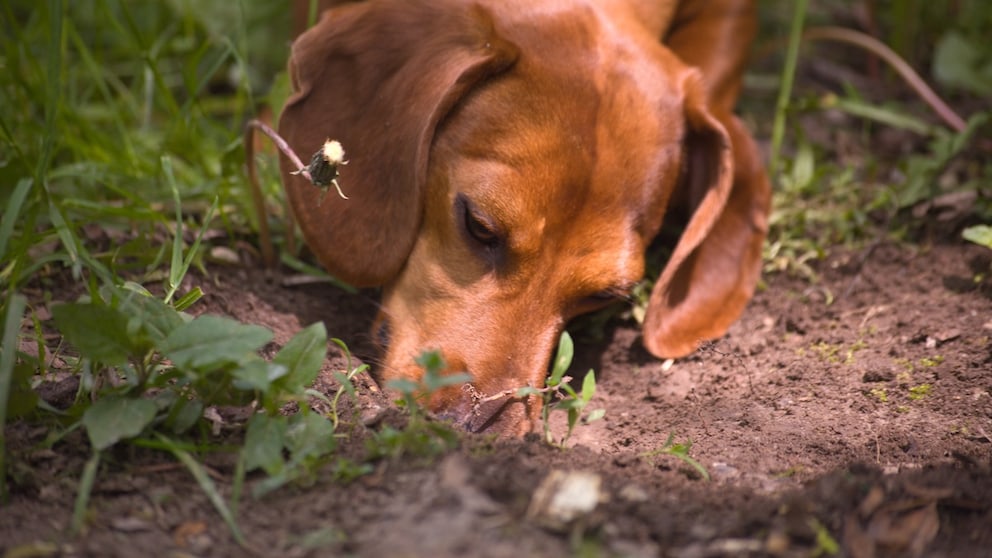
My dog Rudi is a real–sorry Rudi, no offense–“dirt pig.” As soon as I open the door to the terrace, he trots onto the lawn, sniffs a particular spot, and starts eating soil with relish.
When dogs eat soil, it can be for various reasons. Not all are due to (bad) taste. Sometimes, serious causes like a nutrient deficiency or an imbalance in their diet can be behind this taste deviation. In particular, a calcium deficiency or a lack of B vitamins can increase the appetite for dirt. Other medical causes include gastrointestinal issues, parasites, or anemia.
The reason your dog puts dirt in its mouth or even eats it might also lie in its daily life and behavioral or environmental factors. Boredom, stress, or insufficient activity can be reasons why your dog happily and proudly picks up horse manure or duck droppings from the ground during a walk, as is often seen in younger dogs.
1. Deficiencies: Minerals, Vitamins, Nutrients
Dogs need–like all living beings–a balanced diet. If important minerals like iron, calcium, or other trace elements are missing, some dogs instinctively look for alternatives–and soil can (theoretically) contain such substances.
Especially if the regular food is of poor quality or the daily ration is too small, this can be a reason for eating soil and dirt.
2. Medical Causes
Diseases, such as anemia, can also make dogs crave soil and dirt. Anemia is often associated with parasite infestations (such as worms) or internal bleeding; some dogs try to compensate for these missing nutrients by eating soil.
Even with gastrointestinal problems like gastritis or digestive disorders, dogs sometimes instinctively try to soothe their stomachs with soil and bind toxins.
If you notice that your dog suddenly starts eating soil regularly, although it didn’t do so before, this may be a signal that something in the body is out of balance. In this case, you should have the behavior checked by a veterinarian.
3. Stress, Boredom, Lack of Activity
Dogs are social animals with a need for movement and mental engagement. If they are not sufficiently occupied, such as through walks, play, or training, eating soil can serve as an outlet: eating dirt out of boredom or nervousness.
Separation anxiety or insecurity can also cause stress, which manifests in unusual behaviors like chewing or eating soil.
4. Curiosity or Instinct
Not everything serious is behind eating soil. Some dogs–especially when they are young or curious–simply try everything while exploring the world and also wonder, “What does soil taste like…?”
5. Intensely Perceiving Stimuli
You might not need to interpret your dog’s bizarre eating behavior further, as it is sometimes completely harmless–for example, if the ground carries certain smells or residues that stimulate your four-legged friend. These can be scents from animal paws, past barbecues, or carcasses that your dog wants to perceive more intensely by ingesting the soil.
What Dangers Can Eating Soil Bring?
Eating soil is not as harmless as it may seem at first glance and can even become dangerous. Possible risks include:
- Gastrointestinal Problems: Soil can contain stones, small branches, or other foreign objects that your dog swallows while chewing. This can lead to constipation or, in the worst case, a bowel obstruction.
- Parasites and Pathogens: Soil often contains worm eggs, bacteria, or other pathogens that can make your dog sick.
- Toxins or Harmful Chemicals: Especially in unfamiliar gardens or parks that have been fertilized or treated, soil can contain dangerous residues like pesticides, fertilizers, or chemicals.
- Dental and Oral Damage: Small stones or hard soil components can damage your dog’s teeth and irritate the mouth, throat, and intestines.

When Dogs Suddenly Eat Objects: Causes and Treatment of Pica Syndrome

Dog Eats Treats but Refuses Food? Here’s Why
When You Should Be Alert as an Owner
As a dog owner, you will very likely experience your dog occasionally trying a bit of soil. Especially with curious or young animals, you can remain quite calm. However, you should take a closer look in the following cases:
- Frequent or Suddenly Starting to Eat Soil: There may be a nutrient deficiency.
- Accompanying Symptoms like Lethargy, Loss of Appetite, Vomiting, Diarrhea: These can indicate health problems (such as parasites, gastrointestinal issues, poisoning).
- Your Dog Eats Large Amounts of Soil or Solid Chunks: There is a risk of a bowel or stomach blockage, which can be life-threatening in the worst case.
In such cases, a visit to the veterinarian is urgently recommended. They can perform a blood test, stool analysis, or gastrointestinal diagnostics to find possible causes and rule out diseases.
Conclusion
There may be more behind your dog’s taste for soil or dirt than you initially suspect. Besides harmless causes like instinctive curiosity or boredom, eating dirt can also be an attempt to compensate for a nutrient deficiency or even indicate health problems.
A one-time “slip” is usually harmless, but if it becomes a habit or your dog is not feeling well, it is important not to simply accept the eating of soil–but to look for causes and, if necessary, have it medically clarified.
In Rudi’s case, the reason was harmless: In the summer, the grill was on the lawn area that always magically attracts him. However, we only realized this after a visit to the veterinarian.