

September 24, 2024, 10:07 am | Read time: 4 minutes
The Karelian Bear Dog is a Finnish breed that is almost unknown in this country. In its homeland, it has been–and still is–used for big game hunting. Its keen sense of smell, tenacity, and courage make it a popular hunting companion.
Origin
The Karelian Bear Dog hails from Finland and is called “Karjalankarhukoira” there. It is one of the very old Nordic breeds and was bred in regions of the Bering Strait, located at the far edge bordering Russia. Early on, people noticed its talent as a reliable hunting and guard dog and used it for these tasks. This dog was robust enough to survive harsh climates and brave enough to hunt big game like bears and moose. However, its specialty lies in tracking prey and leading hunters to them. According to tradition, the Karelian Bear Dog was systematically bred only from the 19th century onward.
Appearance & Coat
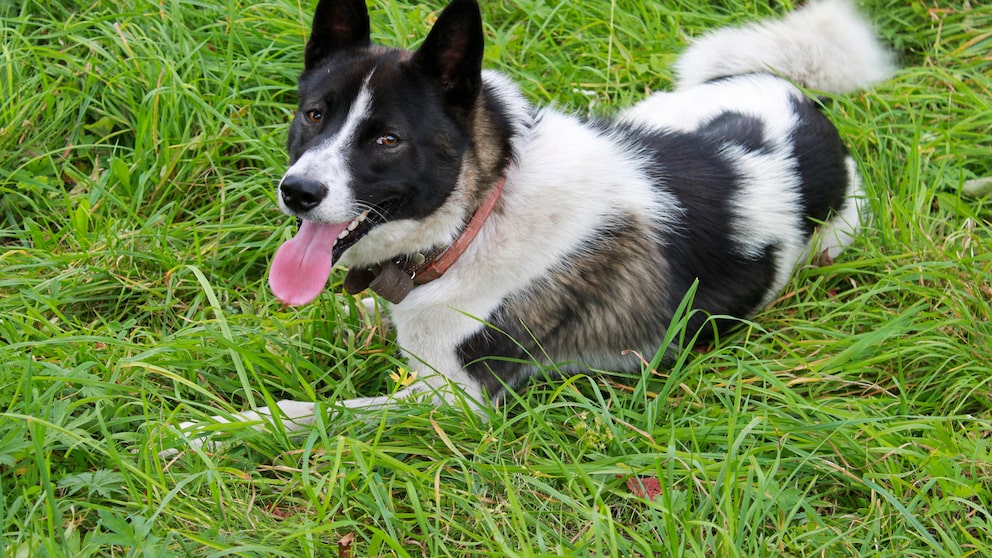
The Karelian Bear Dog is a medium-sized dog with a compact build, reaching a shoulder height of about 21 to 24 inches. It weighs approximately 44 to 66 pounds. Females are slightly smaller and lighter than males. The coat of the Karjalankarhukoira is predominantly black with typically white markings on the chest, neck, paws, and tail tip. Its erect, triangular ears give the bear dog a perpetually alert expression. The tail is medium-length and set high.
Character & Temperament
In terms of character, the Karelian Bear Dog is a hunting dog through and through. It is known for its strong will, independence, and courage, which do not deter it from confronting relatively large animals like bears and moose. Although it is generally more of an independent type, it can still form quite close bonds with its humans. It is loyally devoted to them and has a pronounced protective instinct, which is why it is often used as a guard dog. However, it is not suitable for beginners or as an apartment dog. The Karelian Bear Dog can be aggressive toward other dogs, but it usually does not behave this way toward people. It tends to be more reserved to suspicious with strangers.
Training
The Karelian Bear Dog requires not only consistent leadership but also plenty of exercise. Living in a small city apartment would not meet the needs of this dog. Since this breed is very independent and was bred to make autonomous decisions during hunts, good training should begin early. Especially the recall command should be established early on, as problems can arise if its hunting instinct takes over. Owners should also work on socialization early and have extensive dog experience to assert themselves with this brave and confident dog.
Care & Maintenance
Space, plenty of exercise, and a task–these are essentially the three main points the Karelian Bear Dog needs for a happy home, alongside loving and consistent handling. In addition to physical activity, this dog also wants to be mentally challenged and stimulated.
Regarding grooming, the Karjalankarhukoira is quite uncomplicated. The soft coat should be brushed once or twice a week (more frequently during shedding) to remove dirt and loose hair.
Nutrition
Fundamentally, this agile and muscular dog requires high-quality food with a high meat content. However, the energy consumption of a hunting dog can vary greatly and depends heavily on its tasks. For example, a tracking dog covers many miles and thus naturally consumes a lot of energy. While a dog working in water may not cover such distances, it still requires significant physical exertion, which should be considered in the amount of food provided.
Mountain Cur: This Hunting Dog Belongs Only in Experienced Hands
The Irish Glen of Imaal is the rarest terrier in the world.
Susceptibility to Certain Diseases
The Karelian Bear Dog is generally considered a healthy breed, with no breed-specific diseases known so far. However, potential owners should be aware that dogs of this breed are quite sensitive to heat. Therefore, they should not be exposed to the sun without protection on hot days and should always have access to a cool and shady spot.
The Karelian Bear Dog at a Glance
- Character: brave, independent, strong-willed
- Size: 21–24 inches
- Weight: 44–66 pounds
- Coat: medium-length with dense undercoat
- Exercise Needs: very high
- Average Lifespan: 12–13 years
- Special Considerations: should only be in experienced hands, such as those of a hunter