

July 28, 2025, 3:45 am | Read time: 5 minutes
The Elo is not an ordinary dog–it’s the result of an ambitious breeding project with a clear goal: a stable, family-friendly companion that is both robust and easy to care for. Since its inception in the 1980s, the Elo has developed into a popular, yet still not FCI-recognized breed, available in two size variants and different coat types.
Origin
The Elo was created in 1987 in Germany–specifically in Dedelstorf, Lower Saxony–by the breeder couple Marita and Heinz Szobries. Their goal was to create a calm, child-friendly, and largely bark-free family dog. The foundation of the first breeding line included Bobtail, Chow-Chow, and Eurasier. The new breed was initially called “Eloschaboro,” later shortened to “Elo” and trademarked. This trademark protection also serves to prevent uncontrolled breeding under the Elo name.
In the mid-1990s, a smaller Elo variant was developed, incorporating breeds such as Pekingese, Japanese Spitz, and Kleinspitz. The main focus was always on a balanced temperament and robust health, while coat type and color were secondary. In 1993, the “Elo® Breeding and Research Association e.V.” was founded in Braunschweig. To this day, the Elo is not recognized by the FCI or the VDH, but it is supported by several dog associations. Breeding remains in the hands of a close network of certified breeders, ensuring high-quality standards.
Appearance & Coat
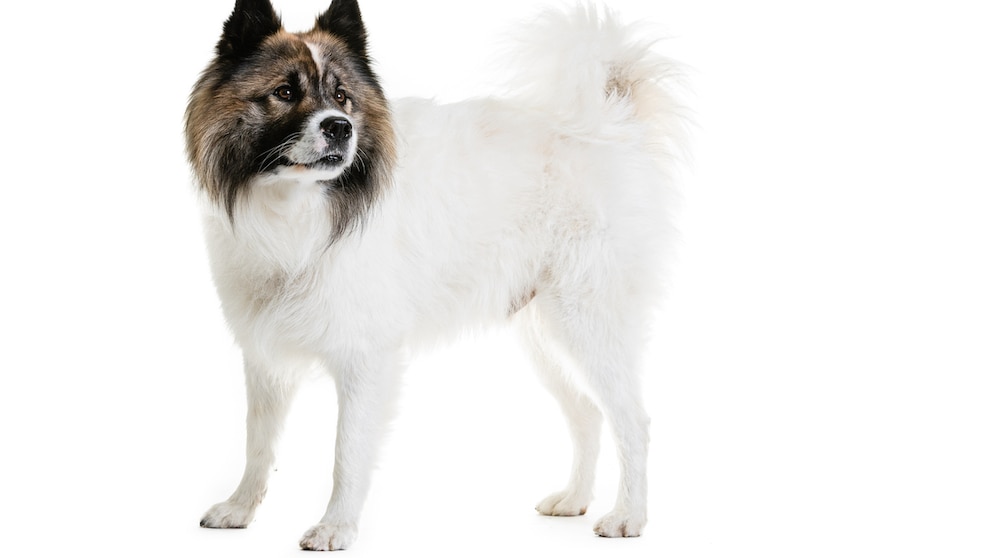
Elos come in two clearly defined sizes: The Small Elo measures between 35 and 45 centimeters at the shoulder and weighs between 10 and 15 kilograms. The Large Elo reaches 46 to 60 centimeters and weighs 22 to 35 kilograms. Both variants are sturdily built, athletic, but without excessive nervousness. The coat is medium-length, plush, and dense. Almost any color is allowed–preferred are mantle spotting, Dutch pattern, or a uniformly spotted coat with white, brown, black, red, or gray tones.
Two coat variants are common: the rough-haired type with a Bobtail-like, but surprisingly soft structure, and the smooth-haired Elo with shorter fur on the face and legs. Typical features include medium-sized, widely spaced erect ears and a bushy tail carried over the back. The appearance can vary greatly depending on which original breed is more visually dominant.
Character & Temperament
The Elo was specifically bred as the ideal family dog–its behavior is intended to be friendly, calm, and socially compatible. It is reserved with strangers but not shy or aggressive. Its close bond with caregivers and its ability to quickly adapt to new environments make it particularly suitable for everyday life. Hunting instincts are hardly pronounced, and barking has been deliberately minimized.
The Elo usually stays close to its caregiver during walks and exudes calmness. Its suitability for households with children is particularly noteworthy–it is considered patient, gentle, and adaptable. Smaller Elos tend to be a bit more spirited than their larger counterparts, but both types generally exhibit a balanced temperament with a strong family bond.
Training
Despite its positive traits, the Elo requires consistent, loving training. It is intelligent but can also be stubborn and likes to test boundaries–especially if it doesn’t sense clear leadership. Early socialization and firm rules are therefore essential. For novice dog owners, thorough preparation is important, as the Elo tends to make its own decisions without confident guidance. Patience, consistency, and trust form the foundation for successful training, with the Elo responding best to calm, positive training methods.
Proper Care & Maintenance
Although the Elo is considered balanced and calm, it needs daily exercise and mental stimulation. Long walks are ideal–athletic feats, however, are less its forte. Its need for closeness and orientation towards people makes it particularly suited for living in a house; kennel housing is not recommended.
The Elo is especially easy to care for when it comes to its coat: Weekly brushing is sufficient in everyday life. During the shedding season, brushing should be more frequent to prevent matting and hair accumulation. Thanks to its good-natured temperament, grooming can usually be easily integrated into daily life.
Nutrition
The Elo requires a balanced, meat-based diet, tailored to its age, weight, and activity level. Both wet and dry food are well tolerated. Raw feeding (BARF) is also suitable for it. It is important to choose high-quality food without added grains or sugar, as such ingredients can lead to health problems in the long term. Feeding should be in fixed portions to avoid obesity–especially in less active dogs.

The American Water Spaniel Is Suitable for Hunting and Family

Why the Boykin Spaniel Excels as an Eager-to-Learn Family Dog
Susceptibility to Certain Diseases
Elos are generally considered robust and healthy dogs, thanks to their broad genetic base and strict breeding selection. However, breed-specific problems can occur–such as eye or heart diseases. There is a low but relevant risk due to the relatively small breeding population, which can favor inbreeding issues. Therefore, it is particularly important to obtain puppies only from reputable breeders with transparent pedigrees and health certificates. Regular veterinary check-ups remain essential for the Elo.
The Elo at a Glance
- Size & Weight: Small Elo: 35–45 cm, 10–15 kg, Large Elo: 46–60 cm, 22–35 kg
- Coat Types: Smooth and rough, medium-length, soft and easy to care for
- Character: Calm, friendly & alert
- Care: Ideal for families, needs close bonds and regular exercise
- Maintenance Effort: Low, weekly brushing is usually sufficient
- Special Feature: Not FCI-recognized, but trademark protected with controlled breeding