

September 25, 2025, 4:24 am | Read time: 5 minutes
The Shiloh Shepherd is among the lesser-known dog breeds–unjustly so, as experts emphasize. Behind the imposing exterior of the American “XXL Shepherd” lies a sensitive, family-friendly companion dog with remarkable intelligence and loyalty. Even though it is not recognized by the FCI, it impresses with a unique breeding history, a gentler nature than the German Shepherd, and a robust appearance.
Origin
The Shiloh Shepherd originates from the U.S. and is the result of a targeted breeding initiative by New Yorker Tina Barber. From her extensive experience with German Shepherds, she developed the desire in the 1970s to create a gentler and more health-stable variant. The goal was a larger, family-friendly companion dog with a balanced temperament–in contrast to the then focus of the German Shepherd as a service and police dog.
Barber began with the selection and controlled crossbreeding of various breeds. In addition to the German Shepherd, genetic influences from the Alaskan Malamute, the Canadian White Shepherd, and the Czechoslovakian Wolfdog were incorporated into the new line. The first documented outcross occurred in 1991.
The new breed was not recognized by international organizations such as the FCI or the VDH, but it found support from smaller associations like the American Canine Association (ACA) and the American Rare Breed Association (ARBA). Despite its still limited recognition, the breed is gaining popularity–especially among people looking for a loyal, athletic, and impressive family dog.
Appearance & Coat
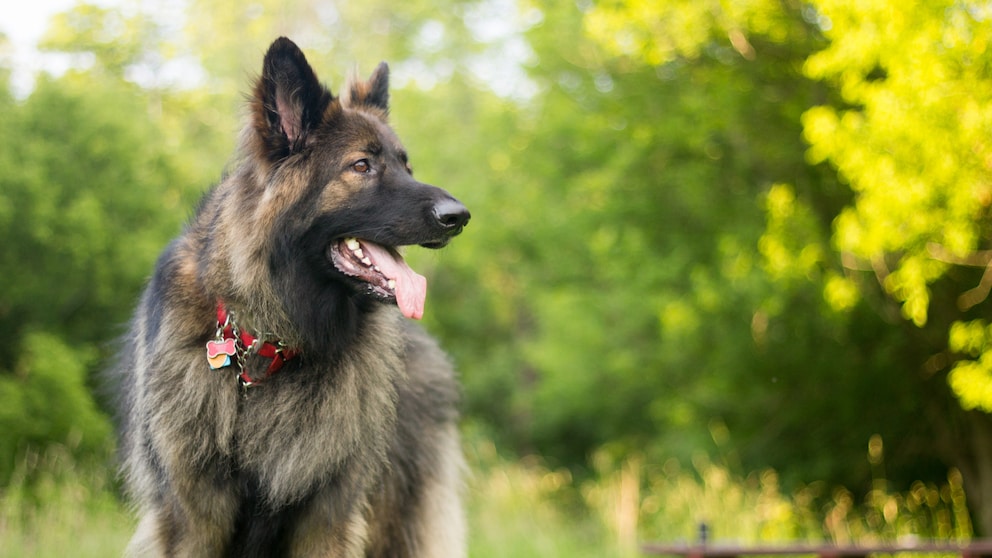
The Shiloh Shepherd shows a clear resemblance to the German Shepherd but appears overall stronger, more massive, and elegant. Males reach a shoulder height of 28 to 32 inches, females 26 to 30 inches. The weight varies depending on body structure: males usually weigh between 99 and 130 pounds but can reach up to 161 pounds; females weigh between 79 and 99 pounds.
The body is muscular, with a broad back and deep chest. The tail is bushy and hangs in a saber shape. The muzzle is black, and the almond-shaped eyes come in various shades of brown. The ears stand upright and are triangular.
There are two coat variants: “Smooth” with a dense, harsh texture and undercoat, and “Plush” with a longer mane in the neck and chest area and pronounced feathering. Both variants have a medium-length coat that sheds heavily twice a year. Common colors are black with markings in silver, gold, tan, cream, or gray, but solid black or white also occur.
Character & Temperament
The Shiloh Shepherd was bred with the goal of combining a gentle, socially compatible, and people-oriented nature with the working enthusiasm of the Shepherd. It is considered friendly, loyal, child-loving, courageous, and protective. Its high intelligence and sensitivity make it an excellent companion for active families and individuals with dog experience.
Despite its imposing appearance, it is neither aggressive nor fearful–such traits are consistently excluded in breeding. Instead, it shows a balanced, calm demeanor, making it also suitable for use as a therapy or assistance dog. The Shiloh Shepherd is exceptionally affectionate and wants to be close to its people. Being alone is difficult for it.
Training
With its pronounced “will-to-please,” the Shiloh Shepherd is generally eager to learn and cooperative. Nevertheless, it requires consistent but gentle leadership. Clear rules and confident communication are crucial to give the self-assured dog orientation–especially during puberty. Early socialization and positive exposure to various environmental stimuli are essential. Inexperienced owners might be overwhelmed by its strength and independence; experienced dog owners, however, benefit from its high learning potential.
Proper Care & Maintenance
Due to its size, need for exercise, and social needs, the Shiloh Shepherd is best suited for rural areas with a house and garden. It requires close family connection, plenty of exercise, and mental stimulation. Long walks, hiking tours, and–depending on body weight–joint-friendly activities like swimming are ideal.
Coat care varies depending on the coat type: “Smooth” variants shed continuously, while “Plush” variants usually shed heavily only during the coat change. During these phases, daily brushing is advisable. Regular nail care and dental hygiene should also be part of the routine.
Nutrition
As a large, muscular breed, the Shiloh Shepherd has specific nutritional needs. Especially during the growth phase, food for large breeds is important to prevent too rapid growth and thus joint problems like hip dysplasia. The food should be high-quality, protein-rich, and age-appropriate.
Since Shiloh Shepherds are prone to gastric torsion (torsio ventriculi), meals should be divided into several portions throughout the day. Meal breaks before and after intense exercise are also recommended. Anti-gulping bowls can help prevent rapid gulping. Treats should make up no more than ten percent of the daily calorie intake.
Smooth Collie: This Herding Dog Is Also Suitable for Beginners
Why Hardly Anyone Knows the Dutch Shepherd
Susceptibility to Certain Diseases
Despite targeted breeding for health, the Shiloh Shepherd shows a certain predisposition to typical large-breed dog diseases–especially hip dysplasia (HD) and other joint problems. Certain types of tumors can also occur more frequently.
Prevention through targeted breeding selection, regular veterinary check-ups, and joint-friendly care and nutrition are crucial. The average life expectancy is between 9 and 14 years.
The Shiloh Shepherd at a Glance
- Character: Loyal, intelligent, friendly, alert, child-loving, people-oriented
- Size (shoulder height): Males 28–32 inches, females 26–30 inches
- Weight: Males 99–161 pounds, females 79–99 pounds
- Coat: Two variants–”Smooth” and “Plush,” both medium-length
- Exercise needs: High, requires plenty of daily exercise and variety
- Average life expectancy: 9 to 14 years
- Special features: Rarely found in Germany, not recognized by major breeding organizations