

August 17, 2025, 2:18 pm | Read time: 5 minutes
The Cesky Terrier is a hidden gem among terriers: friendly, calm, and exceptionally easy to handle. Originally bred for hunting foxes and badgers, this small dog surprises with its sensitivity and adaptability—qualities that make it an ideal family pet. However, caution is advised: Anyone interested in a Cesky Terrier must be patient, as this rare breed is hard to find outside the Czech Republic.
Origin
The Cesky Terrier, also known as the Czech Terrier, is a relatively young breed originating from the Czech Republic. The breed was developed by Czech cynologist Frantisek Horák in the 1950s, who aimed to create a new, easy-to-handle hunting terrier. He deliberately crossed a Sealyham Terrier male with a Scottish Terrier female to produce a low-set, manageable hunting dog suitable for hunting foxes and badgers.
The breed was initially called the “Bohemian Terrier.” The name “Cesky Terrier” was first used at a show in 1959, and in 1963, the breed was officially recognized by the Fédération Cynologique Internationale (FCI). The first dogs were introduced to Germany in 1967, and the first litter was born there in 1987. To this day, the Cesky Terrier remains rare, with only a few dozen puppies registered annually in Germany.
Appearance & Coat
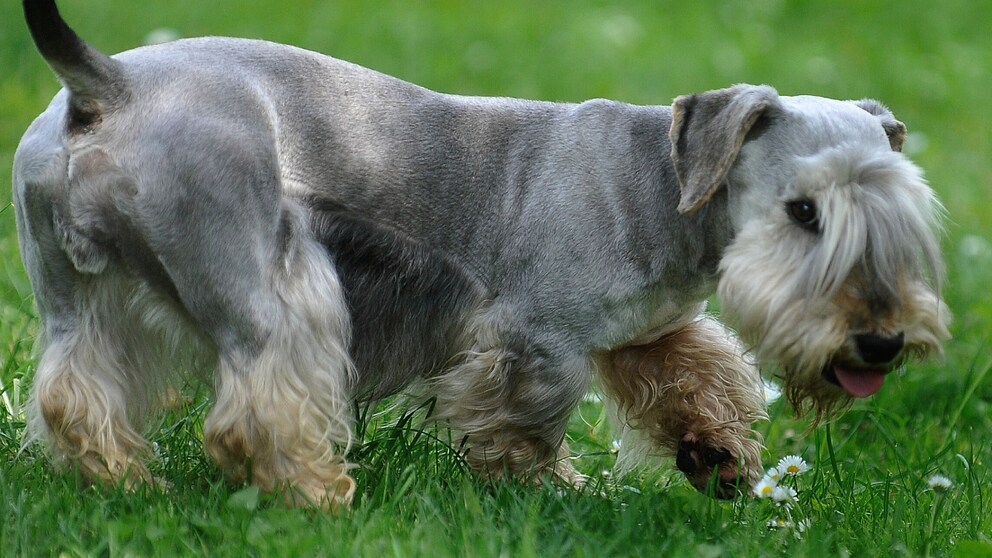
The Cesky Terrier is a short-legged, compact terrier with a rectangular body and pronounced musculature. Males can reach a height of up to 29 cm at the withers, females up to 27 cm, with a weight of about 6 to 10 kg. Characteristic features include medium-sized, forward-folded ears and a wedge-shaped head with prominent eyebrows and a beard.
Particularly striking is the silky, slightly wavy to curly coat, which is medium-length and very fine in texture. The Cesky Terrier sheds little but requires regular trimming. According to FCI standards, only gray-blue and coffee-brown colors are permitted, with darker markings on the muzzle, legs, and chest. The appearance is reminiscent of the Sealyham Terrier but with a softer expression.
Character & Temperament
Compared to other terriers, the Cesky Terrier is noticeably calmer and more balanced. It is considered friendly, sensitive, and obedient—qualities that make it appealing to beginners and seniors. Within the family, it is affectionate and cuddly, but it tends to be reserved with strangers without being aggressive. It rarely barks and remains calm even in stressful situations.
Its hunting background is reflected in its keen sense of smell and enjoyment of exercise. Nevertheless, it is easily controllable and responds reliably to commands if trained consistently. Its keen perception makes it a sensitive companion that closely aligns with the mood of its owner.
Training
Training a Cesky Terrier is usually straightforward. Its high willingness to learn and desire to please its owner make training easier—provided it is done with patience, consistency, and positive reinforcement. Harsh methods are counterproductive for this sensitive dog.
Early socialization is important to prevent skittishness in unfamiliar situations. The dog should also be taught how to manage its hunting instincts. With good training, the Cesky Terrier remains responsive even when spotting wildlife. Due to its attachment, early training to stay alone is essential.
Proper Care & Maintenance
The Cesky Terrier has low demands for its living environment and feels comfortable both in an apartment and a house with a garden—provided it gets enough exercise and closeness to its people. Daily walks and mental stimulation are mandatory.
The silky coat requires intensive care: Daily brushing prevents matting, and professional trimming is needed every eight to 20 weeks. The face—beard and eyebrows—should not be trimmed, as they are breed-specific. Regular ear checks, nail care, and dental cleaning are also part of routine maintenance.
Nutrition
The Cesky Terrier generally does not have dietary sensitivities. However, feeding should be tailored to its activity level and be of high quality—with a high meat content and without unnecessary additives like grains or flavor enhancers.
Special puppy food is recommended until the eighth month of life, and age-appropriate care for seniors from the seventh year. Patience is required during food transitions, as the Cesky Terrier can be picky. Treats should be given in moderation and preferably from the main food. Chew items also support dental care.

The Sealyham Terrier is a Great Family Dog—if You Know What You’re Doing

Sussex Spaniel: Why the Nearly Forgotten Hunting Dog Is a Rare Find for Families
Susceptibility to Certain Diseases
The Cesky Terrier is considered a robust and healthy breed. It has no known breed-specific hereditary diseases, which is also due to its relatively young breeding history. Individual health issues can occur, as with any breed, but they remain the exception for the Cesky.
Its average life expectancy is between 12 and 15 years, with many dogs remaining vital into old age. Regular veterinary check-ups, balanced nutrition, and sufficient exercise promote long-term health.
The Cesky Terrier at a Glance
- Character: calm, sensitive, obedient, family-friendly, reserved with strangers
- Size: 25–32 cm shoulder height
- Weight: about 6–10 kg
- Coat: medium-length, silky, wavy
- Exercise Needs: not extraordinary
- Average Life Expectancy: 12 to 15 years
- Special Features: not prone to barking, suitable for beginners, rare breed