

July 17, 2025, 8:43 am | Read time: 5 minutes
With its distinctive appearance and characteristic “Roman nose,” the Bull Terrier attracts attention everywhere. Yet behind the muscular build and often misunderstood image lies a lively, family-friendly dog with a surprisingly gentle nature. Whether the Bull Terrier fits into your daily life depends not only on your experience but also on your understanding of its special needs.
Origin
The Bull Terrier’s origins trace back to 19th-century Great Britain. The goal at the time was to create a particularly strong, fast, and enduring dog for use in so-called “bull-baiting” events through selective breeding of Bulldogs, Terriers, and Dalmatians. These cruel animal fights were not only for entertainment but also allowed for significant sums to be won through betting.
Over time, however, the use of the Bull Terrier changed. After dog fighting was banned, the muscular four-legged friend increasingly found use as a guard dog and eventually as a family pet. The shift from aggressive fighter to reliable companion was driven by responsible breeders. Nevertheless, the breed still carries a negative image today—partly unjustified, but understandable given its history. In Germany, the Bull Terrier is therefore listed as a potentially dangerous dog in several states, requiring certain conditions for ownership.
Appearance & Coat
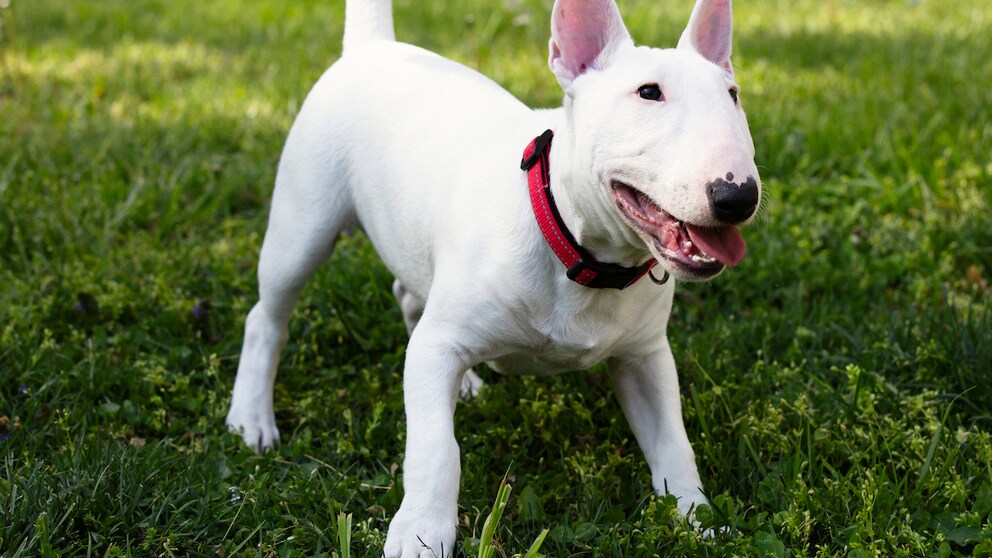
The Bull Terrier is compact, muscular, and exudes strength and determination. Particularly striking is the sickle-shaped curved snout—the so-called “Roman nose”—which gives the dog a unique profile. Its eyes are small, almond-shaped, and deep-set, adding to its distinctive expression.
Despite its relatively short legs, the body appears robust and well-proportioned. The chest is broad, the tail is medium-length and tapers to a point. Typical of the breed are erect, closely set ears. The Bull Terrier’s coat is short, smooth, and easy to care for. Various color variations are common: pure white, black, brindle, or colored with white markings. The variety of color patterns gives each specimen an individual appearance.
Character & Temperament
Despite its intimidating appearance, the Bull Terrier often shows a friendly and affectionate side. Many owners describe it as a spirited, humorous, and child-loving companion that enjoys interacting with its family. Its playful nature is especially appreciated in active households—Bull Terriers are considered little clowns that bring good cheer with their liveliness.
At the same time, it should not be forgotten that this breed was once bred for combative tasks. In stressful or pressured situations, the dog can sometimes react sensitively. Confident handling and early exposure to environmental stimuli are crucial. Bull Terriers also dislike being alone: Lack of activity or loneliness can lead to destructive behavior.
Training
The Bull Terrier requires consistent and knowledgeable training, as it is considered self-assured and sometimes stubborn. Early socialization and clear, positive leadership are essential. With motivation, patience, and positive reinforcement, good learning outcomes can be achieved—the Bull Terrier is indeed intelligent and willing to learn.
However, since it is not a typical beginner’s dog, owners should already have experience in dog training. The existing hunting instinct also makes it necessary to work specifically on recall and to control behavior outdoors well. Structure, clear rules, and loving consistency are the cornerstones of successful training.
Proper Care & Maintenance
Bull Terriers belong to the active dog breeds and require both physical and mental stimulation. Long walks, varied play, and mental exercises are therefore indispensable. It is not just a couch dog—even though it greatly enjoys the closeness of its family.
For potential owners, the legal situation is also important: In several German states, the Bull Terrier is considered a listed dog, which may require ownership permits, temperament tests, or special conditions. Prior legal clarification is therefore essential.
In terms of care, the Bull Terrier is undemanding: Its short coat only needs occasional brushing. However, special attention should be paid to dental care, as this breed is prone to tartar.
Nutrition
In terms of nutrition, the Bull Terrier is largely uncomplicated, as long as certain points are observed. An excessive protein content in the food can lead to skin problems, especially in white specimens, and also strain the kidneys. A balanced, low-fat, and easily digestible diet is therefore advisable.
The breed also tends to be overweight—controlled feeding and regular exercise are therefore particularly important. High-quality dog food with moderate protein content and good nutrient balance forms the basis for a healthy dog life.

Correct Keeping and Care of the American Pit Bull Terrier
Don’t Underestimate This “Bully”
Susceptibility to Certain Diseases
Although Bull Terriers are considered robust dogs, there are genetically predisposed risks. Deafness (especially in white dogs), heart and circulatory problems, and kidney disorders are particularly common. Tumors, joint diseases, and umbilical hernias have also been documented more frequently in this breed.
A responsible breeder places great emphasis on health care—prospective owners should be shown health certificates such as audiometry tests (hearing ability) and heart examinations. With good care and health, the average life expectancy of a Bull Terrier is about twelve years.
The Bull Terrier at a Glance
- Temperament: Playful, energetic, often family-friendly with clownish behavior
- Size & Weight: Compact, muscular; exact measurements not specified
- Coat: Short, smooth, easy to care for
- Care Requirements: High need for exercise and activity, possible legal restrictions