

May 6, 2026, 3:02 pm | Read time: 5 minutes
With its egg-shaped head, compact build, and a temperament that lies somewhere between lovable clown and stubborn mule, the Miniature Bull Terrier draws all eyes. As a loyal, playful companion, it has won the hearts of many dog lovers. However, owning one requires careful consideration—the Mini Bull brings both charm and character.
The Miniature Bull Terrier is more than just a smaller version of the Bull Terrier—it is an independent personality with a fascinating history and remarkable presence. Affectionately called “Mini Bull” or “Egghead,” this dog was originally bred in the 19th century to be smaller. Despite a period of insignificance in the early 20th century, dedicated breeders managed to save it from extinction.
Today, it is a popular companion dog, known for its alert, playful, and friendly nature. Its distinctive head shape, the so-called “Downface,” is an unmistakable trademark that, along with its confident demeanor, makes it a unique presence. Owning one requires consistency and empathy, but this is rewarded with unconditional affection and zest for life. However, animal welfare advocates view the breed critically, as it exhibits some traits of problematic breeding.
Origin
The origins of the Miniature Bull Terrier date back to the mid-19th century. At that time, British breeder James Hinks selectively bred smaller Bull Terrier types with egg-shaped heads, used both as companion and ratting dogs. As early as 1862, such dogs were shown at exhibitions in Birmingham. The Bull Terrier Club was founded in 1887.
While the larger Bull Terrier grew in popularity, the miniature type lost attention at the beginning of the 20th century. In 1918, the breed was even removed from the Kennel Club Register. It wasn’t until 1938 that enthusiasts like Colonel Richard Glyn worked to revive the miniature form and founded the Miniature Bull Terrier Club. In 1943, the Kennel Club re-recognized the breed. Since then, the Miniature Bull Terrier has been considered a distinct breed with a nearly identical standard to the larger Bull Terrier—except for a clearly defined size limit.
Appearance & Coat
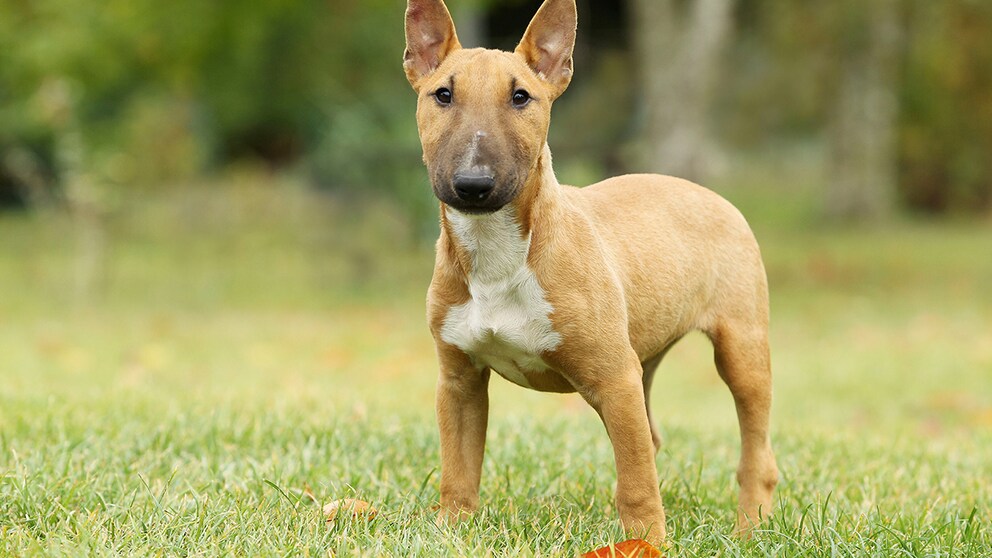
The Miniature Bull Terrier has the characteristic build of the Bull Terrier—strong, muscular, and compact. The most distinctive feature is the egg-shaped head with the so-called “Downface,” where the upper profile line forms a continuous curve. The eyes are small, triangular, and set deep. The tail is short, set low, and carried horizontally. The coat is short, smooth, hard, and shiny.
There are two main color variants: pure white (with possible pigmentation or head markings) and colored, such as brindle, black, red, fawn, or tricolor. The shoulder height must not exceed 35.5 cm, with a compact overall impression and substantial build relative to size being the goal.
Character & Temperament
The Miniature Bull Terrier is considered lively, playful, and independent—sometimes even the “clown” among dogs. It loves to romp with familiar people or dog friends and often remains playful into old age. Despite its playfulness, it is very alert and brave, but not overly aggressive. It usually meets strangers neutrally, but shows deep affection to familiar people.
Its high threshold for irritation and family-friendliness make it a good companion dog for experienced owners. However, it can act stubbornly—not out of malice, but from a pronounced independence. It likes to decide situationally whether it wants to obey. This mix of stubbornness, intelligence, and charm makes its character as unique as it is challenging.
Training
The Miniature Bull Terrier requires consistent but loving training. Its eagerness to learn depends heavily on motivation and relationship—strict obedience is not its forte. A clear, calm tone and early socialization are essential to guide its behavior. Reward-based methods, such as treats, are effective.
Since the Mini Bull learns quickly but also makes its own decisions quickly, patience is as important as consistency. Early exposure to other dogs and pets supports harmonious social behavior. Especially first-time dog owners should be aware that the Mini Bull’s charm should not overshadow its training needs.
Proper Care & Maintenance
The Miniature Bull Terrier is happy in both city apartments and rural homes—as long as it can participate in family life. Being alone is not its preference; closeness to its people is particularly important. Its exercise needs are moderate: regular walks, search games, or controlled romping in the yard are usually sufficient.
Sports with a high obedience component, like dummy training, are less suitable.
In terms of care, it is uncomplicated: weekly brushing is generally sufficient. During shedding, a rubber glove is recommended. Regular checks of teeth, ears, claws, and eyes complete the care routine. Enrichment through mental games and physical activity supports its well-being and prevents boredom.
Nutrition
The Miniature Bull Terrier’s diet should be balanced and protein-rich. High-quality dog food—whether wet, dry, or BARF-oriented—supports muscle development and vitality. The amount of food should be adjusted to age, activity, and health status. Overfeeding should be avoided, as the Mini Bull can be prone to obesity.
Regular feeding times and a clear daily structure aid digestion and promote healthy eating habits. Chew items for dental care and avoiding excessive treats are also important. Fresh water should always be available.

The West Highland White Terrier is Not a Lapdog

Correct Keeping and Care of the American Pit Bull Terrier
Susceptibility to Certain Diseases
The Miniature Bull Terrier shows a genetic predisposition to some breed-specific diseases. These include heart diseases, kidney diseases, eye problems (such as lens luxation), and patellar luxation (dislocation of the kneecap). Particularly in white animals, there is an increased risk of deafness and, in rare cases, blindness. Therefore, mating two pure white dogs is prohibited. Responsible breeding—such as through breeders of the VDH (German Kennel Club)—ensures comprehensive health checks of the parent animals.
Regular veterinary check-ups are essential for early detection and prevention. With good care and a healthy lifestyle, the Miniature Bull Terrier can live up to 16 years.
The Miniature Bull Terrier at a Glance
- Size: maximum 35.5 cm shoulder height
- Weight: about 11–15 kg
- Coat: short, hard, shiny coat
- Character: playful, stubborn & independent
- Special Feature: Suitable for experienced dog owners, active families with consistent leadership