

November 17, 2025, 9:39 am | Read time: 7 minutes
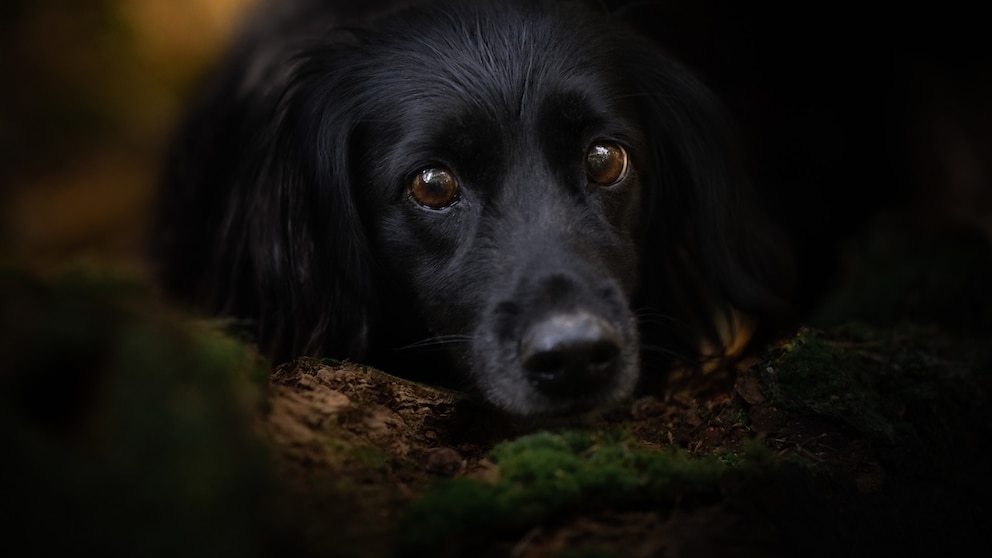
When the days get shorter, many dogs suddenly face the most challenging time of the year: fall. What poses no problem for us can trigger real anxiety in sensitive four-legged friends: the early darkness. Dog trainer Katharina Marioth explains why some dogs are afraid to go for walks in the fall and how you can help with training, routine, and the right food.
Why Dogs Develop Fear of Walking in the Fall
Does your dog suddenly stop during evening walks in the fall, pull on the leash, or not want to go out at all? There’s often more to it than just “not wanting to walk.” While dogs see better than we do at dusk, darkness changes the environment–sounds echo differently, smells are more intense, and movements seem more threatening. Particularly sensitive, insecure, or young dogs react to this with stress. There are several reasons for this.
Common Causes
- Bad experience in the dark: such as a loud noise, a bicycle, or a stranger
- Lack of routine: the dog is not used to or rarely goes for evening walks
- Vision impairment: older dogs or genetically predisposed night blindness
- Overstimulation: many stimuli, little orientation, poor lighting
- Reinforcement by the owner: If you are tense, your dog will notice
Tip: Pay attention to body language. If your dog hesitates, yawns, lowers its tail, or crouches, it’s not disobedience–it’s insecurity.
First Aid: Providing Security and Orientation
The goal is for your dog to experience darkness as predictable and controllable. This includes a calm, planned routine and clear orientation towards you. Here you will learn how to offer your dog more security and orientation.
1. Adjust Lighting
Use collar or harness lights with warm, steady light: no blinking–it can be irritating. Equip yourself with a headlamp or flashlight. Knowing where you’re stepping feels safer. Stick to familiar paths with street lighting until your dog gains more confidence.
2. Conveying Security Through Voice and Body Language
Speak calmly, not overly comforting (“It’s not a big deal…”), but confidently. Move slowly and deliberately. When you pause, stand firmly–this provides orientation.
3. Establish Routines
Start your walk at the same time every evening for now. Begin with a short route, gradually extending it. End the walk with a familiar, pleasant ritual.
How Training Gradually Provides More Security
If your dog reacts strongly, targeted desensitization training can help. This means gradually getting him used to what scares him–without overwhelming him.
Phase 1 – Creating a Comfort Base
Start training at dusk when there is still some light. Choose familiar places for this. Reward calm behavior with treats or praise as soon as your dog remains attentive but relaxed.
Phase 2 – Gradually Increasing Darkness
Move the walks 10–15 minutes later every few days until you both are walking in the dark. Stay calm and try to avoid stressors like main roads, playing children, and bicycles.
Phase 3 – Security Through Training
Practice training signals:
- “Look” – eye contact with you
- “Forward” – gentle movement signals
- “Back” or “to me” – promotes bonding and trust
Phase 4 – Associating Darkness with Positivity
Every time it’s dark, something pleasant happens: a treat, playtime, or cuddling afterward. This way, your dog associates darkness with reward instead of fear.
Properly Training Practice Signals
Practice signals need to be tested and trained. With a suitable training plan, this can be successful.
1. “Look”
Here, your dog should learn to look at you when feeling uncertain or perceiving a stimulus, instead of fixating on the “dangerous” thing. Here’s how to best build the training: Start in a calm environment. Hold a treat at eye level and say kindly: “Look.” As soon as your dog looks at you, say a marker word or use the clicker and give a reward.
Then gradually phase out the treat. Say “Look” without holding anything in your hand. If your dog makes eye contact on his own, reward immediately. Then you can start increasing distractions. Practice in the garden, then at dusk on the path, later in darker situations. If your dog looks at you before getting nervous–jackpot! Be careful not to demand too long of eye contact. One to two seconds of calm contact is enough to signal security.
2. “Forward”
Your dog should learn to orient himself to your movement instead of remaining in uncertainty or freezing. This signal is ideal if your dog tends to suddenly stop or hesitate in the dark. Start in the light and say “Forward” kindly, taking a half step forward yourself. If your dog follows, praise him. Support your signal with a gentle arm movement in the direction of travel.
There should be no tension on the leash; instead, guide through your body language.
Practice at “critical points,” such as dark corners of houses or unfamiliar noises. Say “Forward” early, before your dog freezes. Stay calm in your pace. If you walk confidently, your dog will pick up on your energy.
3. “To me”
The dog should come to you on command, join you, and thus experience protection and trust. Here’s how to start training the signal: Call your dog kindly: “To me!” – Open your body posture slightly sideways and take a step backward. When the dog comes to you, reward him near you, not at a distance. The more pleasant your environment is, the more he will seek protection with you when uncertain.
Then move on to walking: Say “To me” and walk a few meters together side by side. No abrupt stopping–this way, your dog learns to find security with you while moving. Finally, always associate “To me” with something positive. Never use it as a correction (“Now come here!”), or the signal will lose trust.
Tip: You can create combination exercises from the signals. This is also suitable as a small evening routine: Start with “Look”–short eye contact. Then “Forward”–move together. Finish with “To me”–closeness & security. This creates a ritual that your dog understands: “I orient myself to my human–he guides me safely through the darkness.”
Basic Commands Every Dog Should Know

What Puppy Owners Should Watch for in Fall and Winter
Nutrition and Nutrients Can Help
The nervous system of your dog can also be supported by the right nutrition.
1. B Vitamins & Magnesium
Promote stimulus processing in the nervous system and can alleviate stress-related restlessness.
– Found in: salmon, egg yolk, oatmeal, brewer’s yeast (in moderate amounts)
2. Tryptophan
An amino acid that the body uses for serotonin production–the “feel-good hormone.” It is found in millet, turkey, salmon, banana, and cottage cheese. However, tryptophan is only effectively utilized in the dog’s body in combination with carbohydrates.
3. Omega-3 Fatty Acids
Reduce inflammation and promote brain function–especially helpful for older or nervous dogs.
Supplements or herbs like passionflower, valerian, and hemp should always be coordinated with a veterinarian or nutritionist. If your dog becomes panicked, pants, flees, or even shows aggressive behavior, you should consult an experienced dog trainer or behavior consultant. They can create an individual training concept–possibly in combination with a veterinary assessment.
Trust Is the Best Light Switch
Fear of the dark is not a weakness–it’s a reaction to uncertainty.
With patience, clear routines, appropriate nutrition, and calm training, you can teach your dog that it’s safe with you even in the dark.

About the Author
Katharina Marioth is the founder of the brand Stadthundetraining and the KEML principle. She is a certified dog trainer and behavior assessor for dangerous dogs in the state of Berlin. In her daily business, she works closely with veterinarians, scientists, and other specialists on dog-related topics. With her knowledge and skills, she secured the title of Dog Trainer of the Year 2023 in the Sat.1 show “The Dog Trainer Champion.”