


October 5, 2024, 6:10 am | Read time: 4 minutes
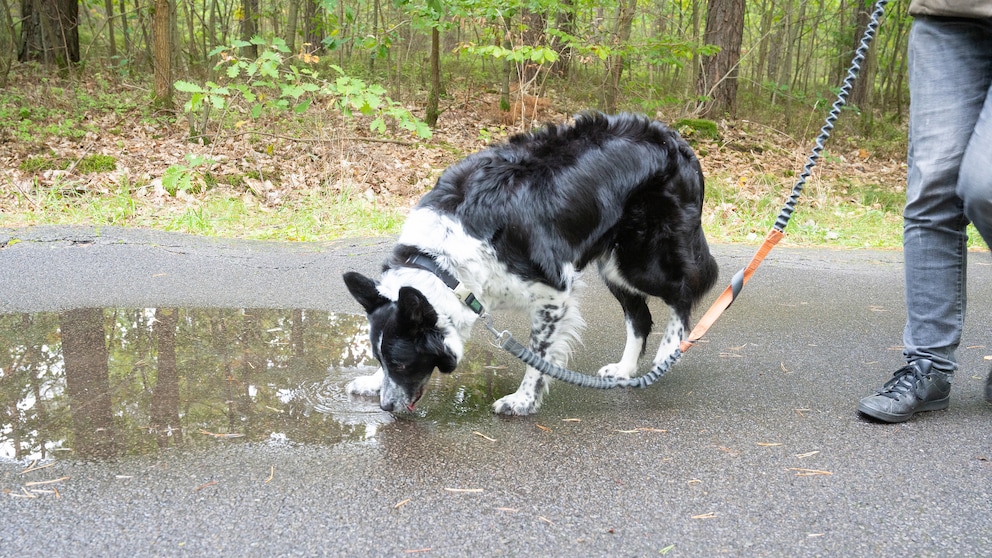
For dogs, puddles during walks are often an opportunity to refresh and quench their thirst. However, owners should prevent this, as stagnant water poses health risks to their pets.
Anyone walking their dog has seen it: Suddenly, the animal is standing in the middle of a puddle, enjoying a few sips of water. This is strongly discouraged. Drinking from puddles can be dangerous for dogs. The reason: Bacteria and contaminants thrive in standing water, warns Berlin dog expert and behavior consultant Nadja Kopp.
“Additionally, puddle water smells different from our tap water because it lacks chlorine. This makes it even more interesting for dogs,” Kopp continues. However, bacteria and contaminants that could be harmful to pets also thrive in puddles and other standing waters.
There is always the possibility that motor oil from parked cars mixes into the water. On country paths, washed-up fertilizers can pose health risks. Parasites and worm eggs can also be ingested through the excretions of other animals.
Initially, this might not be noticeable, but within a few hours, severe diarrhea, vomiting, or other metabolic symptoms can appear. A worm or parasite infestation has more insidious consequences, which might not be immediately apparent if the dog only drank from a puddle once during a walk. In any case, the animals should be taken to a veterinarian.
Also of interest: How much water a dog needs to drink daily
Puddles can contain potentially deadly pathogens
There is also the risk of infection with pathogens, such as leptospirosis. This infectious disease is caused by bacteria known as leptospires. The bacteria primarily enter puddles and bodies of water through the urine of rats and mice.
In summer, high temperatures aid their rapid multiplication, but even with the cooling temperatures in fall, the danger is not eliminated. As it rains more frequently and for longer periods, the bacteria can survive in individual puddles for weeks.
Typical signs that a dog has contracted the disease include fever, loss of appetite, diarrhea, and vomiting. Nosebleeds and circulatory problems can also occur. Additionally, the mucous membranes may turn yellowish.
The tricky part about leptospirosis is that in some cases, few symptoms appear. In such instances, the disease can be fatal if left untreated. Therefore, yellow mucous membranes are always a reason to visit a veterinarian. Blood or urine tests can then be used to check the pet for leptospires.
Danger from Puddles! Leptospirosis in Dogs

Feline zoonoses: Cats can transmit these diseases to humans
The good news? There is a vaccine!
Dog expert Kopp offers some reassurance: “The vaccine against leptospirosis is a mandatory vaccination for dogs, which is refreshed annually. Of course, an infection can still occur. However, the vaccine usually prevents a severe course of the disease. So, there’s no need to panic if the dog drinks from a puddle. If the infection is detected early enough, the animals generally have good chances of recovery and do not have to fear long-term effects,” Kopp explains.
If the dog has not received this life-saving vaccine, or if it is no longer effective, leptospires are extremely dangerous for the animals. Vaccinating your dog is also in the owner’s best interest. Leptospirosis is a zoonosis, meaning it can be transmitted from dogs to humans. If flu-like symptoms occur, one should see a doctor and inform them about the pet’s infection.
How to prevent your dog from drinking from puddles
But how can you stop your dog from drinking from puddles? It’s important to always watch your pet and stop them with a “no” signal. Nadja Kopp even advises always having an alternative for the dog, such as a bottle of clean water, which can then be offered to the dog. If no water is available, flowing water is a drinking alternative with lower risk. There, contaminant concentrations are usually lower.
And if the dog does take a few sips? Stay calm and closely monitor the pet. If it soon shows typical symptoms like diarrhea or fever, see a veterinarian immediately. With the information that puddle water might be the cause, the vet can quickly perform the necessary tests and treat the animal accordingly. 1
With material from dpa