


November 6, 2026, 4:07 pm | Read time: 3 minutes
If you take a closer look at your dog’s ear, you might notice a small skin fold at the lower edge of the ear flap. It looks like a tiny pocket and even has its own name: “Henry’s Pocket.” But what is the purpose of this unusual body feature? To this day, science cannot definitively answer this question.
What is Henry’s Pocket?
The small fold is located at the rear lower edge of the outer ear flap. Its anatomical name is Saccus cutaneus marginalis, also translated as marginal pouch or skin pocket. It is a skin fold that forms an outward-facing indentation. Anatomically, it is located at the so-called antitragic edge of the ear flap.1
The pocket is not equally visible in every dog. In animals with short hair and upright ears, it is usually more noticeable. In dogs with densely haired or drooping ears, it can remain almost hidden. The fold is not an injury or torn skin. As long as it looks unremarkable and does not cause the dog any discomfort, it is part of the normal anatomy of the ear.
Where does the name “Henry’s Pocket” come from?
Who the namesake Henry was is not clear. The English term “Henry’s Pocket” can be traced back at least to the 1970s. However, where it originally came from and whether a specific person is actually behind it remains unclear.
Does the pocket help dogs hear?
The function of Henry’s Pocket is not entirely scientifically understood. A common theory suggests that the fold might support hearing ability. It may dampen certain low frequencies, allowing higher tones to be better perceived or spatially more accurately located. However, there is no scientific evidence yet that Henry’s Pocket actually works as an acoustic filter.
Also interesting: Why do cats have this small “pocket” on their ear?

What’s Behind the Little “Pocket” on Cats’ Ears?
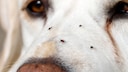
These Ticks Can Be Dangerous to Dogs
Does the fold make the dog’s ear more flexible?
Another explanation relates to the flexibility of the ear flap. The additional skin fold might allow the ear to move, rotate, or lay back more easily. You can think of the pocket as a small stretch fold that gives the skin more leeway at this point. However, this has not been confirmed so far.
Why dog owners should check the small ear pocket
Ticks often settle in the small, often hairy indentation on the dog’s ear and can be easily overlooked during checks. Dirt, plant parts, or other parasites can also hide in skin folds. Therefore, it is advisable to carefully inspect the area during regular coat and tick checks. A closer look is especially worthwhile after walks through tall grass or underbrush.
The fold should not be cleaned with cotton swabs or sharp objects. Usually, it is sufficient to gently pull the skin apart and check for ticks, crusts, redness, or noticeable deposits.