

November 28, 2023, 5:15 am | Read time: 5 minutes
Winter is here. In this cold and wet season, our four-legged friends need special care and attention. What you should definitely keep in mind and how to keep your dog healthy and with a good dose of well-being through the cold season is explained by PETBOOK author Philine Ebert.
Winter is the time when our dogs need more care and attention. When cold and snow force us to spend more time indoors, we should use the time for the care and well-being of our dogs. A joint wellness program strengthens the bond and is fun. After grooming, I like to snuggle up with my dog in a warm blanket and warm up with a cup of tea. He enjoys small massages or grooming sessions. To ensure you and your four-legged friend are optimally prepared for the next frosty outing into the cold, white winter landscape, I have compiled the following tips for you.
Overview
Drying with a Massage Effect!
A wet and cold dog body is just as susceptible to a cold as a human’s. Even the dense undercoat of many breeds does not keep out large amounts of moisture, absorbs it, and takes a long time to dry.
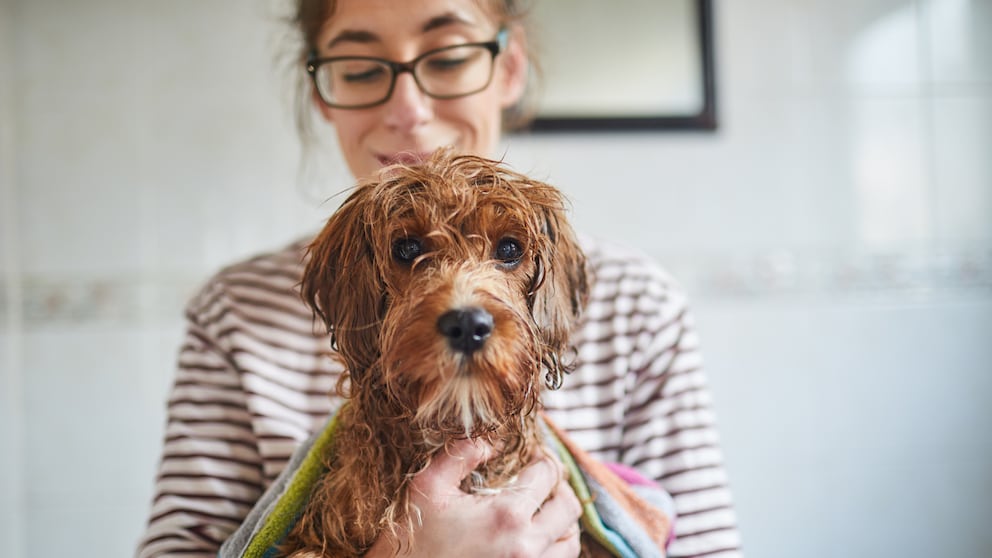
Soaked to the skin by sleet, snowstorms, or deep snow, the first thing to do when you get home is to dry off thoroughly. With highly absorbent towels or special microfiber towels for dogs, the coat can be rubbed dry down to the depths. Many four-legged friends love this ritual and enjoy the pleasant massage while drying.
Tip: For an extra feel-good effect, you can pre-warm the towel on the heater, providing a positive, cozy warm overall experience.
Cozy Warmth
Many dogs like to settle down right after a walk. They generally need more sleep in the cold season and love to snuggle into a fluffy basket, a dog bathrobe, or a warm blanket.
Be sure to pay attention to a suitably warm ambient temperature. This means no open windows, cold tile floors, drafts, or unheated rooms to prevent the animal from catching a chill.
Tip: Some dogs enjoy an additional heat source in winter, such as a heating pad or a red light lamp. However, never leave them unattended.
Stimulate Circulation with Brushing
The coat change can sometimes extend into the winter months. Regular brushing of long-haired breeds helps regulate the heat balance optimally. In double-coated dogs with a lot of undercoat, the dead undercoat tends to mat. Brushing not only removes residues of salt, which can irritate the skin, but also promotes circulation and feels good.
Oils for Coat and Skin Care
When the constant change between dry heating air and damp cold stresses the dog’s coat and skin, oil, such as coconut oil, can be massaged into the coat. It not only makes the coat shiny and smooth but also cares for the dry winter skin and is antistatic.
If you want to pamper your pet further, you can extend the coat care with a soothing massage. Most dogs enjoy this additional wellness treatment and love being massaged in circular motions on the head, neck, back, legs, and paws.
Also interesting: How to Properly Care for Your Dog’s Coat
Prevention is Better than Cure
Dogs should generally only be bathed when absolutely necessary. Because the topcoat loses its natural protection against moisture when washed, allowing the cold to penetrate more quickly, it should be avoided as much as possible in winter.
In heavy rain, icy wind, extreme subzero temperatures, or snowstorms, long walks should be avoided. It’s better to take shorter walks more frequently. Additionally, a coat can be useful in wet, cold winter weather and rain. It keeps out rain or snow and keeps the dog warm.
If you plan dog sports or longer outdoor activities in winter, you should warm up your dog beforehand and never let them stand still in one place for a long time.
Don’t Forget the Paws
The dog’s paw is naturally quite robust, but snow, ice, grit, and especially road salt strain the paw pads. In paws with heavily haired pads, snow and ice accumulate. Ice clumps can form, leading to frostbite, injuries, and restricted movement.
To properly care for dogs’ paws in winter, the fur between the pads should first be trimmed short, and the paws should be washed after each walk in a foot bath with lukewarm water or wiped with a damp cloth. After drying, it is advisable to rub the pads with a care cream.
If the paws are regularly (preferably even before the walk) rubbed with Vaseline or a paw care cream from the pet store, they won’t dry out, become cracked or brittle, and are more resistant to all external influences. When buying, make sure the product contains neither alcohol nor perfume.
Tip: Make an individual paw care product from natural ingredients yourself. It is also perfect for gifting, for example, to all dog lovers for Christmas or as a filling for the dog advent calendar!
Dirty Dog in Winter? Less Stress During Bath Time
Coat care in winter: What dog owners should look out for
My Favorite Recipe for a Winter Paw Care Salve
Ingredients:
- 100 ml coconut oil
- 1 handful of dried herbs, such as chamomile, marigolds, or daisies
- 10 g beeswax
- 5 drops of lavender oil
Instructions:
- Add herbs to the oil and let it sit for one to two days
- Slowly heat the oil and let it simmer for about half an hour
- Strain the herbs through a sieve and add the beeswax
- After the mixture has cooled slightly, finally add the lavender oil
- Stir slowly and pour into containers
Filled in small containers, the paw care salve can be individually labeled and used throughout the winter (stored cool).
Sources
- petprotect.de, “Hunde im Winter” (accessed on 11/27/2023)
- hunde-zone.at, “Hunde im Winter – die 10 wichtigsten Tipps” (accessed on 11/27/2023)