

June 30, 2026, 1:55 pm | Read time: 3 minutes
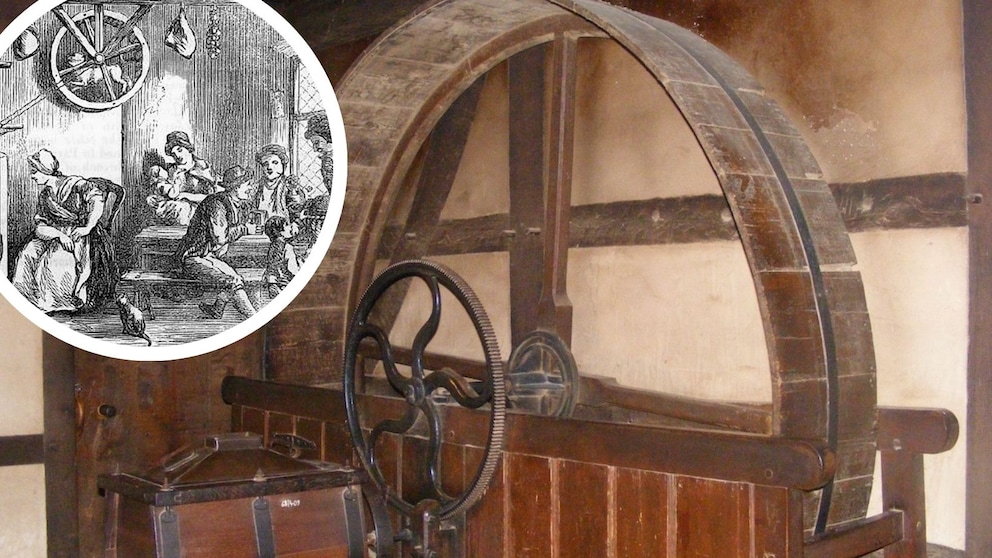
Some ideas from the past seem almost unimaginable today. This includes the breeding of the so-called turnspit dogs. This now-extinct breed was specifically bred between the 16th and 19th centuries to turn roasting spits over a fire in a large wheel–like a hamster in a wheel, only much more cruel.
Dogs ran for hours in the wheel to turn roasting spits
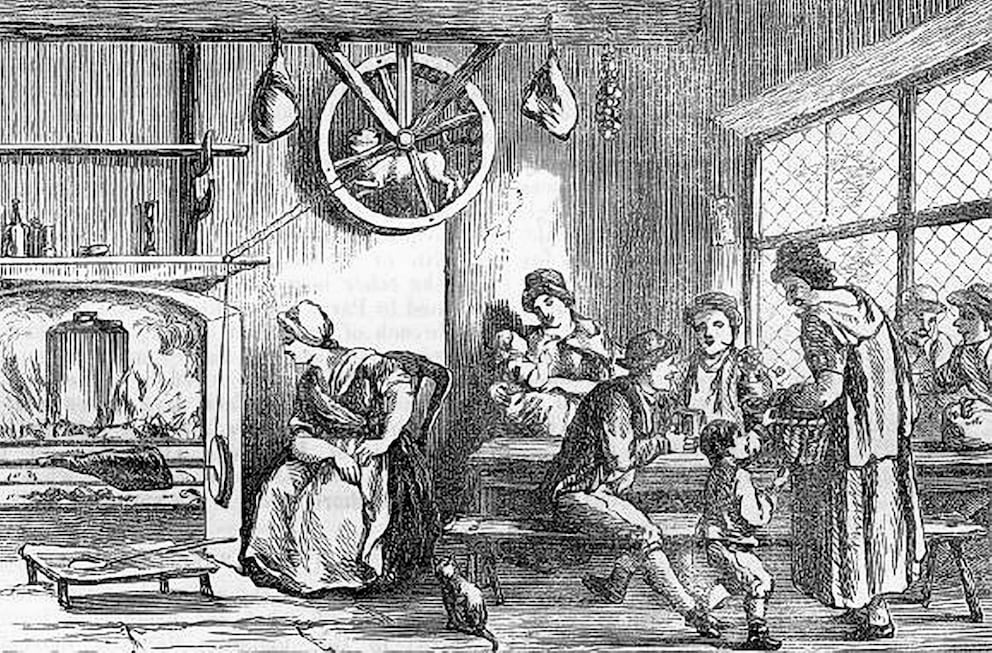
The wheel was connected to the spit by pulleys. As the dog ran, the spit turned, allowing the meat to cook evenly. This was essentially a technological advancement that saved cooks physical effort and time.
For example, a large family roast that constantly turned on the spit required about three hours of cooking time. One can easily imagine how exhausting and hot this work was. Therefore, turnspit dogs were found in almost every kitchen that prided itself on its cooking, making them quite widespread. 1
The first known mention of the turnspit dog dates back to 1576 in John Caius’ work “Of Englishe Dogges.”
Dogs were encouraged to run faster with brutal methods
Since large kitchens typically had several spits for cooking meat, they also kept multiple dogs that took turns in the wheel, working in shifts. However, as one might expect, the dogs used for this work had to meet certain requirements. Turnspit dogs needed to be brave to work so close to the fire. They had to be enduring and tough to perform this work in high temperatures.2
They also had to be obedient and loyal to ensure they didn’t try to eat the roasting meat themselves. According to historians, turnspit dogs were regarded less as dogs and more as kitchen appliances or machines and were treated accordingly. Therefore, brutal practices were not shied away from to encourage the dogs to run faster. For instance, it was common practice to throw a hot coal into the wheel to make the dog run faster if necessary.3

Why You Shouldn’t Underestimate the Skye Terrier

Can Dogs Eat Brussels Sprouts?
What kind of dogs were used as turnspit dogs?
But what exactly was the turnspit dog like? According to records, it was a small but sturdy breed with a long body and short, often crooked legs adapted to running in the wheel. Its coat was usually gray, black, or reddish. From today’s perspective, some drawings of these dogs, often described as “ugly creatures with a sad look,” resemble Corgis. However, with different ears.
This is not necessarily the case, as shown by the only remaining specimen named Whiskey. It was stuffed and is on display at the Abergavenny Museum in Wales. Some authors believe that the turnspit dog might be an ancestor of the Irish Glen of Imaal Terrier, a now extremely rare terrier breed from Ireland.
Turnspit dogs became extinct with technological progress
With the introduction of mechanical spit turners like the so-called Clock Jack, the use of turnspit dogs became unnecessary. It can indeed be said that the breed of turnspit dogs became extinct with the advent of handy spring and electric motors.
Since this breed was mainly regarded as a kitchen tool and had no particular prestige, it was not bred further after its main task was no longer needed. This eventually led to the extinction of the breed in the 19th century.