

July 29, 2025, 2:18 pm | Read time: 4 minutes
Many dog owners are familiar with this: Dense hair grows between their pet’s paw pads, sometimes becoming so long that it interferes with walking or gets tangled with dirt. But should you remove the fur under a dog’s paws? Or does it serve an important purpose there?
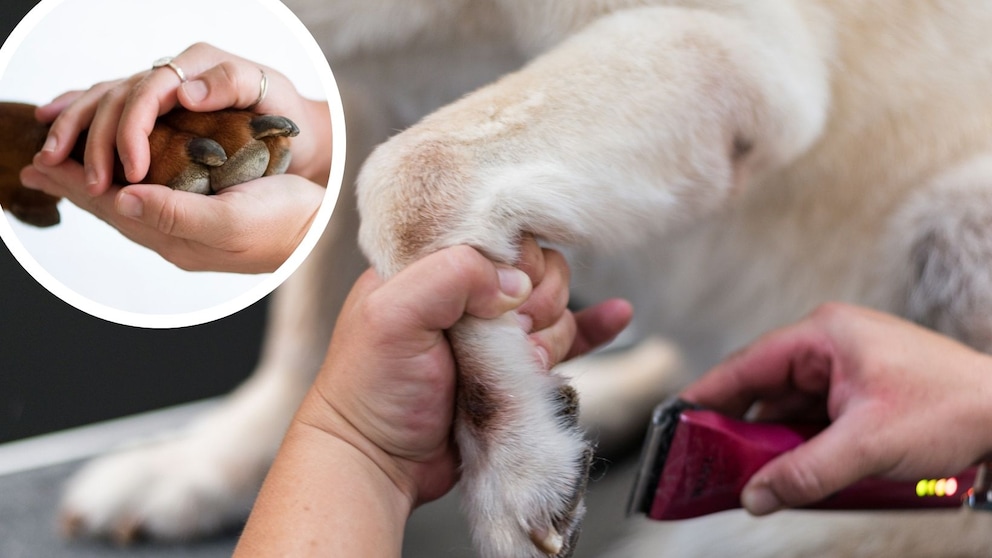
Especially on social media, owners or dog groomers show before-and-after pictures of freshly trimmed dog paws. After all, it does look somewhat neater and more groomed. Additionally, many safe trimmers are offered, allowing you to gently shave your pet’s paw pads. But is this really a good idea?
Should You Remove the Fur Between a Dog’s Paws?
This question cannot be answered with a simple yes or no, says dog trainer Katharina Marioth. “The hair between the pads serves a protective function. It cushions, keeps dirt away, and even aids in secure walking on natural surfaces like grass, sand, or forest floor.” Thus, the hair between the pads and at the edges of the paws protects the sensitive skin areas from external influences such as cold and heat, as well as mechanical friction that occurs during walking.
But that’s not all: The hair between the pads also serves as heat protection. In summer, it buffers contact with hot asphalt and insulates against cold in winter. “While it doesn’t replace paw checks or protective measures in extreme temperatures, it offers a natural defense against external influences,” explains Katharina Marioth.
Also interesting: Influencer: “How I Trained My Dog to Brush Its Teeth”
When Experts Recommend Trimming
However, there can certainly be cases where it makes sense to carefully trim the fur under the paws, the expert notes. “For example, if it is extremely long, regularly matted, or if the dog slips on smooth floors. In winter, too much fur between the pads can lead to snow clumps forming.” Snow and road salt can get caught in long hair, forming painful ice clumps. In such cases, trimmed fur can indeed reduce this risk.
However, it’s not about completely shaving it off, but rather gently shaping it to support mobility, hygiene, and skin health, emphasizes Katharina Marioth. There are certain types of dogs and breeds where such supportive intervention can make a lot of sense. “Dogs with a lot of inter-digital fur or a thick undercoat are particularly prone to matting and dirt accumulation.”
“The Hair Between the Pads Should Never Be Completely Shaved Off”
This includes breeds like Australian Shepherds, Golden Retrievers, Border Collies, or Newfoundlands. Bernese Mountain Dogs, Cocker Spaniels, Long-haired Shelties, or Poodles (depending on the cut) may also benefit from such trimming. “For these breeds, regular, professional trimming can be beneficial to avoid skin irritations, pressure points, or an unclean gait,” summarizes Marioth.
When trimming, less is more, warns the expert. “The hair between the pads should never be completely shaved off, as it protects the sensitive skin from friction, heat, and cold.” But that’s not all: “The hair on the paws has a tactile, perceptive function. It helps the dog recognize ground texture, slight vibrations, or fine stimuli—similar to whiskers. Especially on uncertain ground, when balancing, or for older dogs, this is an important contribution to body coordination,” Marioth explains.

Coat care in winter: What dog owners should look out for

Which Wellness and Care Treatments for Dogs Are Beneficial in Winter
“Removing the Hair Completely Takes Away Part of Their Natural Perception”
“Removing this hair completely takes away not only protection but also part of the dog’s natural perception.” If you still want to trim the fur between the pads, you should use scissors with rounded tips or a quiet trimmer with a guard.”
To make the procedure as stress-free as possible, dogs should be accustomed to paw care, as many animals are very sensitive in this area. Therefore, Katharina Marioth advises consulting a professional, such as a groomer or veterinarian, if in doubt. “Whether paw hair should be trimmed is not a blanket decision,” concludes Katharina Marioth.
“If You’re Unsure, It’s Best to Leave It Alone!”
“It depends on the type of fur, activity level, surface, and the dog’s personality. In many cases, regular cleaning and combing are completely sufficient. If trimming is done at all, it should be targeted, careful, and focused on functionality, not appearance.”
If unsure, professional support should definitely be sought, the expert warns. “If you’re unsure, it’s best to leave it alone. These small hairs can play a big role in health, safety, and well-being.”