


August 24, 2025, 1:44 pm | Read time: 5 minutes
With its shaggy coat, gentle gaze, and a history that dates back to the time of the Korean kingdoms, the Sapsali is more than just a family dog—it’s a living cultural heritage. Once revered as a “spirit chaser” and protector of the home, it has transitioned from the companion of aristocracy to a beloved pet. Anyone who gets to know this rare dog discovers a loyal friend with a calm demeanor and a touch of legend.
Origin of the Sapsali
The origins of the Sapsali (also known as Sapsaree, Sapsari, or Sapsal Gae) are deeply rooted in Korean history. Archaeological and written evidence show that dogs of this type were known as early as the Three Kingdoms period (around 220–280 AD). During the Silla Dynasty, they were primarily kept in noble households, but after the fall of the unified Silla kingdom, they were also appreciated by the rural population. The Sapsali regularly appears in folk songs, fairy tales, and paintings, always with the special role of keeping evil spirits and misfortune at bay.
During the Japanese occupation of Korea (1910–1945), the breed experienced dramatic decimation: Many dogs were killed to use their fur for military clothing. It wasn’t until the late 1960s that a targeted rescue program began at Kyungpook National University. Under the leadership of geneticist Dr. Ha Ji-hong, the gene pool was stabilized through DNA-supported breeding strategies, reducing genetic problems.
In 1992, the Sapsali was recognized as a “natural monument” of South Korea, ensuring its protection and preservation. Today, it lives again in greater numbers, especially in its homeland, where it is valued both as a family dog and a therapy dog—a symbol of Korean culture that has endured through the centuries.
Appearance & Coat
The Sapsali is a medium-sized, sturdily built dog with harmonious proportions. Males reach about 51 cm at the shoulder, females around 49 cm. Characteristic is the lush, long double coat: a weatherproof, long and dense top layer that can have a straight, slightly wavy, or curly structure, and a soft, dense undercoat. Colors range from black, gray, and brown to gold and orange tones, as well as blue, white, or mixed variants.
Particularly striking is the “lion-like” appearance with a voluminous head fringe that often falls over the eyes. The head is rounded, the muzzle rather blunt, the ears hang down, and the large, brown eyes give the facial expression gentleness. The tail is usually carried high and can be straight, rolled, or ring-shaped.
Its strong limbs and deep chest support a smooth, flowing gait. Beneath the coat lies robust musculature, making it suitable for various types of movement. Despite its lush fur, the Sapsali does not appear clumsy but possesses a balanced, elegant appearance that makes it distinctive.
Character & Temperament
The Sapsali is considered balanced, gentle, and loyal. It is friendly and affectionate with its family, but tends to be more reserved with strangers. In its role as a traditional “house guardian,” it combines alertness with calm composure, making it a reliable but not overly bark-prone companion.
It is sensitive, responds to the moods of its environment, and adapts well to household routines. It is generally patient with children and can be a loving playmate. With proper socialization, it gets along well with other dogs or pets.
Its nature also makes it suitable for work as a therapy dog—since 1999, it has been used in hospitals to provide comfort and calm to patients. The Sapsali seeks closeness to its caregivers but remains independent enough not to constantly demand attention.
Training a Sapsali
The Sapsali is capable of learning and enjoys working with its people, but reacts sensitively to overly harsh corrections. Positive reinforcement in the form of praise, petting, or small treats yields the best results. Early socialization is important to channel its initial reserve with strangers into controlled paths.
Short, varied training sessions help maintain its attention and avoid overloading. Consistency and patience are crucial to set clear boundaries. A well-trained Sapsali becomes a reliable family member that respects house rules and acts calmly in various environments.
Proper Care & Maintenance
This breed feels comfortable both in a house with a garden and in an apartment, as long as it receives sufficient exercise and social interaction. A fenced garden offers additional freedom, but is not strictly necessary.
The coat requires intensive care: Brushing several times a week prevents matting and removes loose hair. During the coat change, daily combing is advisable. Monthly baths with mild dog shampoo maintain cleanliness and coat health. Ears, eyes, teeth, and claws should be regularly checked and cared for.
In addition to moderate physical activity—daily walks, playtimes, or light hikes—the Sapsali needs mental stimulation, such as search games or obedience exercises.
Nutrition
A balanced diet is crucial for health and coat quality. Suitable is high-quality dry or wet food for medium to large breeds with moderate energy needs. Omega-3 fatty acids (such as from fish oil) promote a shiny coat, and glucosamine supports joint health.
Owners must adjust the food quantity to age, weight, activity level, and metabolism. Adults typically require two meals per day. Fresh water must be available at all times. Overweight should be avoided to protect the joints.
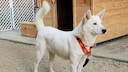
Bred to Hunt bears — What You Need to Know About the Pungsan

Why These Dogs Aren’t Allowed to Leave Their Homeland
Susceptibility to Certain Diseases
The Sapsali is considered robust but shows some predisposition to hip dysplasia. Regular veterinary check-ups, adjusted exercise, and weight control are important for prevention. Eye problems such as progressive retinal atrophy can occur; annual eye exams help with early detection.
Careful breeding selection with genetic tests minimizes the risk of inherited diseases. Additionally, consistent parasite prevention (fleas, ticks, heartworm) and regular dental check-ups are recommended.
The Sapsali at a Glance
- Size: Males approx. 51 cm, females approx. 49 cm at the shoulder
- Weight: Medium-sized, sturdy build
- Coat: Long, dense double coat; straight, wavy, or curly
- Character: Loyal, gentle, alert, reserved with strangers
- Special Feature: Historical role as “spirit chaser” and Korean natural monument