

April 21, 2026, 2:48 pm | Read time: 5 minutes
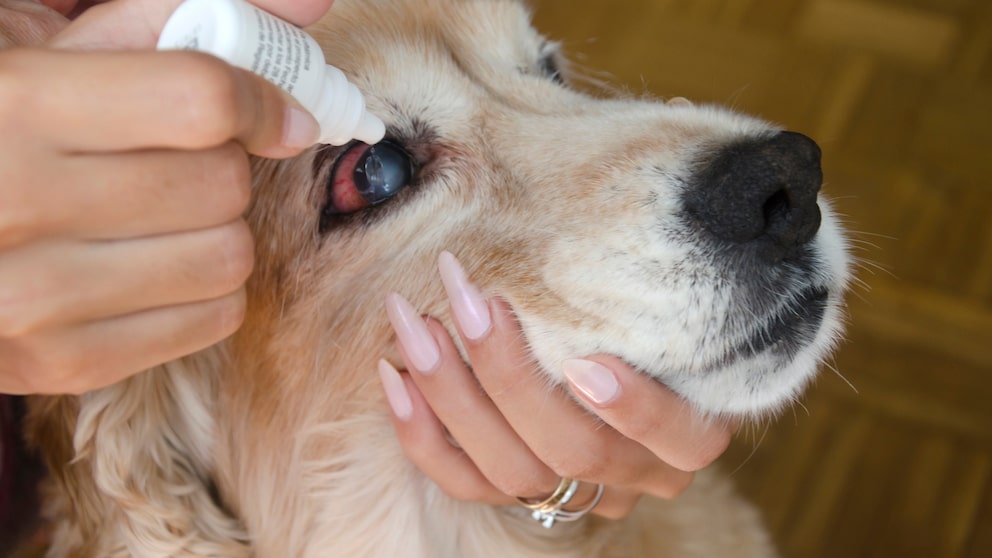
If a dog suddenly blinks more often, squints, or rubs its face with its paw, it could indicate conjunctivitis. Red or watery eyes may seem harmless at first, but they should be taken seriously. PETBOOK explains how to recognize an eye infection in dogs, what causes it, and when a visit to the vet is necessary.
What Is Conjunctivitis?
The conjunctiva is a mucous membrane that covers the visible part of the eyeball and the inside of the eyelids. It protects the eye and aids in moisturizing it with tear fluid. Dogs also have a third eyelid, known as the nictitating membrane, which serves an important protective function.
In conjunctivitis, this mucous membrane becomes inflamed. This can cause it to become red, swollen, or thickened. In some cases, the nictitating membrane is also affected.
Causes–How Does Conjunctivitis Develop in Dogs?
As with humans, the causes of conjunctivitis are varied. It often results from external irritants such as dust, smoke, or drafts. Foreign bodies like sand grains or plant debris can also irritate the eye’s mucous membrane.1
Other Common Triggers of Conjunctivitis Include:
- Allergic reactions (such as to pollen, food, or insect bites)
- Infections from bacteria, viruses, fungi, or parasites
- Eye injuries
- Dry mucous membranes (for example, due to impaired tear production)
- Blocked tear ducts
In some cases, the cause is not directly in the eye. Diseases such as distemper or kennel cough can also manifest through eye infections.
Recognizing Symptoms of Conjunctivitis in Dogs
Conjunctivitis usually presents with visible changes in the eye. They are typically red or swollen. Discharge is also common, which can be clear, mucous, purulent, or even bloody.2
Typical Symptoms of Conjunctivitis Include:
- Frequent blinking or squinting
- Red eyes
- Itching, noticeable by rubbing with the paw or against objects
- Sensitivity to light
- Tearing
The symptoms can affect one or both eyes. For the dog, the inflammation is often uncomfortable or painful. In some cases, the animal may also appear tired or lethargic, especially if an infection or another underlying condition is present.
Which Dog Breeds Are Prone to Conjunctivitis?
Any dog can be affected by conjunctivitis. Short-headed breeds and dogs with distinctive eyelid positions or breed-specific altered eye shapes are comparatively more prone to this condition.
These Dog Breeds Are Prone to Conjunctivitis:
- Pug
- French Bulldog
- Boxer
- Cocker Spaniel
- Bloodhound
- Basset Hound
- English Bulldog
- Shar Pei
The reason is the associated physical characteristics of the breeds: too small noses, large or protruding eyes, enlarged eyelid openings, droopy eyelids, inward-rolled eyelids, or hairs and eyelashes that rub against the eye. Such features can continuously irritate the conjunctiva, offer less protection to the eye, or disrupt tear distribution, thus promoting inflammation.3
Is Conjunctivitis in Dogs Contagious?
Whether an eye infection in dogs is contagious depends on the cause. If it is caused by bacteria, viruses, fungi, or parasites, it can be transmitted to other animals and, in some cases, to humans. In such cases, careful hygiene is important, especially when handling the affected animal and its resting places.4
Transmission from humans to dogs is also possible in principle, but it is relatively rare. Many pathogens are specialized for humans and do not survive well in a dog’s body.
What to Do for Conjunctivitis in Dogs?
Treatment depends on the cause of the inflammation. Eye drops or ointments are usually used, with different active ingredients such as antibiotics, antiparasitics for parasites, or corticosteroid preparations, depending on the cause. For mild irritations, herbal remedies may also help.
Many dog owners initially turn to home remedies for an infection. However, caution is advised. For example, chamomile tea is not recommended, as it can worsen the symptoms. It is best to gently clean the eye and carefully remove any possible foreign bodies. A clean, lint-free cloth and boiled, lukewarm water are suitable for this.

Dark Discharge in a Cat’s Eye? Causes and When to See a Vet

How Horner’s Syndrome Manifests in Cats
Can Conjunctivitis in Dogs Heal on Its Own?
Mild irritations may subside on their own. With proper treatment, conjunctivitis often heals within a few days.
Without treatment, however, there is a risk that the inflammation will worsen or spread to other parts of the eye. In the worst case, this can lead to permanent damage, including blindness in the dog. Therefore, it should not be assumed that the symptoms will disappear on their own.
When Should You Take Your Dog to the Vet?
If there are signs of conjunctivitis, a veterinarian should always be consulted. This is the only way to determine whether it is an independent condition or a symptom of another, possibly more serious disease.
During the examination, the veterinarian checks, among other things:
- Whether there are foreign bodies or injuries
- Tear production, to rule out “dry eye”
- The patency of the tear ducts
- Possible pathogens through swabs
It is also important to rule out other eye diseases such as corneal ulcers, glaucoma (increased intraocular pressure), or cataracts (lens clouding). Tumors can also cause similar symptoms.