

January 9, 2026, 5:37 am | Read time: 4 minutes
A little sleep in the eyes is also common in cats. But when dark, almost black crusts form around the eye, it can quickly become concerning. Especially in light-colored cats, the dark discharge is very noticeable. In many cases, it is harmless, but sometimes it can also indicate health problems. PETBOOK editor Louisa Stoeffler shares her experiences.
Dark Discharge in My Cat Minka
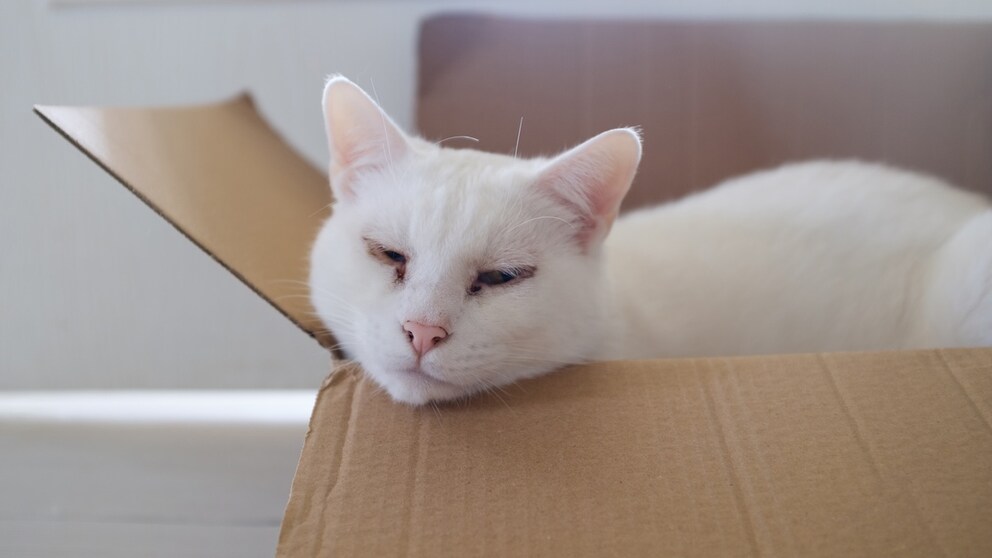
I experienced this myself: My white cat Minka always had an unusually large amount of dark discharge around her eyes. Especially in the mornings, the crusts were clearly visible at both inner corners of her eyes. The eye itself was not red, Minka showed no pain, and behaved completely normally—yet the sight worried me.
Since she had had this heavy discharge from her eyes since I adopted her, a vet examination quickly provided reassurance. She had no chronic eye disease or head deformities, just increased tear production. This was simply more visible due to her pure white fur than in other cats. With regular care, the problem was manageable. However, dark eye discharge is not always so harmless.
What Does Dark Eye Discharge Mean in Cats?
Dark discharge around a cat’s eye is usually dried tear fluid. The dark color is caused by porphyrins—iron-containing metabolic byproducts. They are harmless but stain the fur a noticeable brown to black and accumulate as crusts or flakes.
It becomes problematic when:
- the amount increases significantly
- the discharge is very thick, greasy, or foul-smelling
- additional symptoms like redness, swelling, or pain occur
Then an illness may be behind it.
These Cats Are More Often Affected
Dark eye discharge occurs much more frequently in some cats than in others. Particularly white and very light-colored cats stand out because even small amounts of dried tear fluid appear very dark in their fur. Medically, the discharge is not more problematic—it is just more visible.
Especially short-headed cat breeds like Persians, Exotic Shorthairs, or British Shorthairs are also more often affected. Due to their shortened head shape, the tear ducts are often narrowed or poorly positioned, so tear fluid cannot adequately drain into the nose. Instead, it runs over the inner corner of the eye and dries there.
Additionally, there are cats that tend to have chronically watery eyes regardless of breed or fur color. In them, dark discharge forms repeatedly without necessarily indicating an illness.
When Should You See a Vet?
A vet visit is advisable if:
- the discharge suddenly increases significantly
- it is purulent, greenish, or foul-smelling
- the eye appears red, swollen, or painful
- your cat squints or frequently rubs the eye
- only one eye is persistently affected
Possible Examinations
- Eye examination with a slit lamp
- Fluorescein test (cornea & tear duct)
- Swab if infection is suspected
- Measurement of intraocular pressure
Treatment ranges from soothing eye drops to medication and—rarely—small surgical procedures, especially for short-headed cats that need help.

Recognizing and Treating Conjunctivitis in Dogs

Can Cats Actually Cry?
What Helps Cat Owners in Everyday Life
In many cases, dark eye discharge can be well controlled with regular, gentle care. It is important to clean the eyes gently without causing additional irritation. A soft, clean cloth or a firm cotton pad moistened with lukewarm water is suitable for this. Dried crusts should always be soaked first and then carefully removed.
This is how I handled it with my cat Minka: I gently cleaned her eyes once a day, without pressure and without additional care products. This was enough to remove the dark deposits and keep the sensitive skin around the eye healthy. Home remedies like chamomile tea or saline solutions should be avoided, as they can irritate cat eyes or cause allergic reactions.
Conclusion
Dark discharge from a cat’s eye is often harmless and is simply more visible in some cats than in others. Nevertheless, it is important to closely observe changes and clarify any malformations of the tear ducts. Regular, gentle care is often sufficient—but with additional symptoms, a vet should always take a look. This keeps the cat’s eye healthy—and the worry in check.