

November 27, 2025, 5:12 am | Read time: 7 minutes
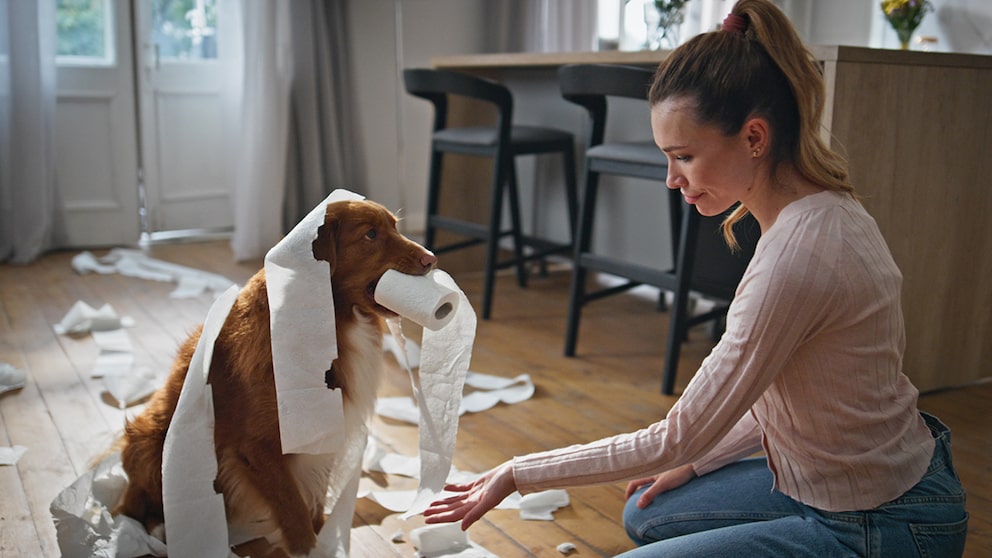
Nowadays, dogs are an integral part of our families. It’s no wonder we always want to love them, remain patient, and consistently stay positive. But let’s be honest: Sometimes you just find your own dog annoying. Dog trainer Katharina Marioth explains why these emotions are completely normal and how you can handle such situations.
The Myth of the Perfect Dog Owner
On social media, you see them everywhere: dog owners who train their dogs with angelic patience, take them everywhere, and never seem annoyed. But reality often looks different. The dog barks at the garden fence for ten minutes while the leash gets wet and you’re standing in the rain. Your coffee spills because the dog stops abruptly in the hallway, and you say for the fifth time, “No, we don’t chase joggers.”
In such moments, you might think, “Honestly – I can’t stand you right now.” And that’s not a character flaw – that’s being human.
Why Emotions in Dog Training Are Normal and Important
Feelings are not the enemy of training – they are the compass that shows you where your limits are. Anger, frustration, or helplessness do not mean you have failed. They are signals from your nervous system that something is too much: too loud, too stressful, too overwhelming. A conscious approach to them is the key to emotional balance – not suppressing the feelings. You don’t always have to like your dog, as long as you always respect them.
The Difference Between Feeling and Behavior
It’s important to recognize the difference between what you feel and how you act. You are allowed to be annoyed, angry, and overwhelmed. But you are responsible for not training or punishing in that emotion.
It’s better to acknowledge the anger, control the impulse, breathe, and take a step back – instead of yelling at or jerking the dog. The goal is not to never be annoyed, but to act consciously despite the emotion.
From Guilt to Self-Acceptance
Many dog owners struggle with guilt when they are annoyed and just find their dog annoying in the situation. You might know this feeling and think, “I should be more patient” or “Others manage it too” and “My dog isn’t to blame.” Such thoughts are understandable and human – but counterproductive. Because guilt paralyzes, while self-compassion empowers action.
At this point, you should change your mindset a bit: “I am allowed to feel what I feel – and still remain loving.” Self-reflection does not mean condemning yourself. Rather, it means being honest and learning from what happened.
Why Your Dog Is Sometimes Really Annoying
Dogs are emotional beings too. They mirror our mood, react to tension, restlessness, or inner insecurity. When you’re annoyed, your dog often responds with more insecurity – and that makes it worse.
Neurobiologically, it’s clear that you enter stress mode, the so-called sympathetic activity. Your dog senses this and reacts with tension or avoidance behavior, both brains escalating each other. That’s why regulation is so important for both humans and dogs. Feelings should not be suppressed but consciously perceived and stopped before they turn into actions.
3 Methods to Stay Calm
Calmness doesn’t happen by itself. It’s an exercise in awareness, breathing, and redirecting. These three simple methods help you stay calm and capable of action in stressful moments:
1. Stop and Breathe
When you notice you’re boiling inside, loosen the leash – as far as it’s safe – take a deep breath, and let your shoulders drop. A short reset is often enough to switch from reaction mode to thinking mode.
2. Mental Reframe Exercise
Ask yourself what you would think if your dog was showing fear instead of defiance. This change in perspective activates empathy instead of anger.
3. Aftercare Instead of Grudge
If you have behaved unfairly, apologize. Not because your dog understands words, but because it changes your attitude. You close emotionally and reconnect.
Practical Example: “I Was Just Done!”
A client of mine – let’s call her Sabrina – described the following problem: “My young dog did everything in one day – barked, pulled, dug. I was completely overwhelmed and snapped at him. Then I felt so guilty that I cried.” In coaching, she learned that emotions are not enemies but indicators. She began to notice stress signs earlier and plan breaks – for herself and her dog.
Now, Sabrina has learned to handle such situations: “Today, I recognize faster when it’s too much. I breathe, take a walk, and then it’s okay again. Before, I would have felt bad for days.” That’s the difference between self-criticism and self-responsibility.
Emotional Honesty Strengthens Bonds
An authentic relationship with your dog means being real, not perfect. Your dog doesn’t need a flawless trainer but a stable reference person who can regulate themselves.
When you learn to deal with your feelings, you automatically learn to read and lead your dog emotionally. This builds trust – and that’s ultimately what training is really about. Bonding doesn’t come from perfection but from authenticity.

Dog Ignoring You? What That Says About Your Relationship

Your Dog Is Suddenly More Difficult in Daily Life? Here’s What’s Behind It
Training Ideas for Dogs and Owners
Emotional honesty is important – but it shouldn’t end in frustration. Especially after challenging situations, it helps to refocus on connection and cooperation. These small training sessions promote calmness, relationship, and mutual regulation.
1. “Reset Walk” – Relax Together
If you notice you’re irritated or your dog is overexcited, this short walk helps to relax. Keep the leash loose and avoid commands. Walk slowly, breathe deeply in and out. Focus only on the rhythm of your steps and the sound of breathing. No training, no expectations – just be. This way, both nervous systems can synchronize, and you move from stress mode back to connection.
2. Practice Orientation – Connection Instead of Control
Orientation signals create closeness and trust. Use small exercises to strengthen the connection: Walk slalom around bollards. You have to orient yourselves together, reinforcing the bond. You can also run a bit, which helps both of you relieve stress. These exercises are not commands but emotional connection anchors. They also help you lead calmly, clearly, and lovingly again.
3. “Learn to Pause” – Humans Can Relax Too
Many dogs don’t respond to our words but to our energy. If you’re internally at 180, no bag of treats in the world will help.
Hold the leash firmly but relax your body. Count five breaths internally while doing nothing. Observe how your dog changes when you regulate yourself. The effect is that your dog senses your calmness and aligns with it. This makes your own state the strongest training aid.
4. “Team Play Instead of Training” – Have Fun Together
In conflict situations, it helps to create positive interaction again. Playing connects – but consciously. Fetch games with clear rituals like “Bring it, Swap, Good,” small nose games in the living room, or trick training focusing on cooperation, such as giving a paw or target work, promote trust and closeness. Playing releases endorphins, reduces stress, and shows the dog that you belong together – even when things were difficult.
5. Reflection After the Storm
After emotional moments, it’s worth pausing briefly and looking honestly. Ask yourself when the point was that you were overwhelmed. Consider what would have helped you at that moment – calm, distance, or more structure? Feel what emotion was actually behind it – anger, fear, or helplessness? This form of reflection is not self-reproach but training for you. This way, you learn to recognize your emotions earlier and act more consciously next time.
Bonus Exercise – “Forgiveness Ritual”
If you notice you’ve behaved unfairly, end the day consciously. Go to your dog and sit quietly next to them. Speak softly, calmly, and kindly – no matter what you say. Maybe you gently stroke their fur, or maybe you just sit quietly together. This way, you regulate together, and the day doesn’t end in frustration but in connection. This builds trust, especially after conflicts.
Conclusion
Yes, you are allowed to find your dog annoying sometimes. But you can also learn what this emotion is trying to tell you. Frustration is not the end of the relationship – it’s an invitation to become more aware. If you learn to regulate yourself instead of condemning yourself, then every training situation becomes relationship work on equal footing. Your dog needs you. So be good to yourself too!