

April 7, 2026, 4:35 am | Read time: 5 minutes
Psyllium husks for dogs are considered a true superfood—but how much truth is there to this, and how useful are they? PETBOOK author and nutritionist Philine Ebert explains the effects, application, and dosage of this natural helper.
Psyllium Husks–Origin and Effects
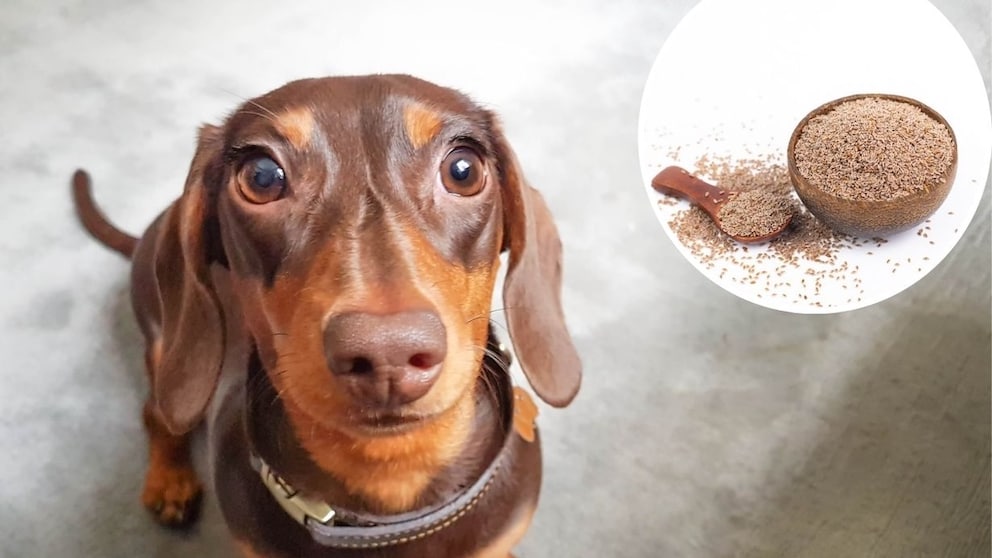
Psyllium seeds are the fruits of an ancient medicinal and food plant, the Indian plantain. Plantain plants are primarily cultivated in India and Pakistan. The plant originates from the North African and Asian desert regions. After harvest, the seeds are dried, the husks are separated, and then offered in their original form, as powder, or in capsules.
Additionally, psyllium husks have a special property: Due to their high swelling capacity, they can bind large amounts of water. This creates a gel-like, mucilaginous substance that nurtures the intestines and intestinal mucosa and supports the normal transport of food through the digestive tract. Even bacterial toxins can be bound and excreted this way. Therefore, psyllium husks are often specifically used as a remedy for gastrointestinal issues.
The Difference Between Psyllium Seeds and Psyllium Husks
Psyllium seeds consist of a seed core and an outer husk. While the core mainly contains protein and fats, the husks are particularly rich in fiber. To obtain pure psyllium husks, both components are separated from each other.
The crucial difference lies in the swelling capacity: While whole psyllium seeds can bind about ten times their weight in water, psyllium husks can bind up to forty times. Due to this significantly stronger swelling effect and their more intense impact on digestion, the husks are primarily used as a remedy.
The Benefits:
- Promotes a healthy gut flora: Psyllium husks contain important fiber and mucilage that strengthen beneficial bacteria in the gut.
- Helps with digestive problems: Both diarrhea and constipation can be regulated by psyllium husks. The swollen husks bind excess water and stomach acid. The stool becomes naturally firmer. If the stool is too hard, psyllium husks naturally ease and speed up its passage through the intestines.
- Natural, plant-based food, remedy, and dietary supplement: It is generally well-tolerated and easy to dose, with good acceptance due to a largely neutral taste.
For Which Dogs Are Psyllium Husks Suitable?
Psyllium husks are particularly suitable for dogs with sensitive digestion, prone to recurring issues like diarrhea or constipation, and can improve food utilization. They also help with heartburn by binding excess stomach acid. Additionally, they can help regulate the body’s response to allergens by promoting a healthy gut flora.
Their use is also beneficial for dogs with disturbed gut flora or chronic issues, such as after feeding errors, antibiotic use, or conditions like diabetes, kidney problems, or lipid metabolism disorders. They can also help with constipation or inflamed anal glands, often caused by too soft stool.
Psyllium husks also support weight management: The swelling fibers provide a long-lasting feeling of fullness and can stimulate metabolism. Furthermore, they promote intestinal care by protecting the intestinal mucosa with their mucilage and strengthening gut health. Overall, psyllium husks contribute to well-being, strong immune defenses, as well as strong claws and a shiny coat.
Proper Dosage for Dogs
The type of issues, health condition, weight, and whether it is an acute problem or a preventive application are crucial for the dosage. For sensitive animals, it is always advisable to start with a lower dose and gradually increase it to observe how they react to increased fiber intake.
As a general guideline, administer about 1 teaspoon of psyllium husks per 10 kilograms (22 pounds) of the dog’s body weight daily.
This means for:
- Small dogs up to 10 kg (22 lbs): ¼ to ½ tsp
- Medium dogs from 10 to 25 kg (22 to 55 lbs): ½-1 tsp
- Large dogs over 25 kg (55 lbs): 1 to 2 tsp
Always mix psyllium husks with plenty of water first. After a swelling time of at least 10 minutes, the mixture can be easily mixed into the food.
The guideline is:
- 1 g psyllium husks + at least 20 g hot water
For a smooth mixture without lumps, add the water to the bowl first and then mix in the psyllium husks. Also, ensure the animal always has enough drinking water available, as sufficient hydration is especially important due to the strong swelling of the psyllium husks. For animals, it is best to buy products specifically labeled as supplements for dogs and cats. There is a wide range of food and supplement manufacturers with precise declarations and dosage instructions.
Can the Application Have Interactions or Side Effects?
As a plant-based natural product, the application is generally safe for dogs. However, even with herbal remedies and supplements, a sensitive animal may react with an allergic reaction or side effects, such as bloating.
The binding of moisture and the resulting altered excretion can affect the effectiveness of other remedies and medications. Therefore, administering individual remedies should not occur simultaneously but with at least a one-hour interval.

Psyllium Husk for Horses–Effects, Dosage, and Application

How Healing Clay Can Help Dogs with These Problems
Which Dogs Are Psyllium Husks Not Suitable For?
For a dog that regularly receives medications affecting the gastrointestinal tract or has certain pre-existing conditions, psyllium husks are not suitable. In this case, or if there are questions about the use of psyllium husks, a veterinarian or animal practitioner should be consulted (also for puppies, seniors, or chronically ill animals).
In cases of severe constipation or suspected intestinal blockage, a veterinarian should be consulted immediately.
My Conclusion
Psyllium husks are not only a quick, natural help in acute cases of general digestive problems. They can also be a valuable support in daily nutrition to strengthen the intestines, keep them healthy, and positively support the dog’s body and overall quality of life.