

January 4, 2026, 7:18 am | Read time: 6 minutes
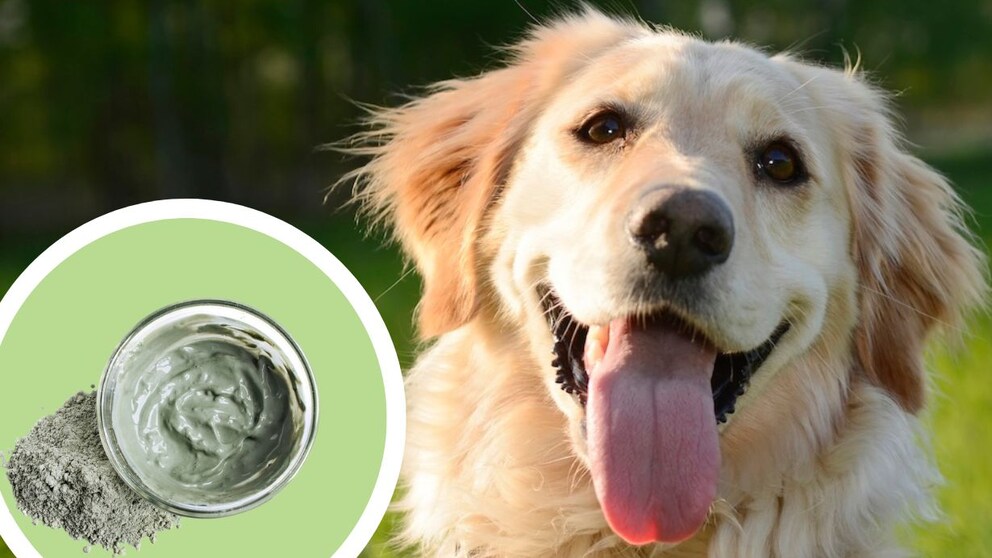
Healing clay powder has been used in medicine since ancient times to alleviate various ailments. This natural supplement is also particularly suitable for our dogs to support their bodies. Our PETBOOK author and canine health consultant, Philine Ebert, has compiled information on why, when, and how to properly use healing clay for dogs.
What Is Healing Clay, and What Is It Made of?
Healing clay is a pure natural product made from natural clay material. It is obtained from Ice Age loess, clay, or clay deposits of the earth, or from peat soil. Mineralogically, the powder, which can have various colors, mainly consists of aluminum silicates (salts of silicic acids) and essential minerals and trace elements such as potassium, zinc, iron, selenium, copper, calcium, chromium, as well as small amounts of magnesium and sodium. The effects of healing clay are not scientifically proven but are based on the experience of many generations.
Emanuel Felke, known as the “clay pastor” and a naturopath, worked with healing clay until his death in 1926. A story is told of a dog he observed rolling in clay after being severely injured. To his great surprise, the dog’s wounds were almost completely healed just a few days later, which was evidently due to the healing properties of the clay.
What Does Healing Clay Do, and What Is It Used for?
Healing clay can work internally and externally in dogs. Some effects include:
- anti-inflammatory
- detoxifying by binding toxins, heavy metals, and metabolic waste products
- alkaline for acidity
- for intestinal cleansing
- metabolism-stimulating
- pain-relieving and cooling
Applications for Healing Clay in Dogs
The remedy can be used for heartburn and gastrointestinal problems due to acidity, often accompanied by vomiting. It is also used for gastrointestinal diseases, especially diarrhea and flatulence, as it supports the intestinal flora and improves food utilization. It can also be helpful for bile acid problems. In cases of mineral deficiency, often indicated by eating soil or feces, it is also used.
It is also suitable for skin irritations such as itching, eczema, insect bites, and sore spots, as it has antibacterial properties and accelerates healing. For pain in the musculoskeletal system and osteoarthritis, compresses can be applied. These have a pain-relieving and anti-inflammatory effect on the joints and also stimulate the circulation of tissue fluids.
A key function of healing clay is to bind and eliminate toxins internally. In cases of toxin or pollutant exposure in the dog’s body, this natural detoxification helps and supports intestinal cleansing.
Reasons for Toxin Exposure in Dogs Can Include:
- consumption of spoiled food (e.g., mold)
- contaminated feed (e.g., due to fertilizers, pesticides, or medication residues)
- prolonged or continuous medication use
- worm treatments
- vaccinations
- parasite infestation
- poisoning
- disrupted cellular metabolism
- liver or kidney insufficiency
- imbalance in the gastrointestinal tract
- environmental pollution (e.g., pesticides on fields, in puddles, etc.)
Internal Use–Only as a Course (Not Permanent)
As a dietary supplement, healing clay is mixed with water or simply added to food. Since the taste is relatively neutral (slightly earthy), the addition is usually well accepted. If the dog does not like the paste, the powder can also be mixed with some yogurt or cottage cheese. Alternatively, there are capsules, tablets, or granules.
Since it is a natural product without additives, it can be pure, high-quality healing clay from the pharmacy or drugstore. For dogs, “ultra-fine” healing clay is best. However, there are now also special products for dogs from manufacturers of dietary supplements.
The administration of healing clay is not suitable for long-term use and should only be applied as a course. For a sensitive dog or one with pre-existing conditions requiring continuous medication, a healing clay course should be discussed with the veterinarian.
Dosage: 1 × daily mixed with some water:
- small dog up to about 10 kg: 1/2 teaspoon of powder
- medium dog, about 10–25 kilograms: 1 teaspoon of powder
- medium dog, about 25–45 kilograms: 1 to max. 2 teaspoons of powder
- large dog over 45 kilograms: 1 tablespoon of powder
These are guideline values.
For a sensitive animal, the dosage should be gradually increased to see how the dog reacts. Start with a lower dosage and slowly increase over several days to the recommended dosage. For special products as dietary supplements for dogs with healing clay, the manufacturer’s feeding recommendation should be followed.
External Use
Since healing clay dries quickly, it is advisable to mix it half with water and oil for external use. The paste is applied moist to the affected skin areas or joints, and if necessary, wrapped with a compress. Until the paste dries and warms up (about 15 minutes), it has a cooling and pain-relieving effect, but the addition of oil prevents the skin from drying out further. Especially for painful osteoarthritis, the associated pain is gently alleviated. This also helps with rheumatic complaints, bruises, contusions, bursitis, or tendon sheath inflammation.
The dried healing clay can be carefully brushed off or rinsed off after use.
Warm Healing Clay Wraps Help With Stomach Cramps
In warm bathwater, healing clay can provide relief for extensive skin problems, joint issues, or hard-to-reach areas. A healing clay bath should last 10–15 minutes, after which the dog should be thoroughly rinsed and dried.

How Healthy Psyllium Husks Really Are for Dogs

Can I Give My Dog Artichokes?
Possible Side Effects
Since healing clay is generally very well tolerated, the risk of side effects is relatively low. Sensitive animals can always react with allergic reactions, digestive disorders such as constipation (in case of overdose), or diarrhea. Gradually increasing the dosage helps minimize the risk of such a reaction.
Caution Is Advised With Other Medications
Healing clay can bind not only water and pollutants but also the active ingredients of other remedies. To ensure the effectiveness of other remedies or medications is not compromised, healing clay should always be administered one to two hours apart from other remedies. In this case, the application should definitely be done only in consultation with the treating veterinarian.

My Conclusion as a Nutrition and Health Consultant for Dogs
“This great remedy should really be in every household. In acute cases, such as diarrhea or insect bites, healing clay helps quickly and naturally. If a dog suffers from heartburn or digestive disorders, a healing clay course is a great way to naturally bring the dog’s body back into balance and support it.”