

January 6, 2024, 9:42 am | Read time: 4 minutes
Dogs primarily communicate through body language–even with humans. Especially in tense situations, it’s important to correctly interpret the signals of our four-legged friends. PETBOOK explains how to recognize when a dog feels threatened.
There are many situations in which dogs feel threatened, such as when someone gets too close or they fear their prey might be taken away. Stressful, threatening, or unpleasant situations can also cause dogs to become stressed and then threaten. The animals’ demeanor can quickly change–and you can see it. Therefore, it’s crucial to know and correctly read your dog’s body signals to respond appropriately and promptly when the dog sends warning signals, helping to defuse a dangerous situation as quickly as possible.
Why Do Dogs Threaten?
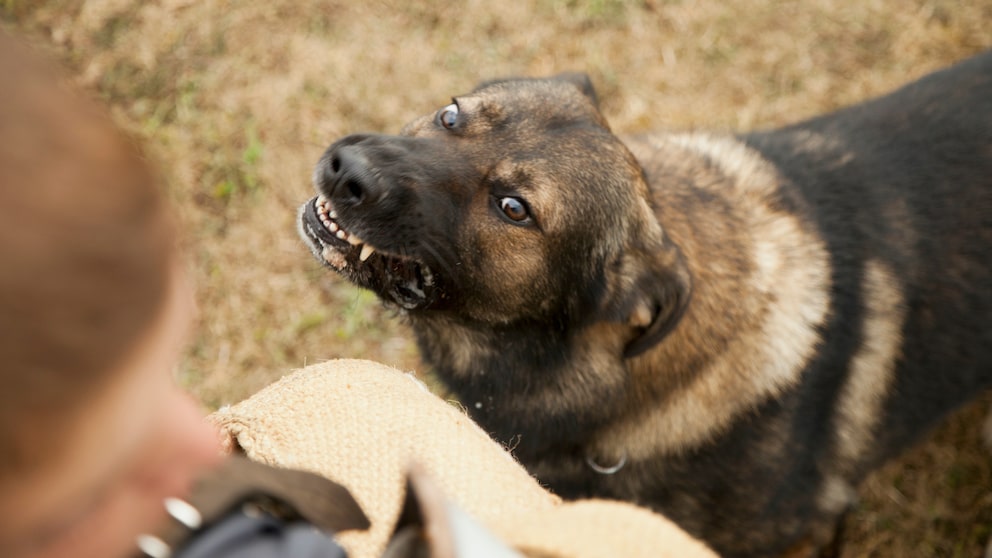
When dogs threaten by growling or even showing their teeth, many people think the dog is being aggressive. However, the primary goal of threatening is to create distance. With this behavior, the dog wants to say, “I don’t want this, I feel threatened by you. Keep your distance!”
This can have various reasons. Dogs often threaten people when they come too close, such as when the dog has a highly valuable resource like a chew bone. It’s important to understand that the dog is not aggressive or poorly trained because of this. It’s entirely normal for animals to want to defend their resources.
How Do Dogs Threaten?
Dogs primarily show through their body language that they feel threatened. According to the Industrieverband Heimtierbedarf (IVH), there are four ways dogs can react in a stressful situation–also known as the “4F”:
- Flight: the dog flees from the unpleasant situation
- Freeze: the dog stands frozen, in a state of conflict–undecided on how best to react
- Fight: the dog engages in open confrontation, using teeth and claws with the intent to harm
- Fiddle: the dog shows its insecurity in a playful manner, such as jumping around, yawning, or licking itself
Depending on which option the dog chooses in fear or stress situations, it usually clearly signals the consequences beforehand. A distinction is made between offensive and defensive threatening.
Offensive Threatening
Offensive threatening is shown by dogs that feel confident and victorious. This means the dog is ready to engage in a fight. This is also emphasized by its forward-directed body language:
- Weight is shifted to the front legs, as if ready to leap
- Neck and head are stretched or slightly raised
- Ears are positioned more to the side or also pulled forward
- Mouth corners are pulled forward
- The dog’s lips appear very short, as if saying “Oh!”
- When baring teeth, the front teeth are especially visible
Offensive threatening should always be taken seriously, as it usually signals an impending bite or attack.
Why Many Dogs Allegedly Bite Suddenly

What Rabbit Ear Positions Mean
Defensive Threatening
Defensive threatening is the less confident but more common variant. Dogs show this behavior mainly when they feel provoked or cornered. Here, the insecurity is emphasized by the backward-directed body language:
- Ears are pinned back against the head
- Body weight is shifted backward
- Mouth corners are pulled long and back, with the back teeth also visible
Defensive threatening should not be ignored. If signals like growling or showing teeth are not understood, the dog may need to be more explicit. It might snap–giving a warning bite. Depending on the dog’s character and size, even a warning bite can injure people, especially children.
Also interesting: “The dog and I stress each other out.”
How to React Properly When a Dog Feels Threatened
Things aren’t always as they seem at first glance. For both dog owners and people who happen to find themselves in such situations, it can be helpful to correctly interpret the behavior of stressed animals.
Threatening is a form of communication and does not mean the dog is aggressive. Therefore, one should not scold or discipline the dog for growling. If you stop this, you take away the dog’s ability to communicate, increasing the risk that the animals will eventually become very quick and very clear.
If a dog shows that it feels threatened, this should be taken seriously and respected. For example, by retreating or managing the situation so the dog is not exposed to threatening situations. This could involve setting up a retreat area where the dog can have peace and is generally not touched or cornered.
With material from dpa