

March 3, 2026, 12:14 pm | Read time: 5 minutes
A winter puppy moves in—and suddenly life is all about muddy paws and sleep deprivation. While cold and darkness reign outside, a small creature grows in the living room, soon entering its adolescent phase. This is where the challenge lies: The quiet winter season is just the beginning. Those who guide their winter puppy with foresight now lay the foundation for a more relaxed adolescent phase—how to achieve this is explained by dog trainer Katharina Marioth.
Winter seems cozy for puppies: short walks, few encounters, a muted world. For the winter puppy, this means manageable stimuli and lots of closeness. But this small horizon doesn’t last long. With spring, the quiet winter backdrop turns into an acoustic, olfactory, and social fireworks display—and the puppy is right in the middle of its next developmental phase.
Why Winter Is Not a Training Break
Winter doesn’t mean a training break. Even though it’s tempting to quickly dash outside and then bring the puppy back into the warmth, it’s important to incorporate small learning moments. This can mean stopping briefly by a street while cars pass or letting the puppy walk on different surfaces. The dog not only learns new stimuli but also that its human remains calm, even when the environment is unfamiliar.
A classic among winter puppies is the seemingly perfect house training. Everything runs smoothly because it’s unpleasant outside and no one lingers long. In spring, this suddenly changes: The lawn becomes a landscape of discovery. To prevent issues, practice patience in winter—don’t rush back inside, but give the puppy time to be outside. This signals that being outside is normal and not just a quick obligation.
At the same time, it’s worthwhile to work early on calmness and self-regulation. Winter puppies sleep and cuddle a lot, which is nice, but doesn’t promote much frustration tolerance. Small exercises like waiting briefly before meals, taking breaks during play, or lying on a blanket while the human does something else are valuable investments. In spring, when everything is exciting at once, these skills are urgently needed.
Spring, Adolescence, and New Challenges
The transition to spring brings not only more stimuli but also more social contacts. Dog parks fill up, walking paths become busier, and suddenly every other dog seems like a potential playmate. For winter puppies, who have met few peers so far, this can quickly become overwhelming.
Here, quality over quantity applies. It’s more sensible to allow carefully selected dog contacts than to throw the puppy into any random group. Positive experiences with confident, well-socialized dogs lay the foundation for relaxed encounters during the adolescent phase.
Another often underestimated point is physical development. Winter puppies often move less simply because the weather doesn’t permit it. With spring, activity suddenly increases. But muscles, tendons, and joints need time to adjust to new stresses. Rushing too much too soon risks overloading. Varied but moderate exercise is key: small search games, short discovery tours, and conscious breaks instead of endless marches.
Adolescent Phase: Stay Calm and Grow Together
Then there’s the adolescent phase, which usually arrives quite punctually with the first warm days. The winter puppy, who was attentive and responsive, suddenly seems to lose its hearing. Commands that worked yesterday seem like a foreign language today.
It’s important not to see this as a setback but as a completely normal developmental step. The dog’s brain is undergoing changes, priorities are being rearranged, and the environment is simply incredibly exciting. Those who continue to train the basics calmly, without pressure, will navigate this phase much more smoothly.

How Men and Women Differ in Training Their Dogs

What Puppy Owners Should Watch for in Fall and Winter
Lower Expectations, Turn on Humor
Humor is an indispensable tool during this time. The adolescent dog will act silly. It will try things out, test boundaries, and make decisions that seem highly questionable from a human perspective. Those who manage to take a step back internally and view the whole thing as a learning process save themselves a lot of frustration.
Humans should also prepare for spring. With rising temperatures, expectations often grow too. People want longer walks and a dog that “finally listens properly.” These expectations are understandable but not always realistic. A winter puppy just entering adolescence is not a finished companion dog. Patience, leniency, and realistic goals make this time much more pleasant.
Bonding as an Anchor in Turbulent Times
An often overlooked aspect is emotional bonding. Winter offers ideal conditions to build a stable relationship. Lots of shared time, quiet moments, and clear structures create trust. This bond is the foundation on which everything else is built. A dog that looks to its human and trusts them navigates a chaotic spring world more easily.
In the end, the winter puppy is a kind of silent teacher. It forces us to slow down, look more closely, and focus on the essentials.
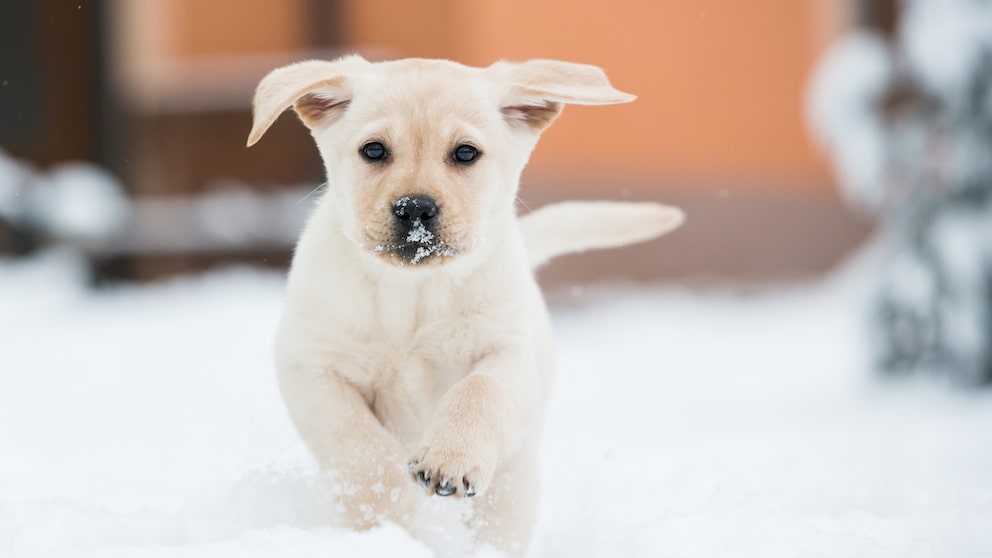
And if everything goes wrong, a quick look back helps. Remember the little creature that timidly trotted through the snow, jumped into every puddle, and fell asleep exhausted after ten minutes outside. This memory puts many things into perspective. Spring comes, the dog grows, and with the right mix of preparation, humor, and calmness, you simply grow along with it.

About the Expert
Katharina Marioth is the founder of the brand Stadthundetraining and the KEML principle. She is an IHK- and government-certified dog trainer and behavioral assessor for dangerous dogs in the state of Berlin. In her daily business, she works closely with veterinarians, scientists, and other specialists on dog-related topics. With her knowledge and skills, she secured the title of Dog Trainer of the Year 2023 in the Sat.1 show “The Dog Trainer Champion.”