

October 20, 2026, 10:28 am | Read time: 7 minutes
The puppy nips at the hand, the sleeve, or the pant leg. The young male dog growls when someone walks by his bowl. The seemingly fitting advice quickly follows: Just grab his muzzle, and he’ll remember it. After all, dog mothers supposedly do the same. Dog trainer and PETBOOK author Katharina Marioth explains why this comparison is incorrect, what consequences the grip can have, and which alternatives are better than holding the muzzle shut.
The Comparison to the Dog Mother Falls Short
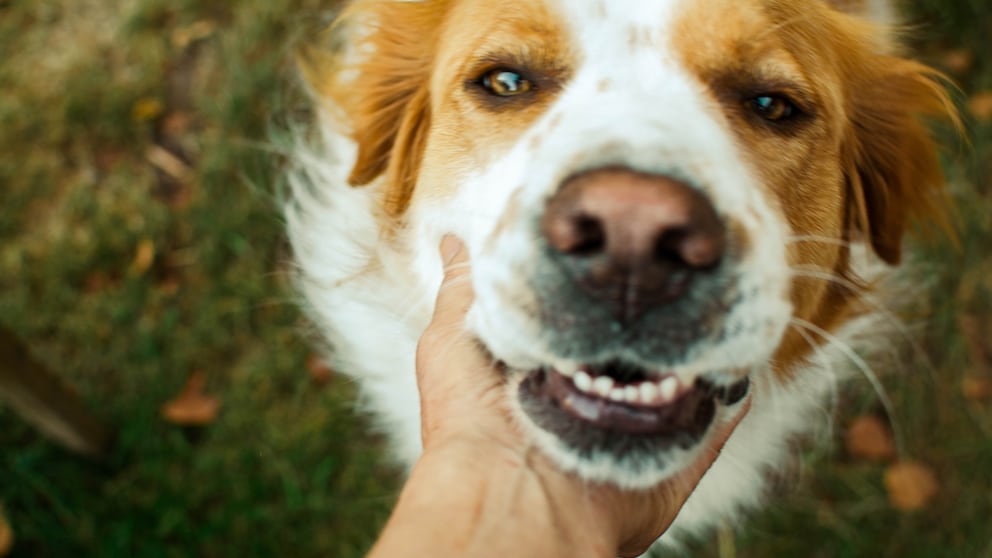
Let’s start with the dog mother, as the argument isn’t entirely unfounded. Adult dogs and even wolves do sometimes grab each other’s muzzles. However, this happens without pressure and without pain, between animals that know each other and whose body language is attuned to one another. Often, it’s a social gesture that occurs in play or is meant to calm.
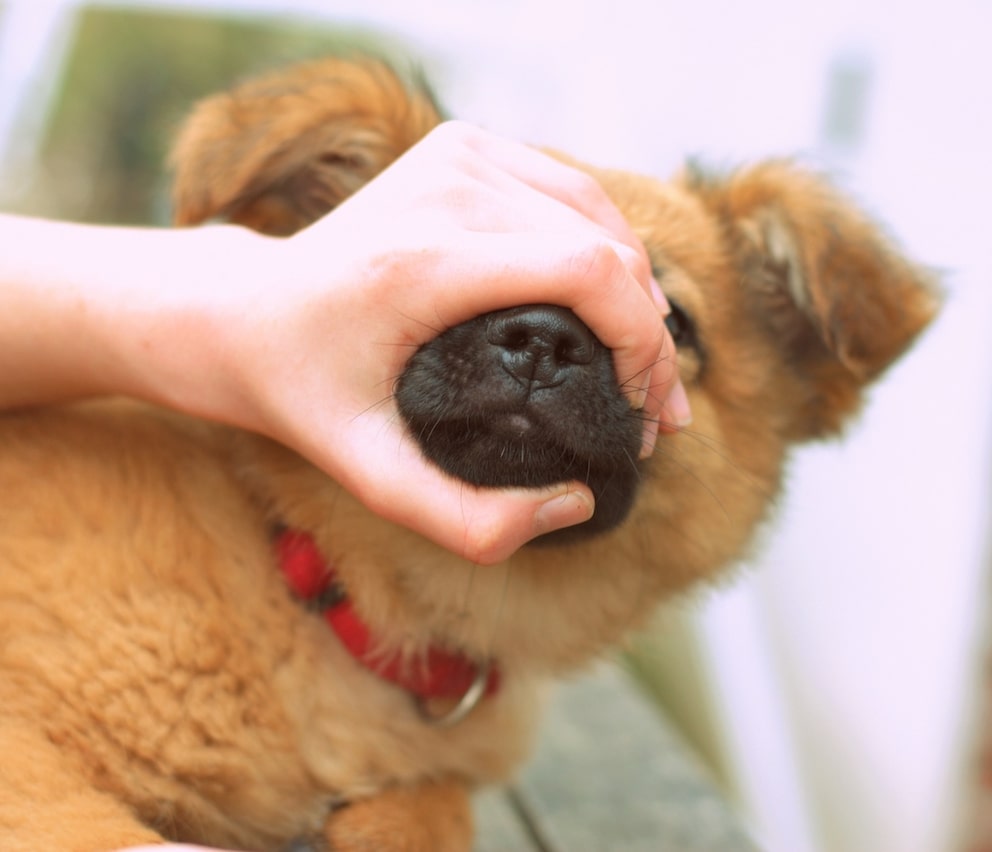
When a human grabs and presses the lips against the teeth, it has nothing to do with this gesture. The dog doesn’t experience a familiar communication from its kind but rather a sudden compulsion it can’t interpret and can’t escape.
The Grip Hits a Particularly Sensitive Spot
For a dog, the muzzle is more than just a part of the face. It’s his tool for exploring the world, his grasper, and his means of communication. Right next to it is the nose, his most important sensory organ.
Grabbing the muzzle targets one of the most sensitive areas a dog has. It restricts his freedom of movement, can affect his breathing, and presses the lips against his own teeth. Even if we don’t grab tightly, it means significant stress for many dogs.
Also interesting: What it means when your dog lies on you
Training Can Turn Into a Trust Issue
One might argue that’s precisely the point. The dog should realize his behavior is undesirable. The problem is that dogs don’t always learn the way we want them to. An unpleasant experience is linked to what was most prominent at that moment. It’s rarely the thought: “I bit too hard.” It’s more often the hand approaching the dog, the person leaning over him, or the room where both are standing.
I see the consequences in practice repeatedly: Dogs that turn their heads away when you try to stroke their foreheads. Dogs that freeze when putting on a collar. Dogs that won’t let the vet touch their faces anymore. What was intended as a training measure becomes a trust issue.
Being Still Doesn’t Mean Understanding
But why do such methods persist so stubbornly? Because they seem to work at first glance. The puppy stops nipping, the dog becomes quiet. But being quiet doesn’t mean understanding.
Many dogs freeze under pressure. They shut down internally because they have no other choice. To us, it looks like insight. Because our behavior seems to work, we resort to it again next time. This creates a cycle where the person is rewarded and the dog becomes insecure.
In the Worst Case, the Dog Defends Itself
There’s also a risk that’s often underestimated. A dog that feels cornered and held doesn’t have many options. He can freeze, flee, or defend himself. For animals that are already insecure, defending often ends in a serious bite. After such incidents, families sit across from me, completely surprised because the dog “has never done anything before.”
If children in the household see adults holding the dog’s muzzle, they might imitate it. The danger is even greater then, as a child is less likely to recognize a dog’s warning signals than an experienced adult.
Science Also Views Physical Coercion Critically
Science now views such measures critically. Studies on training methods that use intimidation and physical intervention show more stress signs and more frequent problem behaviors in dogs. Methods that rely on rewards and clear structures perform better without straining the relationship.
A dog that fears his owner’s reaction doesn’t learn better. He mainly learns to be cautious.
By the way, if you watch two dogs playing, you’ll often see them nipping at each other’s muzzles or locking jaws. It’s play and follows rules: The animals switch roles, take breaks, and regulate their strength. A human can’t fine-tune this, nor does the dog understand the intention behind it. Therefore, this image isn’t suitable as a model for training, even if it seems so at first glance.
End the Play with Nipping Puppies
The question remains, what can be done instead. Let’s start with the puppy that explores everything with his teeth that comes his way. Puppies don’t nip out of malice. They explore their surroundings, play, and are often overtired when they become particularly wild.
It’s helpful to calmly end the play: hold the hand still, stand up, leave the room for about half a minute, and then start again. No yelling, no snapping, no drama. The puppy learns something very simple: When teeth meet skin, the fun is over.
This includes having a chew toy within reach and plenty of sleep, often more than people initially plan for. A puppy often needs up to 18 hours of rest a day.
Also interesting: Dog trainer: “Dogs are increasingly stressed these days–it’s our fault”

Elvis Goes Wild on the Leash! How TV Dog Trainer André Vogt Helped Us

Dog Trainer: “Raising Dogs Without Punishment? Difficult.”
Resolve Conflicts and Train Touches
If a dog snaps at objects or food, it helps to build the “Leave it” command positively. Offer something better in exchange and return the item if it’s safe. The dog learns he doesn’t lose anything when he lets go. If you grab the muzzle and take the item out, you might teach him he needs to defend it.
Growling is a warning, not insolence. I strongly advise against punishing it. Because then the problem doesn’t disappear, only the warning does. It’s better to create distance, look for the trigger, and rule out possible pain with a vet. If there’s more to it, an experienced trainer is the right contact.
There are situations where you actually need to handle a dog’s mouth, such as giving a pill, removing a foreign object, or checking the teeth. This can be done without force if prepared. I let dogs practice placing their chin in my hand and reward each second of calm with a treat. Then, slowly lift the lips, initially for just a blink, later a bit longer. Many dogs learn this surprisingly quickly, making the next vet visit more relaxed for everyone involved.
Trust Instead of Intimidation
In the end, it boils down to a simple consideration: I want my dog to trust me because he has good experiences with me, not because he knows what happens if he doesn’t.
A dog that isn’t afraid of my hand will let himself be touched later when it really matters. Holding the dog’s muzzle might save two minutes of patience. But the price might be trust, which can only be restored with difficulty.
And if you’ve ever grabbed the muzzle because you were taught to do so, there’s no reason for guilt. We all act based on the knowledge we have at the time. What’s important is what we do with it from today. Then your dog learns: Your hands mean something good. Always.