

December 26, 2025, 7:21 am | Read time: 5 minutes
Painful joint issues are a common sign of aging in dogs. In addition to various healing and medicinal treatments, there is the option to permanently improve joint function with gold implants and reduce the associated pain. How this special method works and which dogs it is suitable for is explained by Philine Ebert, PETBOOK author and health consultant for dogs.
Overview
- What Is a Gold Implantation?
- What Are Gold Implants?
- Where Does the Therapy Come From?
- How Do Gold Implants Work?
- Which Dogs Are Suitable for Gold Acupuncture and Gold Implants?
- What Gold Is Used and How Does It Work?
- How Does the Treatment Proceed?
- How Long Do Gold Implants Last in Dogs?
- What Are the Benefits of the Therapy?
- How Expensive Are Gold Implants for Dogs?
- Conclusion
What Is a Gold Implantation?
Gold implantation and gold acupuncture are gentle, long-lasting therapies used for dogs suffering from chronic, painful joint diseases. These include degenerative joint diseases, hip dysplasia, elbow dysplasia, knee osteoarthritis, spondylosis, cruciate ligament tears, or spinal changes.
Often, years of compensatory behavior and resulting movement disorders have caused additional defects and pain that can be effectively treated.
What Are Gold Implants?
Gold implants are used in dogs to treat epileptic seizures, gum inflammation, scar tissue pain, chronic diseases of the immune system or digestive tract, and inflammatory skin conditions. In a minimally invasive procedure, gold beads, pieces, or threads are permanently placed in the tissue around the affected joint or surrounding muscles.
This therapy is now widespread for pets (especially dogs, cats, and horses), with about 20 studies existing in veterinary medicine alone. A Norwegian study showed that in 78 dogs with hip dysplasia, treatment success was observed just 14 days after treatment—and in the following three to six months. The gold therapy showed significant pain reduction and a considerable improvement in mobility. In a follow-up study, the effect lasted for another two years.
Where Does the Therapy Come From?
American veterinarian Dr. Terry Durkes began treating hip dysplasia in dogs with gold implants in 1975. The goal was to influence pain transmission and modulate the nervous system to interrupt chronic pain. Since the 1990s, the method has also been practiced in Germany.
How Do Gold Implants Work?
Current research shows that the local application of gold not only affects the immune system but may even regulate genes involved in inflammatory processes and rheumatoid arthritis. Further results are still pending.
While the painful changes cannot be reversed by gold acupuncture, the degeneration process is significantly slowed, and the pain is permanently reduced.
Which Dogs Are Suitable for Gold Acupuncture and Gold Implants?
The therapy is suitable for all dog breeds. Unfortunately, some breeds are still predisposed to joint diseases due to breeding, such as Old English Bulldogs, English Bulldogs, Dachshunds, Terriers, and Pugs. The most common orthopedic disease, hip dysplasia, often affects German Shepherds, Labradors, and Golden Retrievers.
What Gold Is Used and How Does It Work?
For this therapy, 24-karat gold in the form of beads, pieces, or wire pieces is used. 24-karat gold is durable and biologically inert in the body, meaning it typically does not cause unwanted reactions like rejection or inflammation in the tissue.
Gold implants do not work pharmacologically (like the effect of medications) but through the permanent stimulus on the nervous system. The animal does not feel the implants. They can remain in the tissue for a lifetime and do not migrate.
Gold also has tension-relieving, anti-inflammatory, and pain-modulating effects. The method is very well tolerated. Temporary mild swelling and fatigue due to anesthesia are possible side effects of the treatment.
How Does the Treatment Proceed?
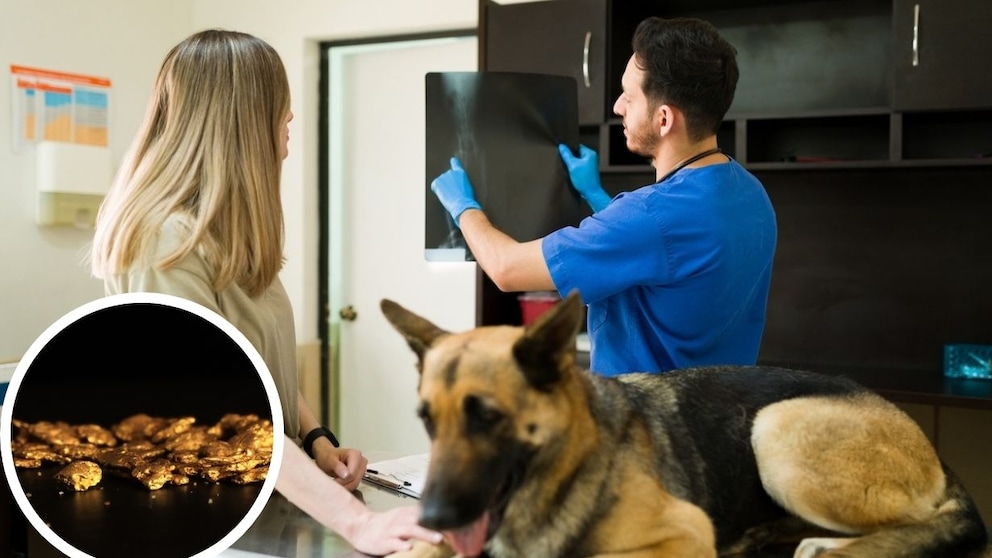
The veterinarian determines the severity of the disease and the current pain state based on X-rays and the dog’s specific gait. Using trigger point diagnostics (manual examination), they then locate the appropriate acupuncture points for implantation.
The permanent effect of gold is achieved by inserting gold beads, pieces, or wires with a hollow needle (cannula) under anesthesia. These are tiny particles.
In classic gold acupuncture, the implants are placed around the affected joint (between 10 and 50 pieces) and provide lasting stimulation to the respective acupuncture points for pain reduction.
When gold implants are specifically placed in the tissue, the metabolism is activated. This results in the breakdown and removal of inflammatory and pain substances. The tissue’s pH level normalizes, and the anti-inflammatory effect of the gold reduces pain.
How Long Do Gold Implants Last in Dogs?
The procedure is a one-time event, and the effect usually lasts a lifetime. Physiotherapeutic follow-up care (controlled movement, massages, water training) can, in some cases, further support the treatment’s success after implantation. The veterinarian accompanies the dog in the following months.
What Are the Benefits of the Therapy?
According to an American study, gold acupuncture is effective in about 80% of animals, and many dogs experience less or even no pain afterward.
As a result, owners can significantly reduce or sometimes even completely eliminate the need for pain medication. This spares the rest of the organism, especially the gastrointestinal tract, liver, and kidneys.

How to Recognize Arthritis in Cats

When a Horse Limps, This Disease is Often the Cause
How Expensive Are Gold Implants for Dogs?
The costs depend on the severity and progression of the disease, the necessary preliminary examinations, and the number of gold implants. The implant for a single acupuncture point costs approximately between 30 and 90 euros.
The costs for an entire treatment, including preliminary examinations, X-rays, anesthesia, and the gold implants, can range from 1,300 to 4,000 euros.
The veterinarian usually prepares a detailed, individual treatment plan with a cost estimate in advance, which can be submitted to the pet health insurance for cost coverage.
Conclusion
This treatment is a suitable alternative for dogs of all ages suffering from painful, chronic joint diseases and often relying on pain medication. Through a minor procedure, pain can be reduced in a gentle way. Many dogs can often move freely and without pain after the treatment.