

October 20, 2025, 4:08 am | Read time: 4 minutes
The horse comes out of the stall, takes a hesitant first step, appears stiff, and only moves more fluidly after a few minutes. A sign that many animal owners initially dismiss as a normal sign of aging—but often there’s more to it: spavin, one of the most common joint diseases in riding and driving horses. PETBOOK explains how spavin develops, how to recognize the disease, and what helps in treatment.
What Happens in the Body with Spavin
Spavin is a disease affecting the hind legs of horses. The source of pain is located above the hock joint. Repeated stress causes inflammation, which alters the cartilage and eventually the bone. Bony growths form, causing the joint to stiffen increasingly. Eventually, the joint becomes completely ossified. Although the pain then subsides, the horse’s movement is significantly restricted.
Typical triggers include misalignments during training, improper or neglected hoof care, hard surfaces, and excessive stress in sports. However, not only is too much movement problematic: lack of exercise, injuries, or an unbalanced diet can also promote the disease. Sport and workhorses that regularly exert strong pressure on their hind legs are particularly at risk.1, 2, 3
Recognizing Spavin Despite Its Challenges
The tricky thing about spavin in horses is that it usually develops gradually. Initially, the animal shows slight lameness after rest periods, which improves with movement. Over time, the lameness persists, especially at a trot or during tight turns. Many animals move stiffly, take shorter steps, and lose momentum. For owners, this can be confusing if the horse has always moved smoothly. If you notice such changes, do not hesitate to contact your veterinarian.
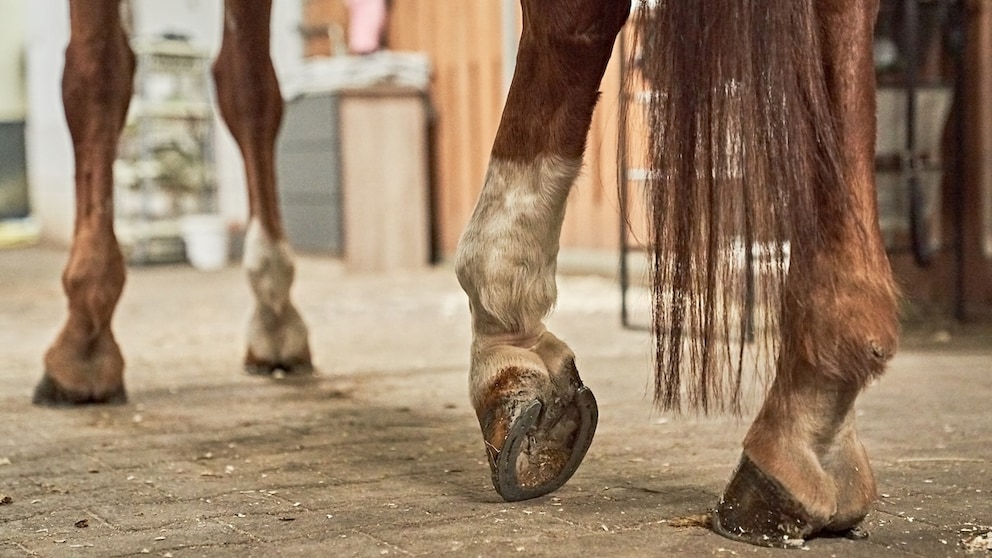
In acute phases, the hock joint may be warm and slightly swollen. Some horses show resistance when giving a hoof that is usually given smoothly or have difficulty trotting or cantering. Upon closer observation, increased wear on the toe of the horseshoe is noticeable–a sign of altered stress. If spavin becomes chronic, the muscles in the hindquarters atrophy, and bony thickenings may become visible or palpable on the inside of the joint.
Diagnosis and Treatment
For diagnosis, the veterinarian assesses the horse both standing and in motion. A flexion test can make hidden lameness more apparent. The suspicion is usually confirmed by X-rays, which show typical bone changes. Early stages are not always visible, so if necessary, a joint anesthesia—local anesthesia of the joint—is used to determine the cause with certainty. If the horse moves differently or better after local anesthesia, the source of pain can be further pinpointed.
The focus in treating spavin in horses is on pain relief. Anti-inflammatory medications such as meloxicam or firocoxib are used in acute phases, often combined with joint injections of cortisone or hyaluronic acid. Preparations that affect bone metabolism can also help slow the disease process.
Regular, controlled movement is also crucial: it keeps the cartilage supple and promotes blood circulation. Stall rest is usually counterproductive—an active stable and regular, free-range pasture time are better. Appropriate hoof care can also relieve stress and correct misalignments.
In severe cases, surgery is also an option. This is performed in an animal clinic and offers the horse a return to a piece of normality—without pain.

Why Is My Horse Lame?
How to Recognize Arthritis in Your Horse
Prevention Is the Best Care
To prevent spavin, focus on joint-friendly training and good hoof care. A balanced diet with adequate mineral supply supports stable bones and cartilage. Warm-up phases before training should be essential for every rider, as well as varied movement. Additionally, it’s important to ensure a soft surface to evenly distribute joint stress.
After injuries, the standing time should be kept as short as possible, and a slow rebuild should be coordinated with the veterinarian. Regular checks of hoof position and shoeing help detect misalignments early. If you notice lameness, stiffness, or irregular gaits, do not wait—early diagnosis can prevent spavin from becoming chronically progressive.
In Short
Spavin in horses is a degenerative disease of the hock joint that develops gradually and can occur in phases. With timely diagnosis, targeted therapy, and consistent movement management, many horses can still lead a largely pain-free life.