

March 16, 2026, 12:44 pm | Read time: 5 minutes
Many dog owners initially notice only small things: The dog squints one eye, rubs its face more often, or the eye appears red. Often, this seems harmless. But behind such inconspicuous changes, there could be glaucoma in dogs—an eye disease that can quickly become serious. PETBOOK explains which symptoms are important to recognize and why quick action is crucial.
How Glaucoma Develops in Dogs
For an eye to function normally, a stable pressure must be maintained inside. This is ensured by a clear fluid called aqueous humor. It is produced in the ciliary body—a structure in the eye that also holds the lens and helps the eye adjust to different distances. The aqueous humor supplies the eye with nutrients and helps maintain the shape of the eyeball. At the same time, the fluid is constantly being produced and drained. The drainage occurs through the so-called drainage angle, located between the cornea and the iris.
In a healthy eye, there is a balance between the production and drainage of the aqueous humor, keeping the intraocular pressure constant.1
In glaucoma, this drainage no longer functions properly. The aqueous humor accumulates in the eye, and the pressure increases. The elevated pressure can damage sensitive structures like the retina and optic nerve, both crucial for vision. Without treatment, this can lead to blindness in a short time.
Why Dogs Get Glaucoma
Glaucoma in dogs can have various causes. Veterinarians generally distinguish between primary glaucoma and secondary glaucoma.
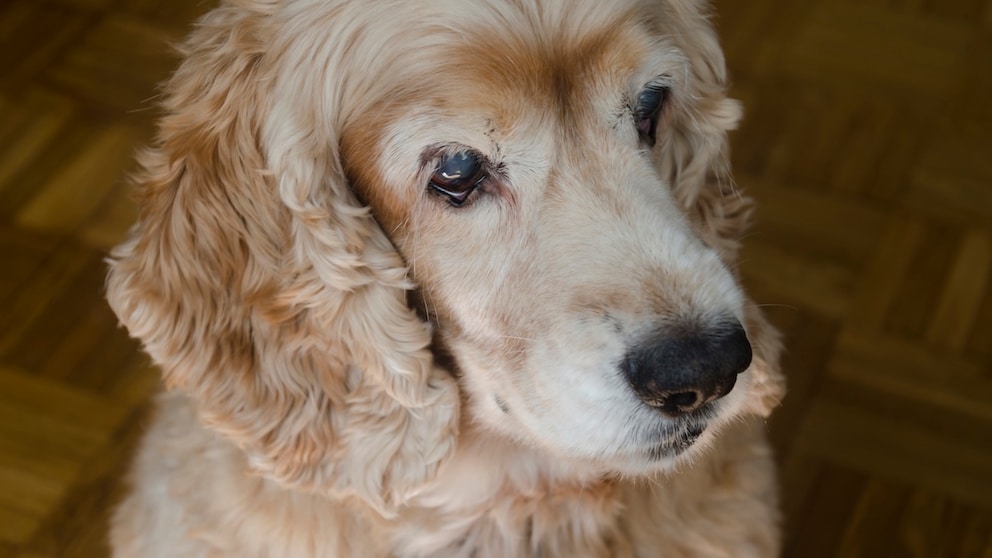
In primary glaucoma, the cause lies directly in the eye. Often, the so-called drainage angle—the area through which the eye fluid drains—is congenitally malformed. This impedes the outflow of aqueous humor, increasing intraocular pressure. According to an information brochure from the University of Veterinary Medicine Vienna, certain dog breeds have a genetic predisposition for this. These include Dachshunds, Poodles, Cocker Spaniels, Basset Hounds, Chow Chows, and Dalmatians. Primary glaucoma often occurs in dogs between the ages of three and seven. Initially, only one eye is affected, but the second eye can also become diseased later.2
However, secondary glaucoma is more common in dogs. Here, the increased intraocular pressure results from another eye disease. A possible cause is lens displacement (lens luxation), where the lens partially or completely detaches from its suspension and can block the outflow of aqueous humor. Chronic eye inflammation, bleeding from injuries or foreign bodies, and tumors inside the eye can also disrupt the drainage of eye fluid. In some cases, glaucoma in dogs develops after eye surgeries.3
Recognizing Symptoms
Glaucoma in dogs is usually very painful. However, the first signs are often difficult for owners to recognize because they initially appear nonspecific and can easily be mistaken for simple eye irritation.
Typical symptoms that may be noticeable in everyday life include:
- Red or watery eyes
- The dog squints the affected eye or keeps it closed more often
- Increased rubbing of the eye
- Sensitivity to light
- Sensitivity around the head
- Withdrawal, apathy, or decreased appetite
As the disease progresses, further changes may occur:
- Clouding of the cornea
- A dilated pupil that hardly or no longer contracts in response to light
- Vision problems; the dog bumps into objects more often
- Enlargement of the eyeball if the increased intraocular pressure persists
Without treatment, glaucoma in dogs can lead to permanent retinal damage and blindness within 24 to 48 hours. Therefore, the condition is considered a veterinary emergency.
How Veterinarians Diagnose Glaucoma in Dogs
If glaucoma is suspected, the veterinarian first measures the intraocular pressure. This examination is called tonometry, where a special device is used to determine the pressure in the eye.
Additionally, the veterinarian examines the eye closely to identify possible causes of the increased pressure. If primary glaucoma is suspected, a procedure called gonioscopy may be performed. This involves examining the drainage angle—the area through which the eye fluid drains—with special instruments to detect malformations or changes.
Depending on the findings, further examinations may be necessary to rule out other eye diseases or clarify the exact cause of the dog’s glaucoma.
How Is Glaucoma Treated?
In dogs with glaucoma, the increased intraocular pressure must be reduced as quickly as possible. Various medications are used for this, such as eye drops, tablets, injections, or infusions. They aim to either decrease the production of aqueous humor or improve the drainage of fluid in the eye. Additionally, many animals receive medication for pain and inflammation.
If medication is not sufficient, surgical intervention may be necessary. Laser procedures or freezing of certain structures in the eye are used to reduce the production of aqueous humor. If the eye is already permanently blind or the intraocular pressure can no longer be adequately controlled, removal of the eye (enucleation) may be necessary in severe cases to relieve the animal’s pain.
The choice of treatment depends on the cause of the glaucoma, the condition of the eye, as well as the age and overall health of the dog.
How Glaucoma Develops and Is Treated in Cats
Signs, diagnosis, and treatment of cataracts in dogs
What Are the Prognoses for Glaucoma in Dogs?
Glaucoma in dogs is considered a serious eye disease. The prognosis mainly depends on how early the disease is detected and treated. Within 24 to 48 hours, significantly increased intraocular pressure can cause permanent retinal damage.
The cause of the glaucoma and the dog’s overall health also influence the course of the disease. Many animals initially respond well to treatment. However, maintaining normal intraocular pressure is often challenging. After successful therapy, pressure spikes can recur. Therefore, regular check-ups are important to monitor intraocular pressure over the long term.
Prevention and Management
Targeted prevention of glaucoma in dogs is usually not possible, especially if there is a genetic predisposition. However, for breeds with a known risk, it may be advisable to have regular veterinary eye examinations and watch for early changes. Red, painful, or cloudy eyes should always be promptly evaluated. Early detection of the disease can be crucial in reducing pain and preserving vision for as long as possible.