


September 28, 2025, 6:54 am | Read time: 4 minutes
Glaucoma is a serious eye disease that can also affect cats. It involves an increase in the pressure inside the eye, damaging the optic nerve. If not detected and treated in time, it can lead to irreversible blindness. Because cats often hide pain well, glaucoma in them often goes unnoticed for a long time.
How Does Eye Pressure Develop and When Is It Elevated?
The eye contains a clear fluid called aqueous humor. It is produced inside the eye, supplies essential structures with nutrients, and normally drains through fine channels. If this balance between production and drainage is disrupted, the internal pressure of the eye increases. 1
In healthy cats, the normal intraocular pressure ranges from about 10 to 25 mmHg. Values over 30 mmHg are considered pathologically elevated and can already cause damage to the optic nerve.2
How Does Glaucoma Manifest in Cats?
The symptoms are often subtle and develop gradually. Typical signs can include:
- dilated, sluggish pupils (mydriasis)
- a cloudy or bluish tint to the cornea
- a noticeably large or protruding eye (buphthalmos)
- unequal pupil sizes
- redness of the conjunctiva
- sudden onset of blindness
Behavioral changes such as withdrawal, reduced activity, or aggression can also indicate pain.3
The Two Types of Glaucoma
In cats, glaucoma is distinguished between primary and secondary glaucoma. 4
- Primary glaucoma is rare in cats but can occur due to congenital changes in the eye that obstruct the outflow of aqueous humor.
- In most cases, however, it is secondary glaucoma, which occurs due to other eye diseases or injuries—such as chronic inflammation, congenital malformations, or lens dislocation.
Causes of Glaucoma in Cats
The causes of glaucoma in cats are varied, with secondary forms being much more common than primary ones. The most common is chronic uveitis, a persistent eye inflammation caused by infectious diseases such as Feline Immunodeficiency Virus (FIV), FeLV, or FIP, which can obstruct the outflow of aqueous humor and increase eye pressure.
Other possible triggers include congenital malformations or a condition called lens luxation, where the lens blocks the outflow of aqueous humor. Less commonly, injuries with bleeding or a condition called aqueous humor misdirection syndrome, where the aqueous humor is misdirected within the eye, can lead to increased eye pressure. 5
Do Cats with Glaucoma Experience Pain?
Yes, even if it is not always visible. Many cats with glaucoma appear only quieter, withdraw, or avoid being touched on the head. People with glaucoma often describe significant pressure pain as a constant headache or migraine, so it is likely that cats experience considerable discomfort as well.6
Diagnosis and Treatment
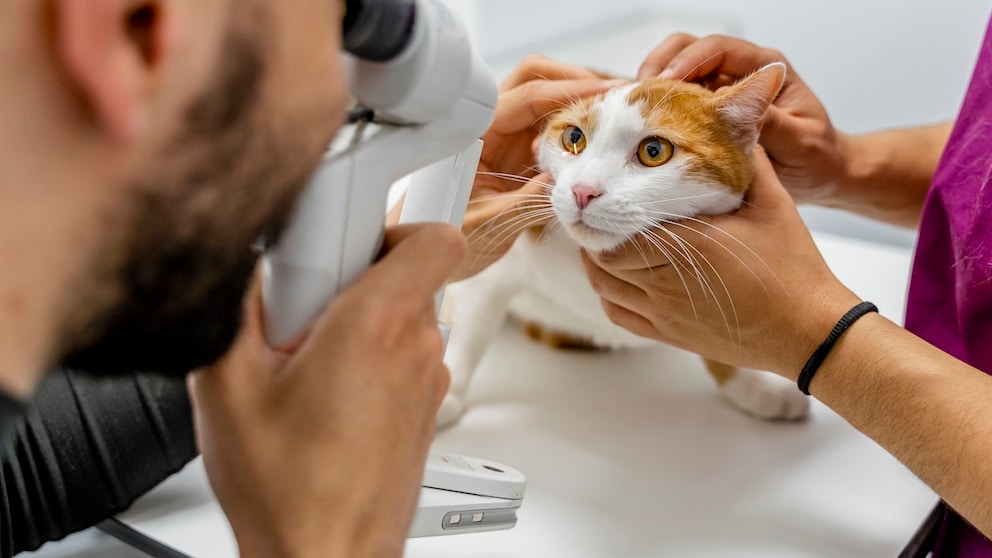
A veterinarian diagnoses glaucoma through a thorough eye examination.
Treatment depends on the stage and cause:7
- Medications: primarily eye drops with carbonic anhydrase inhibitors, such as timolol, which reduce pressure by decreasing fluid production in the eye.
- Emergency therapy: In acute cases, a mannitol drip can quickly reduce pressure.
- Surgery: In cases where medications are ineffective, enucleation (removal of the eye) may be necessary. While it sounds drastic, it is an effective way for the cat to live pain-free.

Glaucoma in Dogs: How to Recognize Early Symptoms
Signs, diagnosis, and treatment of cataracts in dogs
Disease Progression and Prognosis
The prognosis depends heavily on the stage and cause of the diagnosis: If glaucoma in cats is detected early, vision can sometimes be partially preserved. In most cases, however, vision is already significantly impaired. With proper care, a cat can still lead a good life—pain relief is especially important.8
Conclusion
Glaucoma in cats is a serious eye disease that often goes unnoticed until it is too late. Since it often arises secondarily from other diseases, thorough examination by a veterinarian is crucial. Although lost vision cannot be restored, with proper care, a cat can still lead a good life—pain relief is especially important. It is crucial to have any changes in a cat’s behavior or eye appearance examined by a veterinarian.