

May 26, 2026, 12:58 pm | Read time: 6 minutes
With bushy brows, weather-resistant, wiry hair, and an alert gaze, the German wirehaired pointer not only symbolically represents German hunting passion but embodies it to perfection. Yet, its rugged charm and loyal expression can be deceiving: Behind the distinctive beard lies a highly specialized hunting assistant with a demanding nature. Who this four-legged friend is truly suited for—and why one shouldn’t be swayed by appearance alone.
The German wirehaired pointer is a prime example of functional breeding: Developed to perform all tasks of a hunting dog in field, forest, and water, it impresses with versatility, robustness, and intelligence. Since the early 20th century, the motto “Performance defines type” has been the standard for its pure breeding, securing it a strong position among Germany’s most popular pointing dogs. However, the wirehaired pointer is not a dog for everyone. Without hunting leadership or at least adequate alternative activities, this working dog risks being underutilized—with all the consequences. Breeding is strictly controlled, with annual tests like the Hegewald, where only the most capable dogs are passed on. Choosing this breed means choosing responsibility—and a loyal partner with a hunting instinct.
Origin
The origins of the German wirehaired pointer lie in Germany at the end of the 19th century. The goal was to create a particularly versatile all-purpose hunting dog from various rough-haired hunting dog breeds. Breeds like Griffon, Pudelpointer, and German roughhaired pointer were deliberately crossed. Later, the breeding line was supplemented with the German shorthaired pointer to refine pointing and flushing abilities. The focus was always on hunting performance—appearance was secondary.
The development was significantly influenced by Baron Sigismund von Zedlitz and Neukirch (“Hegewald”), who insisted that only high-performing animals be allowed for breeding. This philosophy led to the founding of the Verein Deutsch-Drahthaar in 1902, which continues to enforce strict breeding criteria. Over the decades, the German wirehaired pointer became the most widespread pointing dog breed in Germany, with over 3,000 puppies annually in the VDH. Internationally, the wirehaired pointer has also established itself, even finding hunting use at royal courts in Sweden and Spain.
Appearance & Coat
The German wirehaired pointer is a strong, medium to large hunting dog. Its weight ranges from about 27 to 35 kilograms, depending on gender and body structure. The breed displays a muscular, compact build with a deep chest and a harmonious gait. The tail is carried horizontally to slightly raised and is often docked for hunting purposes—where legally permitted.
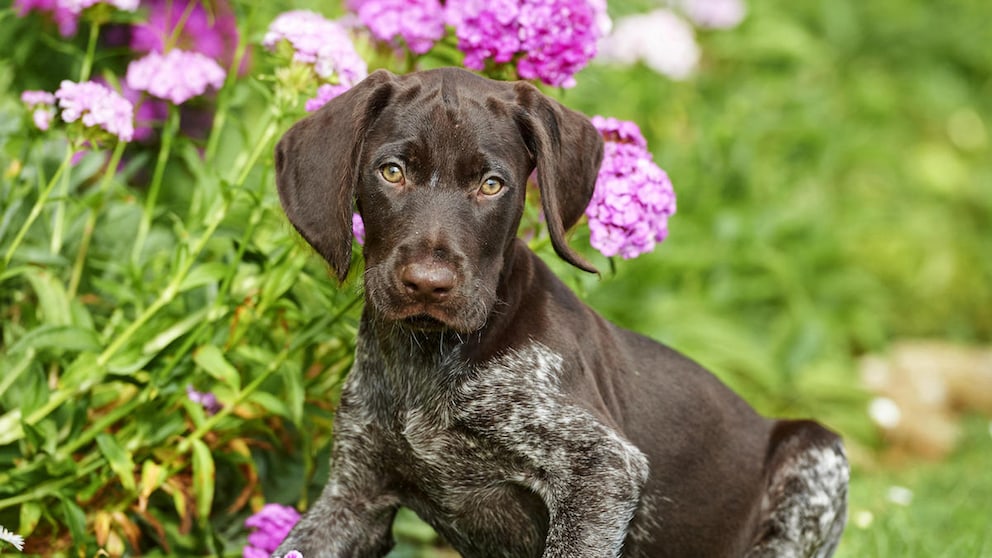
Trademark features include bushy eyebrows and a dense beard on the upper and lower jaw, giving the dog an expressive, often described as loyal face. Particularly striking is the weather-resistant coat: The wiry topcoat is two to three centimeters long, hard, and lies close. Underneath, a dense, water-repellent undercoat protects against moisture, thorns, and cold. The standard allows for liver roan, black roan (each with or without patches), and liver with or without a white chest spot.
Character & Temperament
The German wirehaired pointer is an energetic, confident, and resilient hunting dog with a strong work ethic. Its nature is considered stable and balanced. The wirehaired pointer shows courage, high learning ability, and strong nerves—it is neither shy nor aggressive, but often reserved with strangers. It forms close bonds with its handler and is affectionate, playful, and humorous in familiar surroundings. Properly exercised, it can be an excellent family dog, but it is not merely a companion dog. A certain readiness to defend against people, tolerated in breeding, must not be unintentionally encouraged. The German wirehaired pointer needs clear structures, mental challenges, and tasks to fully develop its potential.
Training
Training the German wirehaired pointer requires experience, consistency, and empathy. Due to its intelligence and quick comprehension, it learns quickly but also tests boundaries. Therefore, the breed is not suitable for beginners. Professional hunting training ideally begins in puppyhood, such as through handler courses at hunting dog clubs. These include basic obedience, pointing, tracking, retrieving, water work, and gun steadiness. At home, a loving yet firm leadership is important. Unwise indulgence—such as giving in to begging—can quickly become a habit. Those who lead their wirehaired pointer clearly but fairly gain a highly cooperative partner.
Proper Care & Maintenance
The German wirehaired pointer belongs exclusively in responsible hands—ideally those of hunters or very active dog sports enthusiasts. It is not a city dog and is unsuitable for purely apartment living. Optimal conditions include a house with a large yard and daily physical and mental exercise. Without hunting leadership, it should be regularly challenged through scent work, dummy training, mantrailing, or tracking. Longer walks, running, or riding can provide additional stimulation.
Coat care is simple: Regular brushing is sufficient, as the harsh topcoat is dirt-repellent and easy to maintain.
Nutrition
The nutrition of the German wirehaired pointer must be adjusted to its energy needs. A working hunting dog has a high calorie consumption depending on the area of use (e.g., flushing or water work). A diet with high meat and moderate fat content is recommended. Feeding should be completed before hunting activities to minimize the risk of gastric torsion—ideally, the last meal is given the night before. During hunting, only small snacks or hydration breaks are allowed. With heavy exertion, sufficient water breaks—especially in heat—are essential. For dogs with less activity, the food can be adjusted accordingly or supplemented in a BARF-compliant manner.

Can the German Longhaired Pointer Also Be Kept as a Family Dog?
The English Pointer Requires an Experienced Handler
Susceptibility to Certain Diseases
The German wirehaired pointer is considered a generally robust breed with careful breeding selection. Hip dysplasia (HD) and osteochondrosis dissecans (OCD) of the shoulder are rare thanks to strict controls. However, some hereditary diseases are known: including entropion (eyelid malformation), epilepsy, hemophilia B, and von Willebrand disease (a blood-clotting disorder).
A rarer but serious condition is craniomandibular osteopathy (CMO), which primarily affects young dogs and can lead to painful changes in the skull area. Regular veterinary check-ups, health certificates of the parent animals, and breeding under the VDD standard minimize the risk of genetic diseases.
The German Wirehaired Pointer at a Glance
- Character: Confident, handler-oriented, eager to learn, hunting, highly motivated
- Size: Males 61–68 cm, Females 57–64 cm
- Weight: approx. 27–35 kg
- Coat & Colors: Wiry, robust, with undercoat; liver roan, black roan, liver
- Grooming Effort: low–regular brushing is sufficient
- Special Features: All-purpose dog for field, forest, and water; not suitable for beginners