


November 7, 2025, 7:16 am | Read time: 5 minutes
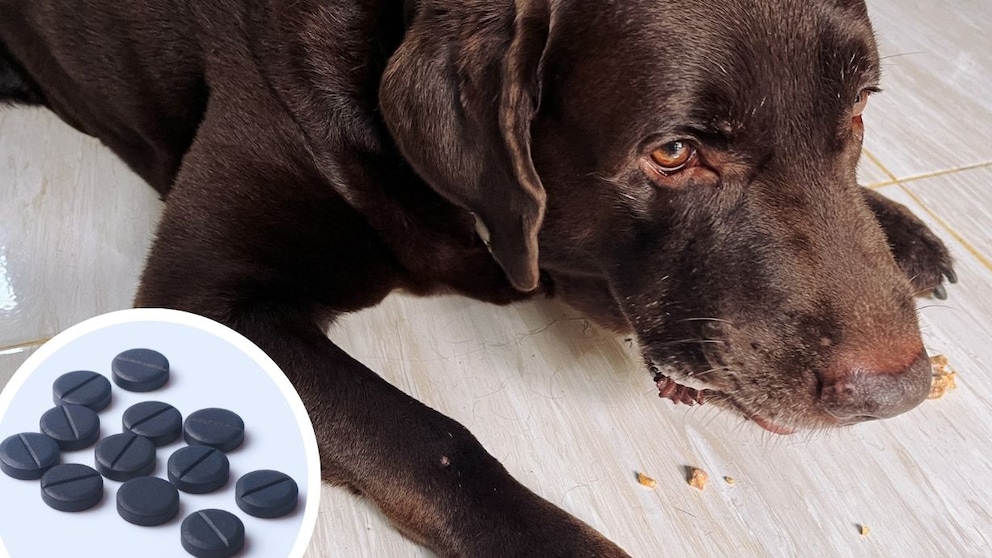
Charcoal tablets are considered a home remedy for diarrhea and a first-aid measure for poisoning. But when are they really useful, how should they be dosed correctly–and when should you take your dog directly to the vet?
How Charcoal Tablets Work in Dogs
Charcoal tablets–also known as activated charcoal or medicinal charcoal–have been trusted for decades for gastrointestinal issues. They are made from highly porous, pure carbon, often derived from coconut shells or wood.
Thanks to their unique structure, even simple activated charcoal has a massive surface area–about 300 square meters per gram! It acts like a microscopic sponge: It attracts and binds toxins, bacteria, medications, or poisons before they enter the bloodstream. In cases of poisoning, this can be life-saving; for mild gastrointestinal upset, activated charcoal helps neutralize toxins and bacteria in the gut.1
When Charcoal Tablets Are Useful for Dogs
For Diarrhea
Too much liverwurst from the table, a find during a walk, or a harmless stomach upset–mild diarrhea is common in dogs. In such cases, charcoal tablets can help bind toxins and stabilize digestion.
However, diarrhea should not automatically be treated with charcoal tablets. It is often a natural cleansing reaction of the body. If your dog shows lethargy, loss of appetite, or vomiting, a vet should be consulted.
For Poisoning
If the dog has ingested something toxic–such as rat poison, chocolate, grapes, or a suspicious piece of sausage on the roadside–activated charcoal is the most important first-aid measure.
The charcoal binds the poison in the gastrointestinal tract and prevents it from entering the body. The rule is: The faster it is administered, the better. However, it never replaces a visit to the vet–poisoning is always an emergency!
Tip: In areas with a high risk of poison bait, every dog owner should keep a small “anti-poison emergency ration” of activated charcoal on hand (more on this below).
Also interesting: Poisoning in pets–what you should do now
Dosage of Charcoal Tablets
The correct dosage depends on the purpose and the weight of the dog.
For Diarrhea:2
- Small dogs (up to 10 kg): 0.5–1 g of activated charcoal, 1–2× daily
- Medium dogs (10–25 kg): 1–2 g, 1–2× daily
- Large dogs (25–50 kg): 2–4 g, 1–2× daily
- Very large dogs (over 50 kg): 4–5 g, 1–2× daily
For Poisoning (Emergency Measure):
The rule of thumb here is one gram of activated charcoal per kilogram of body weight. In severe cases, the vet may recommend up to eight grams per kilogram of body weight, spread over several doses.3
Since larger dogs require a corresponding number of tablets, it is advisable to stock activated charcoal powder instead of tablets and, if necessary, fill it into capsules yourself.4
Warning: Activated charcoal can cause constipation in too high a dose. Therefore, adhere to veterinary recommendations.
How to Administer
Some dogs take tablets without issue, while others recognize them immediately and refuse them. The following methods can help:
- Hide in food: Crush the tablets and mix them into wet food or liverwurst.
- Mix with water: Combine powder or crushed tablets with a little water and gently administer with a syringe (without a needle) into the side of the mouth.
- Direct administration: Calm dogs can have the tablet placed directly on their tongue.
Important: After ingestion, the stool may turn black–this is completely harmless.
When to See a Vet?
Charcoal tablets are an effective first-aid measure but not a substitute for medical care.
Please seek veterinary help immediately if:
- Your dog is very lethargic or vomiting,
- Blood is visible in the stool or vomit,
- The diarrhea lasts more than 24 hours,
- There is a suspicion of poisoning,
- It involves a puppy, senior, or chronically ill dog.
If your dog is dazed, having seizures, or weak and can no longer swallow properly, do not give charcoal! In this case, there is a risk of choking–go to the vet immediately. The vet can determine the cause, provide infusions, or–if poisoning is suspected–initiate further measures such as blood tests and X-rays. 5

First Aid for Dogs: What to Do in an Emergency

How Healing Clay Can Help Dogs with These Problems
How to Prepare an Anti-Poison Emergency Ration for Your Dog
Poisoning can happen at any time–and every minute counts. With a prepared “anti-poison emergency ration,” you are ready to act in an emergency.
Here’s how to proceed:
- Calculate the dose: 1 g of activated charcoal per kg of your dog’s body weight.
Example: A 20 kg dog needs 20 g of activated charcoal. - Prepare the portion: Portion the appropriate amount into a clean, airtight container or small bag.
Label it with your dog’s name and dosage. - Choose the right form: Charcoal powder is easier to dose than tablets–especially for large dogs. It can be mixed with a little water to form a paste in an emergency.
- Store the emergency ration within reach: Keep it in the first-aid kit for dogs or in the car–especially if you are in areas with a high risk of poison bait.
- In an emergency: Administer the prepared amount immediately, even before heading to the vet. The activated charcoal can slow down the absorption of poison in the digestive tract–but it does not replace veterinary treatment.
Conclusion: Activated Charcoal Can Save Dogs’ Lives–But It’s Not a Cure-All
Charcoal tablets are a proven remedy for gastrointestinal issues and a real lifesaver in emergencies. Their effectiveness is based on a simple principle: bind, neutralize, excrete. Always keep some activated charcoal in your home pharmacy–but do not rely solely on it. If your dog appears ill or you suspect poisoning, it’s better to visit the vet one time too many than one time too late.