

January 9, 2026, 3:22 pm | Read time: 5 minutes
The Cão da Serra da Estrela, also known as the Estrela Mountain Dog, is an imposing shepherd dog from Portugal, whose impressive appearance is paired with a deeply rooted protective instinct. This ancient Molosser has been guarding herds in the rugged highlands of the Serra da Estrela for centuries—with courage, intelligence, and remarkable independence. But what makes this livestock guardian so fascinating for experienced dog owners—and at the same time so challenging?
Origin
The Cão da Serra da Estrela is one of the oldest dog breeds on the Iberian Peninsula. Its origins lie deep in the mountain range of the same name in northern Portugal, where it has been used as a livestock guardian for centuries. Even in ancient times, Molossers were described as independently working guard and war dogs—the Estrela Mountain Dog fits into this tradition. It accompanied sheep and goat herds from the valley to altitudes of over 2,000 meters to protect them from predators and thieves.
The breed was first publicly shown in 1908 in Lisbon. A first standard was established in 1922, followed by international FCI recognition in 1955. With the Portuguese Carnation Revolution in 1974, the dog lost its status symbol significance and was temporarily threatened with extinction. Today, the breed is experiencing a cautious renaissance—not only in Portugal but also in countries such as France, Sweden, the Czech Republic, and the United States. Breeding remains largely in Portuguese hands, although international breeders also rely on original lines from the Estrela region.
Appearance & Coat
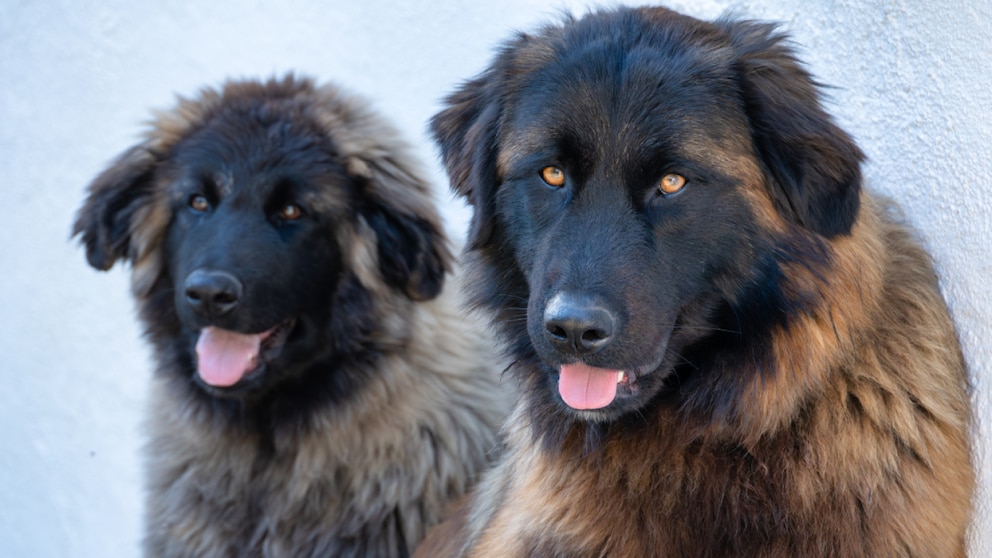
The Estrela Mountain Dog is a strong, harmoniously built Molosser of the mastiff type with a shoulder height of 65 to 73 cm for males and 62 to 69 cm for females. The weight ranges between 35 and 60 kg. Its compact body conveys strength without appearing bulky and allows for a brisk, enduring gait despite its size.
Typical is the rustic coat with a goat-like structure, which comes in two varieties: short-haired and long-haired. Both types feature a close-fitting, weather-resistant coat with dense undercoat. The topcoat is either smooth or slightly wavy. The breed appears in yellow, fawn, or wolf gray, sometimes with white markings. The undercoat is usually lighter than the topcoat. Particularly in the long-haired variety, striking feathering on the legs, tail, and neck gives the dog its distinctive appearance.
Character & Temperament
The Estrela Mountain Dog is a confident, independent, and deeply loyal dog. As a classic livestock guardian, it has a pronounced territorial behavior and is watchful and sometimes even suspicious of strangers, without being aggressive. Within its family, it is considered gentle, faithful, and reliable, often forming a close emotional bond with “its” person.
Typical is its high threshold for stimuli and calmness—qualities that are essential in combination with its strength. Despite its balanced nature, it tends to be dominant, especially with same-sex peers. The Estrela is not a beginner’s dog but requires leadership based on mutual respect, patience, and wise consistency.
Training
Training the Cão da Serra da Estrela requires experience, a delicate touch, and above all, consistency. Its pronounced self-confidence and independent working style make it not particularly receptive to authoritarian training. It reacts sensitively to being overwhelmed and refuses meaningless drills or harsh corrections.
Instead, it needs a close bond with its person and clear but fair guidance. Early socialization—especially in dealing with other dogs—is crucial to control dominance behavior. Those who train it with patience, positive reinforcement, and empathy will gain a reliable and loyal companion.
Proper Care & Maintenance
An Estrela Mountain Dog does not belong in an apartment. It needs space, tasks, and the opportunity to independently observe its territory. Ideally, a house with a large, well-fenced yard is best. Daily walks are necessary, preferably in a natural environment.
In terms of coat care, the Estrela is undemanding. Weekly brushing is usually sufficient, but during shedding, it should be done more frequently. Its dense, weather-resistant coat is dirt-repellent. In addition to regular care, owners should also ensure sufficient mental and physical activity to prevent boredom and unwanted behavior.
Nutrition
Proper nutrition is particularly crucial during the growth phase to prevent joint diseases such as hip dysplasia (HD). After an energy-rich puppy diet, it should be switched to a lower-protein food to avoid rapid growth.
Once the dog is fully grown, energy intake can be adjusted again—but always in relation to activity level and health status. Fresh drinking water, high-quality food, and controlled weight development are essential. With appropriate knowledge, raw feeding can also be a suitable form of nutrition.
What Owners Should Know About the Bergamasco Shepherd Dog
This Livestock Guardian Dog Does Not Belong in Private Hands
Susceptibility to Certain Diseases
The Cão da Serra da Estrela is considered a robust and resilient breed. Hardly any breed-specific hereditary diseases are known. The most common health challenge—as with many large breeds—is hip dysplasia (HD).
Responsible breeders pay attention to healthy breeding lines and have their breeding animals examined accordingly. Regular veterinary check-ups, careful rearing conditions, and adjusted exercise during puppyhood significantly contribute to prevention.
The Cão da Serra da Estrela at a Glance
- Character: Watchful, independent, loyal, dominant
- Size (Shoulder Height): Males 65–73 cm, Females 62–69 cm
- Weight: 35–60 kg
- Coat: Short or long-haired, goat-like with dense undercoat
- Exercise Needs: High, has a strong herding instinct
- Average Lifespan: 10 to 12 years
- Special Features: Strong independence, not suitable for beginners, should not be kept in a small apartment