

May 26, 2026, 4:19 am | Read time: 4 minutes
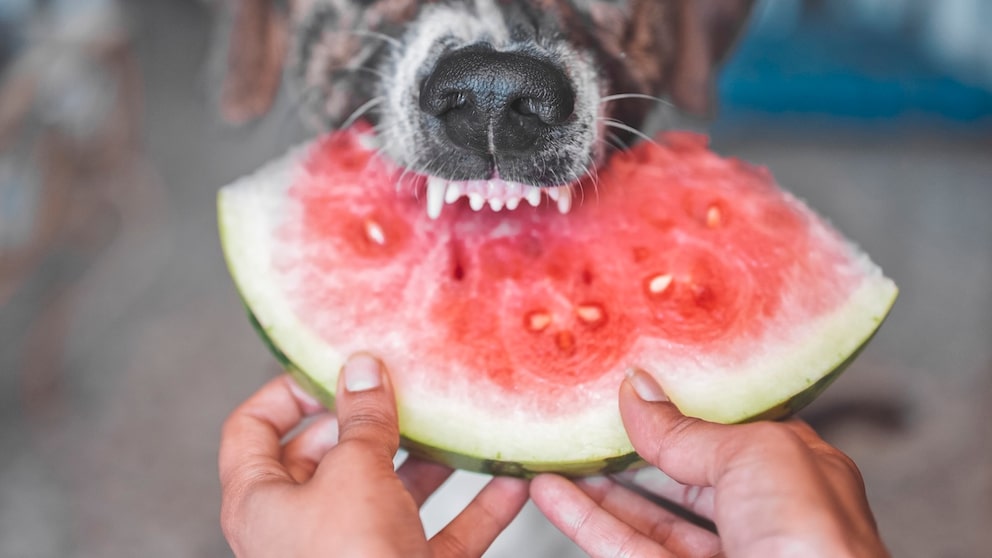
Watermelon is not only a refreshing treat for people and animals in the summer, but it’s also available almost year-round now. Our dogs are also interested in this colorful, light, and refreshing snack. Many enjoy nibbling on a piece of melon just as much as their humans do. But is this popular fruit suitable for our four-legged friends, and what should be considered when feeding it to them? PETBOOK author and dog nutritionist Philine Ebert has compiled all the facts about watermelon for you.
Can My Dog Eat Watermelon?
Yes, dogs can eat watermelon. The fruit is actually quite healthy for them. Watermelons are more than 90 percent water, contain vitamins and minerals, and support the entire organism. All these factors make this low-calorie fruit a popular snack, especially in the summer. It also automatically helps with hydration.
Watermelons also contain a lot of potassium, which is particularly important for various cellular metabolic processes. The mineral supports healthy heart muscle function and the transmission of nerve impulses. The vitamin C in the fruit helps build collagen, which is important for bones, teeth, and connective tissue, and it also strengthens the immune system.
Watermelon provides valuable fiber due to its high fiber content, supporting healthy and normal digestion. The natural fruit sugar content of a watermelon is about 6 grams per 100 grams, which is harmless in appropriate amounts for a healthy dog. For diabetic, overweight, allergic, and particularly sensitive animals, consulting a veterinarian is advisable.
How Much Watermelon Can a Dog Eat?
Watermelon is a low-calorie, healthy addition to food and a varied snack. However, every organism reacts differently to fruit. Therefore, the amount should be increased slowly to see how the dog tolerates melon.
Starting with small pieces, the daily amount ultimately depends on the size and weight of the animal. The rule of thumb for snacks and treats should be followed. The total amount of additional snacks should not exceed 10 percent of the daily food ration and should be included in the daily nutritional needs.
Also interesting: Which Fruits Dogs Can (and Cannot) Eat
What Happens if It Was Too Much Watermelon?
If a dog eats too much watermelon, it can result in gastrointestinal issues such as nausea, vomiting, bloating, diarrhea, or constipation. Puppies are also very sensitive when it comes to digestion and should only receive watermelon rarely and in small amounts.
Dogs with intolerances or even allergies may react with itching, skin rashes, redness, inflammation, and digestive issues to the fruit. If such physical symptoms occur after feeding watermelon, it is better to avoid it and consult a veterinarian if necessary.

Are cats allowed to eat watermelons?

Which Fruits and Vegetables Guinea Pigs Can Eat
What Should Be Considered When Feeding?
Please do not feed the rind or seeds! Only the red flesh is suitable for dogs. The rind is hard to digest, tastes woody, is difficult to chew, and is often contaminated with pesticides. Therefore, it is better to offer the dog only ripe pieces of red flesh without rind and seeds. The seeds are particularly hard to digest for small dogs and can cause an intestinal blockage in the worst case.
The flesh of honeydew and cantaloupe melons can also be fed to dogs without concern. However, since they have a higher sugar content, the appropriate amount should be carefully considered.
How to Make Watermelon a Summer Highlight for Dogs
My recommendations for using watermelon on hot summer days:
Encourage Drinking
Adding fresh or frozen watermelon pieces to the water bowl piques interest. It also surprises your four-legged friend with a new taste and adds variety to the bowl.
Offer a Healthy Alternative to Ice Cream
Melon also works great as ice. Simply freeze small fruit pieces, puree, or smoothie in an ice cube tray, and you’re done. It keeps them occupied and refreshed at the same time.
Incorporate Watermelon into Play
Put small pieces, fruit puree, smoothies, or yogurt with fruit into an interactive toy, on a lick mat, or in a Kong. This provides long-lasting entertainment and a refreshing, fruity licking experience.
New Variety for Rewards or on the Go
Chilled melon pieces or smoothies from a thermos are the perfect cooling snack during long walks or hikes. And not just for the dog, but also for the owner.
Encourage Scent Work and Tracking Skills
Hiding small watermelon pieces in a sniffing mat, incorporating them into search games, or laying a small trail in the garden provides excitement, variety, and engagement through active scent work.