

May 4, 2026, 8:48 am | Read time: 6 minutes
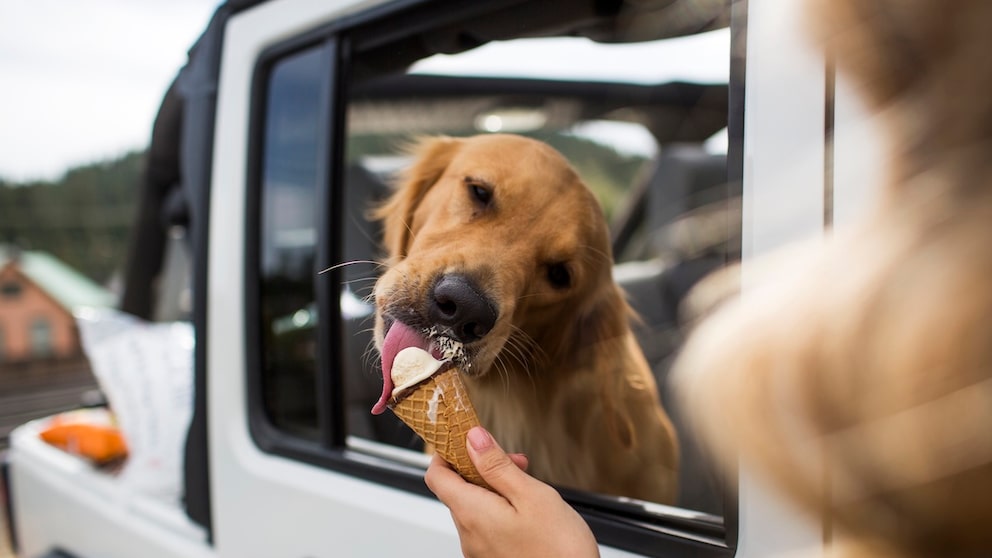
As temperatures rise, the temptation to give your dog some ice cream also grows. But is it safe? PETBOOK explains why many types of ice cream can be problematic or even dangerous for dogs.
Overview
- Can Dogs Eat Ice Cream?
- Problem Number 1: Lactose-Containing Dairy Products
- Problem Number 2: Chocolate
- Problem Number 3: Sugar
- Problem Number 4: Xylitol and Other Artificial Sweeteners
- Problem Number 5: Raisins, Coffee, Tea, and More
- Other Risks When Dogs Lick Conventional Ice Cream
- Make Ice Cream for Dogs Yourself for Refreshment
Can Dogs Eat Ice Cream?
Every dog owner knows the feeling: You want to enjoy your sandwich, salad, or a refreshing ice cream on a park bench in peace, but you’re constantly being watched eagerly and encouraged with whines to share. After all, the motto is “friends share.” Whether that’s a good idea is explained in this article.
Problem Number 1: Lactose-Containing Dairy Products
Classic ice cream flavors like vanilla, stracciatella, or chocolate contain milk or cream, depending on the recipe. Puppies can still tolerate milk or the lactose it contains well, as mother’s milk is their initial nourishment as mammals. However, as they grow, most dogs lose this tolerance, especially for cow’s milk, and become lactose intolerant.
As a result, dogs cannot tolerate milk sugar or can only handle it in small amounts. The primary reactions to intolerance include digestive issues and diarrhea. A dog might not show symptoms if it licks a bit of ice cream off a finger, but larger amounts should be avoided.
Problem Number 2: Chocolate
Chocolate ice cream is among the most popular flavors. However, most dog owners know that the ingredients theobromine and caffeine found in cocoa beans are almost pure poison for dogs–and larger amounts can even be fatal. Although the amount in chocolate ice cream is usually small, combined with other unfavorable ingredients, chocolate ice cream, stracciatella, or any cocoa-containing ice creations should not end up in a dog’s mouth.
Also interesting: 10 Foods That Are Toxic to Dogs
Problem Number 3: Sugar
The sugar content that makes ice cream so incredibly tasty for humans is not good–not even for our four-legged friends. While this problematic ice ingredient won’t directly cause health issues, sugary snacks are not good for already overweight dogs or their teeth. For dogs with diabetes, sugar poses an acute health risk!
Problem Number 4: Xylitol and Other Artificial Sweeteners
Unless explicitly labeled, ice cream at the parlor is usually sweetened with conventional granulated or powdered sugar. However, caution is advised if you opt for ice cream with sugar alternatives like xylitol, also known as birch sugar. Even in small amounts, it can cause seizures, liver failure, and actually lead to fatal hypoglycemia.
Commercially produced ice cream poses a particular danger to dogs, as the sweet dessert often contains numerous artificial additives. Among them are cheap sugar substitutes that make the product economical and even sweeter for humans–but can lead to poisoning in dogs.
Problem Number 5: Raisins, Coffee, Tea, and More
Some ice cream flavors contain rum raisins, which pose a particular danger to dogs: Even small amounts of raisins can lead to kidney failure in dogs, and alcohol is also toxic. An ice cream of the popular Málaga variety should definitely not end up near a dog’s snout.
Various toppings are also risky due to the harmful mix of theobromine in chocolate and caffeine. Therefore, ice cream flavors containing coffee are particularly risky: In dogs, caffeine and alcohol have a much more intense effect due to their lower weight. Caution: The currently popular matcha ice cream is made from tea, which contains a high caffeine content.

What Happens When Cats Eat Yogurt

Why Many Dogs Eat Less in the Summer
Other Risks When Dogs Lick Conventional Ice Cream
Especially in small dog breeds or puppies, even small amounts of sugar, xylitol, or caffeine can have significantly stronger effects. But that’s not all. A phenomenon can occur that is more common in winter, known as snow gastritis. A too-cold food can cause stomach cramps in sensitive animals. Cold ice cream can lead to gastrointestinal irritation or toothaches in some dogs, especially in sensitive or older animals.
The rule of thumb is: One to two teaspoons per kilogram of body weight of dog-friendly ice cream on very hot days is okay–but it should not be more, especially for small dogs.
Make Ice Cream for Dogs Yourself for Refreshment
Whether from the ice cream parlor or the supermarket, ice cream often contains ingredients that can be quite dangerous for dogs. Not least, with the sometimes overwhelming number of additives in industrial ice cream, it’s easy to lose track–such ice creams have nothing in common with natural food for humans or animals and should ideally stay in the supermarket freezer.
If you want to treat your dog to a refreshing snack in the summer, it’s best to make dog ice cream yourself. With a few well-tolerated ingredients and without plastic waste–sustainable, safe, and healthy!
Recipe Idea 1: Frozen Yogurt
Unlike milk or cream, many dogs can tolerate lactose-free, fermented dairy products like buttermilk or yogurt in small amounts. For a quick frozen yogurt, puree some frozen blueberries with a bit of plain yogurt, and you have a dog-friendly ice cream that provides an extra portion of antioxidants, vitamins, and minerals. The blueberries can also be replaced with frozen banana slices if desired.
Recipe Idea 2: Vegan Dog Ice Cream
For a vegan dog ice cream creation, simply replace the yogurt with some natural peanut butter. However, this ice cream variant has significantly more calories. Already overweight dogs should therefore receive this snack only rarely or in small amounts.
Recipe Idea 3: “Dog-Healthy” Ice Pops
If you want to skip the blender and feed the ice directly from the freezer, larger ice cube molds are perfect. These are available in silicone, for example. For a “pet-friendly” ice pop, simply mix suitable fruits or vegetables like berries, steamed pumpkin or carrot, or apple shavings with some water, freeze, and serve in portions.
Final Tip: If you’re in a hurry, specially made creations from ice cream manufacturers for dogs are a good option. There are now ice creams for dogs from well-known ice cream companies that offer dog ice cream à la “Doggie Dessert” with peanut butter, pumpkin, and more, in addition to their conventional range.
Beke Enderstein is a certified nutritionist specializing in creating vegan and vegetarian recipes along with food styling. Naturally, nutrient-rich recipe ideas for pets are also included. Her treat creations are well-tested, as her cat Findus and her rescue dog Jasper take on the taste testing.