


March 23, 2026, 2:10 pm | Read time: 5 minutes
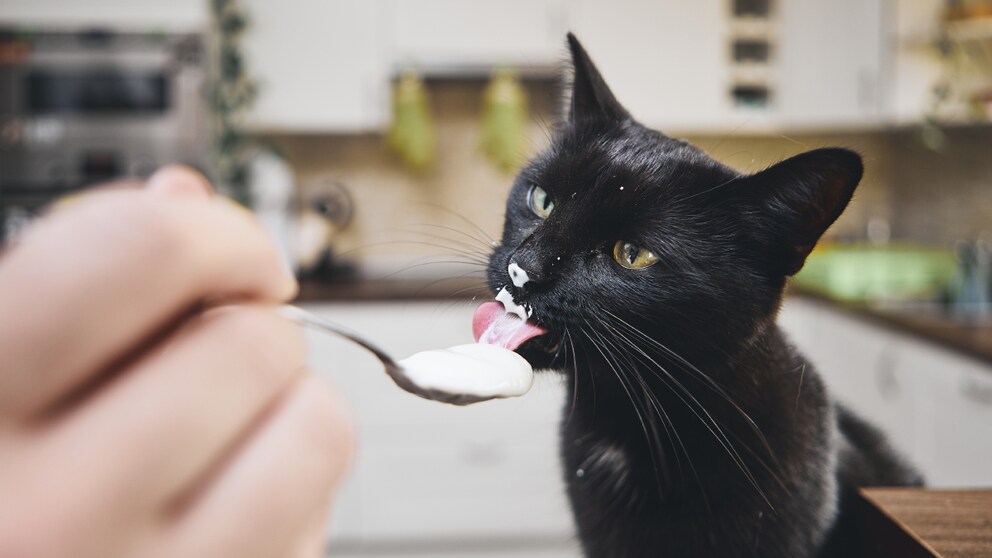
The myth of the milk-loving cat persists. In many children’s books, cats happily lap from a milk bowl–and in real life, owners often turn to dairy products when their feline friend is curiously sitting at the breakfast table. But what about yogurt? Can cats eat it, or does it harm their health? PETBOOK editor and biologist Saskia Schneider explains.
Is Yogurt Healthy for Cats?
Yogurt can occasionally be a beneficial addition for cats, but it’s not a necessary part of their diet. Unlike regular milk, yogurt contains less lactose and is therefore better tolerated by many cats. It also provides protein, calcium, and lactic acid bacteria, which can positively affect gut flora.1
So the short answer to whether cats can eat yogurt is: Yes–but only in small amounts, and not every yogurt is suitable. Many adult cats are lactose intolerant. After the nursing age, their bodies produce less of the enzyme lactase, which is necessary for digesting milk sugar. If a cat reacts to dairy products with diarrhea or bloating, it’s best to avoid them altogether. Additionally, dairy products–including yogurt–are among the more common food allergens for cats. Yogurt is not a health booster, but at most an occasional snack.
Nutrients in 100 Grams of Yogurt
Natural yogurt made from whole milk (3–3.5% fat) contains, among other things:2,3,4
- Energy: approx. 60–80 kcal
- Protein: approx. 4–5.7 g
- Fat: approx. 3–3.7 g
- Carbohydrates (including lactose): approx. 4–7.8 g
- Calcium: approx. 120–200 mg
- Potassium: approx. 280 mg
- Vitamin B2 (Riboflavin): approx. 0.17–0.27 mg
- Vitamin B12: approx. 0.2–0.5 µg
For cats, high-quality protein and calcium for bones and teeth are particularly important. However, the lactose content remains a critical point.
How Much Yogurt Can a Cat Eat?
The rule is clear: less is more. For most cats, a teaspoon, at most a tablespoon of yogurt, is a safe amount. This should be offered occasionally–not daily–perhaps every few days.
It’s important to start with a very small amount and then observe the cat. If it shows signs of diarrhea, bloating, or vomiting, yogurt should no longer be part of its diet. Generally, yogurt should be considered a treat–not a staple of the diet.
Can Cats Eat Lactose-Free Yogurt?
Lactose-free natural yogurt is definitely a better choice for cats, especially for those with sensitive digestion. While this yogurt is not completely lactose-free, the lactic acid bacteria partially break down the lactose. Nevertheless, many cats react sensitively.
The same applies to plant-based yogurt alternatives like soy, coconut, almond, or oat yogurt: They contain no lactose but offer no nutritional benefit to cats. They should also not be offered regularly and should be sugar-free.
Greek yogurt can also be suitable, as it contains less lactose, but it is significantly higher in fat. Therefore, it is less recommended for overweight cats. Homemade yogurt from lactose-free milk is particularly safe–without unnecessary additives.5
What Happens if Cats Eat Too Much Yogurt?
If a cat eats too much yogurt, the gastrointestinal tract usually reacts first. The milk sugar cannot be sufficiently digested, often leading to diarrhea, bloating, stomach pain, or vomiting. With regular or excessive consumption, these symptoms can worsen and, in the worst case, lead to persistent irritation or inflammation of the gastrointestinal tract. Allergic reactions to milk proteins are also possible.
Calorie content also plays a role: If yogurt is fed frequently or in large quantities, it can contribute to weight gain over time–especially in indoor cats. Yogurts with sugar, flavors, or other additives are particularly problematic, as they offer no health benefits but further burden digestion and metabolism.
Does Yogurt Help Cats with Diarrhea?
Probiotic yogurt can be supportive for mild diarrhea but does not replace a vet visit for persistent issues. If your cat shows discomfort, yogurt should be discontinued immediately.6

Should Cats Drink Milk? Expert Warns Urgently

Can Dogs Actually Eat Ice Cream?
What to Consider When Feeding Yogurt to Cats
If you want to offer your cat yogurt, you should follow a few basic rules:
Only natural yogurt is suitable, preferably lactose-free, without sugar, fruits, vanilla, or other flavors. Industrial fruit or dessert yogurts do not belong in a cat’s bowl. Sweeteners, preservatives, and artificial additives should also be avoided.
Special caution is advised with yogurt sweetened with birch sugar or xylitol. This sugar substitute is highly toxic to cats–and dogs–and can lead to the death of the animals even in small amounts.
Conclusion: Yogurt in Small Amounts and Occasionally
Cats can eat yogurt–but only occasionally, in very small amounts, and in the right form. Lactose-free natural yogurt is the best choice. If a cat shows signs of intolerance, it should be avoided altogether. As harmless as yogurt may seem, it is not a staple food for cats, but at most a small snack in between–and only if it is well tolerated.
About the Author
Dr. Saskia Schneider is a Ph.D. biologist. During her studies at the Free University of Berlin, she focused primarily on zoology and animal behavior. In addition to training as an editor, she completed training as a behavioral consultant with a focus on cats.