


September 14, 2024, 2:22 pm | Read time: 4 minutes
Whether dogs can recognize themselves in mirrors is a topic of global debate among experts. Scientists have developed a test for animals to prove this. But how do dogs perform?
When a dog first sees its reflection in a mirror, it often starts barking or tries to invite the perceived fellow dog to play. Then it becomes confused and checks to see if the fellow dog is behind the mirror. Later, the mirror image no longer interests it, and it seems to ignore it. Has it understood that it’s seeing itself? Can dogs recognize themselves in mirrors?
Overview
How the Mirror Test Works
To determine if an animal can see or recognize itself in a mirror, one or two scentless colored dots are placed on a part of its body that it can only see in the mirror. A common position is the forehead. If the animal sees itself in the mirror and reacts by trying to remove the dot, it is considered proven that it has recognized itself in the mirror and thus has self-awareness. If it tries to remove the spot directly on the mirror surface, it has not associated the reflection with its own self. 1
Also interesting: These Animals Recognize Themselves in Mirrors
Dogs Regularly Fail the Test
Humans can do it–and so can some animal species, such as great apes, elephants, dolphins, magpies, and pigs, recognize themselves in mirrors. This means they have self-awareness. This was discovered by biopsychologist Gordon G. Gallup with the so-called mirror test. Dogs regularly fail the mirror test. But does this mean they lack true “consciousness” and are therefore less intelligent?
Recognizing oneself in a mirror is often equated with self-reflective abilities. But that’s nonsense, says behavioral ecologist Alex Jordan. In 2023, he was part of a team at Osaka City University led by Masanori Kohda that showed cleaner wrasses also interact with their reflection (PETBOOK reported).
Self-recognition is nothing special, according to Jordan. “Even bacteria distinguish between self and non-self,” the Swiss newspaper “Neue Zürcher Zeitung” quotes the biologist. Consciousness is not required for this. Instead, cognition, the complex mental activity, should be seen as a gradual development that varies among different species. Other scientists also advocate for this perspective.

Is the Mirror Test Suitable and Meaningful for Dogs?
Many cognitive scientists confirm that dogs do indeed have a self-image. They point out that the world of dogs is more about smells or sounds. In scent tests, scientists observed that dogs can distinguish their own scent from that of other dogs.
For example, Alexandra Horowitz from Barnard College found in various olfactory tests: “Dogs spend more time examining the scent of other dogs than their own scent.” The test also included the following setup: When a dog smells its own urine, it is not particularly interested. But if a marker, a few drops of another dog’s urine, is added to its own scent, it immediately sniffs it longer. This is precisely why marking is such an important behavior for our dogs. 2 3

Do Birds Have Consciousness?
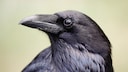
Smarter Than Expected! Crows Also Have Consciousness
Why Does the Dog Bark at Its Reflection?
Some dogs act wildly when they look in the mirror. Some pet owners report that they had to cover or remove mirrors because their dogs reacted so frightened or aggressively to their reflection. The reason is that dogs do not recognize themselves in mirrors and see a foreign fellow dog in the reflection. Most dogs quickly learn that the reflection poses no threat and begin to ignore their mirror image.
Conclusion
The mirror test, which almost always yields negative results for dogs, does not provide insights into a dog’s intelligence or self-awareness, as this type of test may simply be unsuitable for dogs. They respond more to olfactory than visual stimuli.