

October 17, 2025, 9:13 am | Read time: 7 minutes
PETBOOK author Laura Pomer wanted to do everything right with her first dog. She attended numerous dog training sessions, but today she would approach it very differently. Here she shares how a so-called dog whisperer showed her how simple it can be with dogs if you try to understand them.
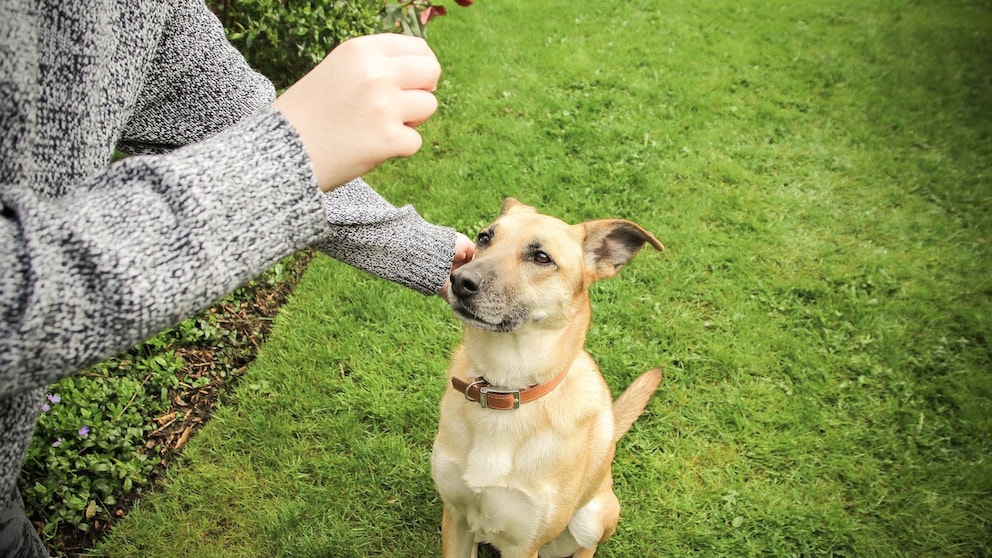
My dog is a Chihuahua-Fox Terrier mix from the animal shelter. She is small and probably the cutest animal in the world. Most people not only forgive her for jumping up on them but find it adorable. Her demanding whining and whimpering are usually met with goodwill. But if we’re honest, such behavior is, of course, not acceptable.
Today, if you want a well-behaved dog, modern thinking suggests you can’t do without a trainer. I’ve tried both. My opinion on traditional dog training has since changed significantly, and I now follow a completely different approach.
Which Dog Trainer Is the Right One? The Choices Are Vast
The problem starts with choosing a dog trainer. Countless individuals and companies offer traditional dog training–both online and offline. My first encounter with an apparently self-proclaimed dog trainer happened right at my doorstep. The woman approached me about my dog, and after a brief chat, she introduced herself as a dog trainer and said she could come by the next day. One hour: 50 euros. That was relatively cheap compared to other trainers–maybe too cheap? I declined.
Later, I arranged to meet with a trainer who had been recommended to me and had good reviews on Google. I was taught the basics, which apparently included giving treats in almost every situation. As a reward? Treats. To combat fear? Treats. For practicing being alone? Right–treats again.
“Feiiiiiiinnn!!!” Echoed Through the Woods
After three sessions, I was supposed to master the basics. Often, however, I was unsure how to behave. So I decided to participate in group training sessions with an official dog trainer who also trained other trainers. Before each of these Saturday sessions, I packed large amounts of treats–for special achievements (such as successfully balancing on a log), the great, big treats were needed–and yet they were never enough. I was regularly helped out.
Besides the bombardment with snacks, another important component of this training was the typical sing-song. This means a command should be given in a very specific tone. If the dog followed it, you had to quickly raise your voice to the highest octaves. “Feiiiiiiinnn!!!” echoed through the woods. The higher and squeakier, the better.
I Don’t Deny That Traditional Dog Training Works
Anyone who has delved a bit into the topic knows that traditional dog training originated with working, hunting, and police dogs. Obedience and control were the focus. Later, psychological concepts such as classical and operant conditioning were introduced. Dogs learn through reward, punishment, or the association of stimuli.
Many dog schools still use a combination of commands, treats, and praise, often accompanied by high-pitched sing-song. Modern training approaches, however, focus more on positive reinforcement, motivation, and a trusting bond between dog and owner.
But just because dog training works doesn’t mean you have to use it. I learned this after my first conversation with a so-called dog whisperer–admittedly, a cheesy term that even he struggles to say. Perhaps he could be better described as an advocate for dogs, which doesn’t sound any less silly but at least does justice to his “mission.”
The man lived on the streets for about 14 years following unpleasant events in his childhood, much like countless street dogs in Serbia. Dogs were his companions–he studied and learned to understand them out of necessity. His knowledge not only taught him to appreciate dogs for their pure, harmony-seeking nature. He now uses it to teach dog owners how to interact with their four-legged friends in a species-appropriate way.
Respect Comes Before Trust
In short, the approach of “my” dog whisperer is based on the pack leader theory. In communication, you can completely do without language. This makes sense, as language does not naturally occur in the animal world. Instead, it’s about energy and body language. The pack leader–and this should be the owner–must exude calm, focus, and presence. This has the advantage for the dog of being able to follow. Respect comes before trust, as one of my lessons goes. The whole thing is very similar to the approach of the American Cesar Millan, also known as the Dog Whisperer.
The most important thing seems to be to see the dog for what it is: a dog. An animal with instincts, a need for movement, and also a need for a clear hierarchy. An example from everyday life: When my dog comes to the meadow completely unexercised, she barks at everything. This is partly because she hasn’t been worn out beforehand–all the energy is pent up, and she doesn’t know where to put it.
I also haven’t led her. I just let her rush ahead–she’s overwhelmed by her freedom and apparently feels the need to protect me from the unknown (such as the man reading with a cap on his blanket). That’s not her job. If I want my dog to live with me–in an apartment in Berlin-Mitte instead of in a pack in nature–then I have to make it easier for her to submit.
Conditioning Destroys the Dog’s Natural Instincts
Conditioning, or learning through reward or punishment, leads to dogs no longer acting instinctively–at least that’s how the dog whisperer explained it to me. We humans expect them to behave as we might expect from ourselves.
Dogs have been domesticated for an estimated tens of thousands of years. And sure, household dogs probably don’t suffer from getting treats. Unless, of course, you overdo it and they develop health problems like obesity. Everyone can decide for themselves whether to follow the more modern approach and–perhaps even convinced–lead a kind of child substitute on a leash. Many people also value dogs sitting and staying when asked, giving a paw, and perhaps mastering some tricks. In short, that the dog can do the amazing: understand words and respond to them.

Elvis Goes Wild on the Leash! How TV Dog Trainer André Vogt Helped Us

What Does a Dog Psychologist Actually Do?
Should You Not Talk to the Dog at All Anymore?
Talking to the dog is a thing of its own. Yes, I admit: I do it too–though much less than before. I tell my dog how cute she is and announce when we’re about to go out. Even though I actually know that this might not be so pleasant for the animals. After all, I also find it more of an annoyance when someone talks to me in a completely foreign language. In this case, at least, it’s the same system of communication. Dogs use different communicative behaviors if allowed.
My Wish Is for an Independent and Relaxed Dog
Others, on the other hand, are more concerned with the dog being calm and relaxed–whether or not he sits on the ground. That he follows when you indicate it, and indeed, that he is independent. The first trainer I worked with back then explained to me that I should literally make situations in which my dog is afraid palatable with treats. She would then associate positive feelings with the supposedly threatening. But training away emotions with food–how is that supposed to work?
According to my dog whisperer, the right way would be to act calmly and confidently in front of the fearful dog. Not comforting him–that would only confirm his insecurity–but showing through calm energy and leadership that there is no reason for fear. For this reason, you should only pet the dog when he is relaxed. Because this feeling is what needs to be confirmed.
I don’t presume to fully and accurately convey the philosophy. I still want to learn as much as possible from the dog whisperer. And of course, I don’t condemn it if others choose to rely on traditional dog training, meaning working with treats, positive reinforcement, and the like. People are so accustomed to the principle–in fact, it’s initially a bit more challenging without aids. But once you internalize that it’s not the dog that needs to be trained, but the human who must be clear and guiding in their communication–then it suddenly works. For me and my Maggie, it’s certainly the right way.