

April 2, 2023, 2:42 pm | Read time: 4 minutes
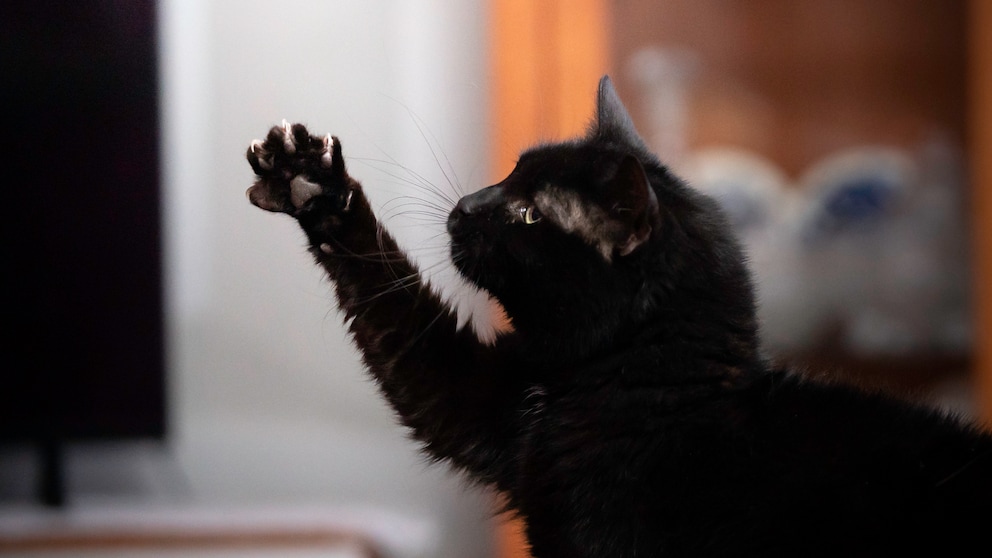
When cats extend their sharp claws, it often becomes dangerous, especially for small prey like mice or birds. But furniture can also suffer if you don’t provide your cat with a scratching post. When in a cuddly mood, the cat retracts its claws and shows its soft paws, or it kneads rhythmically, extending and retracting its claws. However, not all animals can extend and retract their claws at will. PETBOOK explains why this is the case and which animals are affected.
Animals with claws use them in various ways: They help in searching for food, such as digging, grasping prey, and defending themselves. Even a small animal, like a young kitten, can inflict bloody wounds on its attacker. Claws are also used for climbing or moving on smooth surfaces like rocks and ice. Depending on the species, claws vary in shape, structure, and size. There’s another anatomical difference: Some animals, like cats or lions, can retract their claws, while others, like dogs or bears, have claws that are firmly attached to their bones and limbs and cannot be retracted.
Overview
The Structure of Cat Claws Helps in Retraction
Cats have 18 claws, five on each front paw and four on each back paw. These claws are made of keratin, like human fingernails. However, unlike human nails, they are pointed, curved, and hollow. The inside is made of hard marrow, and the outer layer is soft claw horn. To keep claws sharp, they must be honed. When the outermost layer, the soft claw sheath, is worn out, it is shed by scratching on a post, furniture, or in the wild. If a house cat doesn’t have the opportunity to hone them, the owner must assist with a claw trimmer. It’s important not to injure a blood vessel when trimming.
Also interesting: Which Animals Need Their Claws Trimmed?
When a cat is in a relaxed resting position, the claws are not visible and are protected in a special pocket. There, they are held tightly in the claw sheath by elastic bands and the upper tendon. With a clever mechanism, the cat can quickly extend them by tensing a flexor tendon that runs under the paw through two sheaths. This stretches the three finger bones, and the claw becomes visible.
What Function Does Claw Retraction Serve?
The function of claw retraction in animals is also known as retraction. It allows the cat to retract its claws at any time. This is advantageous when it wants to silently sneak up on prey. To then grab the animal, it can quickly extend its claws again. This anatomical feature has helped cats throughout evolution to ensure their survival in various situations, such as fleeing from an attacker by climbing a tree. Additionally, the claws are protected from wear while walking, keeping them sharp for use as a weapon at any time.
Also interesting: How Cats Were Domesticated
Why Can’t Dogs Retract Their Claws?
Dogs, like cats, have 18 claws. Ten claws on the front legs and eight toe claws on the hind legs, with the occasional addition of the so-called dewclaw. A dog’s claws are firmly connected to the bones in their paws and are not controlled by muscles or tendons like a cat’s. They are therefore only minimally movable and provide stability when running by anchoring in soft ground. To catch prey, dogs use their teeth, but they also use their claws to hold onto it.

This wildcat loves water and barks–hardly anyone knows it.

Should you cut your cat’s claws?
Which Other Animals Can Retract Their Claws?
Most members of the cat family (Felidae), as well as some members of the civet family (Viverridae), can retract their claws. There are exceptions like the cheetah, which cannot retract its claws. This may be why it is the fastest runner around, as the claws provide grip and stability. All big cats like lions, tigers, panthers, or leopards can retract their claws. Even the native fox and lynx have this ability. Reptiles, rodents, birds, and birds of prey, on the other hand, cannot retract their claws.
Sources
- Tatzen-paradies.de, “Why Dogs Can’t Retract Their Claws Like Cats” (accessed March 31, 2023)
- Hase-und-igel.de, “Three Unsolved Mysteries” (accessed March 31, 2023)
- Hund.info, “Anatomy of the Dog” (accessed March 31, 2023)
- Katzenkrallen.wordpress.com, “Structure and Function of Cat Claws” (accessed March 31, 2023)